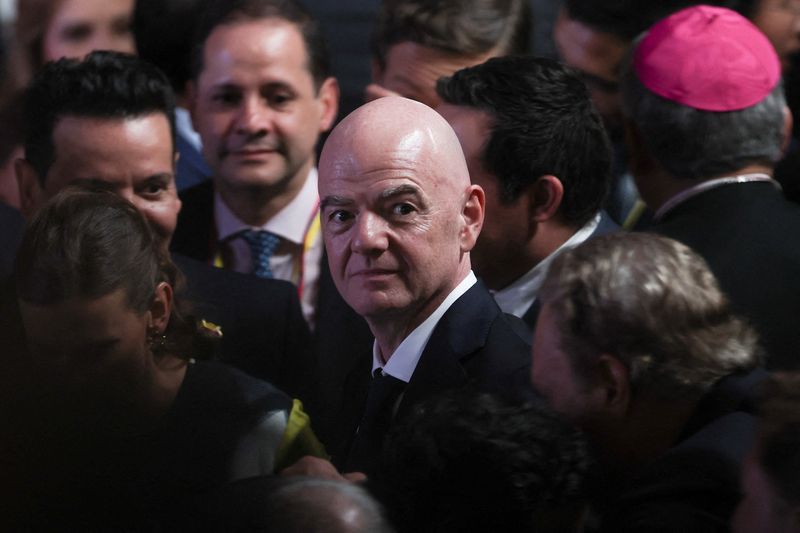
The Royal Dutch Football Association (KNVB) has escalated its criticism of FIFA's leadership structure, announcing it will withdraw support from President Gianni Infantino and demanding a fundamental restructuring of the world soccer governing body. In a statement released on Sunday, the KNVB—one of FIFA's founding members since 1904—called for the organization to host an "International Summit on the Future of FIFA" in Amsterdam, framing this gathering as essential to determining institutional direction before selecting new leadership to take effect from 2027 onwards.
This move marks a significant shift in the KNVB's position, given that the Dutch federation had previously backed Infantino's presidential campaign. The reversal signals growing unease among football's established power brokers regarding the FIFA chief's governance approach and strategic decisions. The timing is particularly notable as Infantino faces a scheduled presidential re-election in March 2025, though influential member associations are now exploring whether to trigger a confidence vote earlier, following his controversial proposal to commercialize FIFA's signature events by selling equity stakes to private equity investors.
The Dutch federation's statement reveals a more nuanced critique than a simple leadership change. The KNVB emphasizes that installing a new president represents merely a surface-level solution to deeper institutional problems. According to their assessment, FIFA's current structure concentrates excessive authority within the presidential office while leaving the administrative apparatus insufficiently independent from political influence. This imbalance, the KNVB contends, undermines effective governance and accountability mechanisms that should characterize a global sports organization managing billions in revenue and stakeholder interests across 211 member associations.
Three core reform pillars have emerged from the KNVB's proposal. First, they advocate for robust governance improvements featuring enhanced checks and balances that would distribute power more evenly across FIFA's decision-making bodies. Second, they insist that human rights protections and environmental sustainability must become foundational to FIFA's planning and tournament award processes, moving beyond rhetorical commitments to enforceable standards. Third, they champion stronger international collaboration mechanisms that would give smaller and less-resourced football associations genuine voice in policy formation rather than merely consultative status.
Financial redistribution forms another cornerstone of the Dutch federation's agenda. The KNVB proposes that FIFA should reinvest up to 90 percent of its distributable revenue into soccer development programs globally, substantially increasing support for grassroots infrastructure and capacity-building in developing nations. This proposal directly addresses complaints that FIFA's enormous revenue streams—generated primarily through wealthy European and established football markets—accumulate at the center while peripheral members struggle with basic operational resources.
The underlying tension revealed here reflects a broader debate about FIFA's foundational mission. Infantino has previously argued that FIFA bears responsibility for narrowing financial disparities between its wealthy and resource-constrained members. However, the KNVB rejects what it frames as a top-down European prescription for global football development. Rather, the Dutch federation emphasizes collaborative methodology, proposing that FIFA's restructuring should emerge from inclusive dialogue involving all 211 member associations and the six continental confederations, ensuring that reform directions reflect diverse regional interests and perspectives rather than reflecting the vision of the headquarters in Zurich.
This Dutch initiative carries particular weight within European football politics. UEFA, the continental confederation encompassing European associations, has simultaneously pursued aggressive legal action against Infantino. UEFA has petitioned United States federal courts to obtain testimony and documentary evidence from FIFA offices in Florida, specifically seeking materials for a planned criminal complaint against Infantino to be filed in Switzerland. This parallel legal pressure alongside institutional reform demands creates a challenging environment for the FIFA president, signaling coordinated pressure from multiple vectors within global soccer's power structure.
The KNVB's explicit withdrawal of "unconditional support" indicates recognition that their earlier backing of Infantino was contingent upon demonstrated performance and acceptable governance standards. The federation's statement suggests these conditions have not been met, particularly regarding Infantino's recent initiatives involving private equity investment in FIFA events. Such ventures raised concerns about commodifying the World Cup and other signature tournaments in ways that might prioritize commercial interests over competitive integrity and inclusive access.
For Southeast Asian football stakeholders, this institutional upheaval at FIFA carries tangible implications. The region's football associations depend substantially on FIFA's development funding, capacity-building programs, and tournament opportunities. A more transparent, accountable FIFA focused on reinvesting revenues into soccer development could enhance support for emerging markets. Conversely, prolonged governance instability or leadership uncertainty might delay or disrupt funding allocations and strategic planning that affects regional federation operations, youth development initiatives, and competitive opportunities.
The proposed Amsterdam summit represents a potential watershed moment for FIFA's institutional evolution. Rather than a simple leadership rotation or cosmetic reforms, the KNVB is advancing a comprehensive restructuring agenda that questions fundamental assumptions about how world soccer's governing body should operate. The summit's success would depend on whether FIFA's diverse membership can coalesce around shared reform principles, or whether competing interests among wealthy, developed, and emerging football nations prevent meaningful institutional transformation.
As this reform movement gains momentum within football's establishment, Malaysian and Southeast Asian observers should note that institutional changes at FIFA ultimately affect resource allocation, development programming, and competitive opportunities available to regional associations. The outcome of Amsterdam's proposed summit could reshape how FIFA distributes its substantial revenues and exercises governance authority, with practical consequences for football development trajectories across the region.

