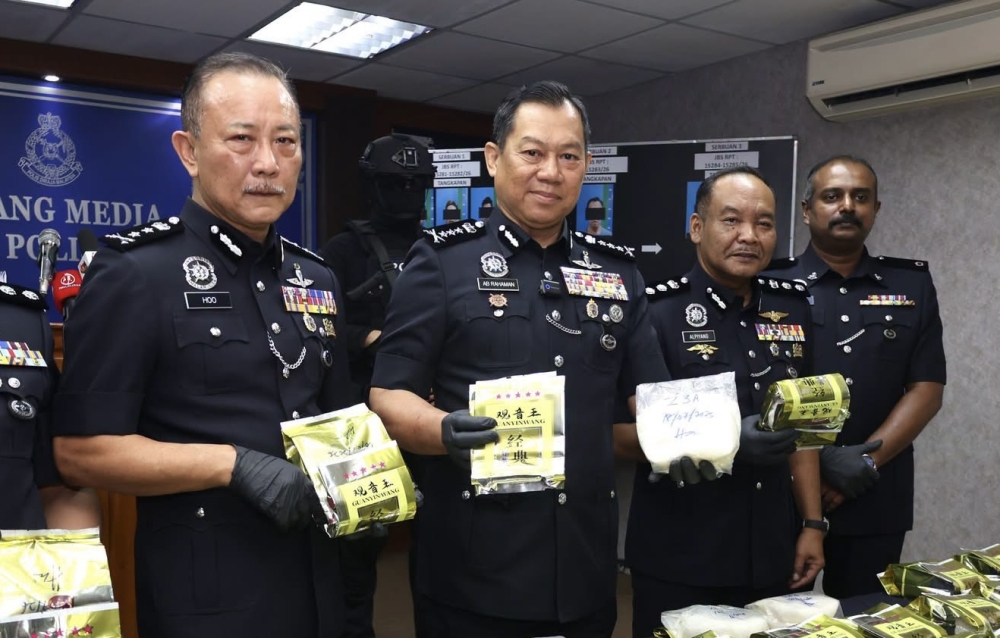
Police in Johor Bahru have successfully broken up a synthetic drug trafficking organisation following coordinated raids that netted eight arrests, exposing how criminals have increasingly exploited family relationships and elderly citizens' assets to facilitate illegal drug distribution across the state.
Among those taken into custody is a 16-year-old youth, raising fresh concerns about the involvement of minors in organised drug operations and the vulnerability of young Malaysians to recruitment by criminal syndicates. The teenager's engagement in the network demonstrates an alarming pattern observed by law enforcement agencies nationwide: traffickers deliberately target school-age individuals who perceive minimal risk due to juvenile sentencing guidelines and limited criminal records that could otherwise complicate their participation in organised crime.
The investigation revealed a particularly brazen operational tactic: the use of a family member's personal vehicle—a car belonging to the youth's grandfather—as a clandestine depot for storing and distributing synthetic narcotics. This method reflects criminal adaptability in circumventing police detection, as vehicles registered to elderly individuals with clean criminal histories attract less scrutiny during routine traffic stops and checkpoint inspections. Such repurposing of family assets underscores how organised crime infiltrates households and weaponises familial trust structures.
The eight individuals arrested span various operational roles within the syndicate, suggesting a hierarchical organisation rather than ad hoc street-level dealing. Police investigations typically categorise such networks into supply chain tiers: importers or manufacturers at the apex, regional distributors in the middle echelon, and street-level peddlers or users at the base. The diversity of arrestees indicates authorities have successfully identified and apprehended participants across multiple functional layers.
Synthetic drug operations have proliferated across Johor over recent years, capitalising on the state's strategic geographic position near international borders and major transportation corridors. The proximity to Singapore, coupled with dense urban centres in Johor Bahru and Iskandar Puteri, creates ideal conditions for trafficking networks to establish distribution hubs servicing both domestic Malaysian markets and cross-border clientele seeking cheaper narcotics than those available in neighbouring jurisdictions.
The raid outcomes underscore growing police coordination in tackling organised narcotics crime. Multi-agency task forces combining personnel from the Royal Malaysia Police Narcotics Division, Johor state contingents, and sometimes federal intelligence units have enhanced the capacity to identify trafficking networks through informant networks, electronic surveillance, and financial transaction monitoring. Such coordinated approaches have proven more effective than isolated precinct-level operations at dismantling larger syndicates.
The involvement of a minor carries significant implications for Malaysia's approach to youth rehabilitation versus prosecution. Courts and rehabilitation authorities must balance accountability with understanding how young individuals become ensnared in criminal enterprises—typically through poverty, peer pressure, or deliberate grooming by traffickers offering quick financial gain. The 16-year-old's case will likely undergo assessment for alternative sentencing that incorporates counselling and educational interventions alongside custodial measures.
Family-based exploitation in drug operations reflects broader vulnerability dynamics affecting Malaysian communities, particularly in urban and semi-urban areas where economic precarity renders households susceptible to criminal proposition. Elderly relatives, often isolated and unfamiliar with contemporary trafficking methods, may unknowingly permit vehicle use or property access that subsequently serves criminal purposes. Public awareness campaigns remain inadequate in educating senior citizens about risks associated with lending vehicles or financial assistance to younger relatives engaged in criminal activity.
From a regional enforcement perspective, this Johor Bahru bust contributes to broader Southeast Asian counter-narcotics operations. The Association of Southeast Asian Nations (ASEAN) member states maintain collaborative frameworks for pursuing cross-border drug trafficking, though implementation inconsistencies across jurisdictions occasionally allow traffickers to exploit legal and regulatory gaps. Malaysia's proactive raids and subsequent prosecutions strengthen the region's deterrent posture against syndicates attempting to establish supply chains spanning multiple countries.
The synthetic drugs market particularly challenges authorities because manufacturing occurs in clandestine laboratories potentially located domestically or abroad, with precursor chemicals sourced through shell companies and black-market chemical suppliers. Unlike heroin or cocaine production, which requires specific geographic and agricultural conditions, synthetic drug manufacturing demands only chemical knowledge, small-scale equipment, and a secure location—criteria readily satisfied in residential buildings, industrial estates, or rural properties. This accessibility explains the proliferation of domestic synthetic drug networks throughout Peninsular Malaysia.
The psychological dimension of youth recruitment warrants additional investigation. Researchers studying organised crime involvement among teenagers identify common pathways: gang affiliation as a status proxy, familial criminal connections normalising illicit activity, financial desperation offering attractive quick-income propositions, or deliberate cultivation by adult traffickers leveraging teenagers' perceived anonymity and legal protections. Disentangling which motivations applied to this particular 16-year-old suspect could inform targeted intervention strategies for at-risk demographics.
Moving forward, this dismantling signals police determination to pursue mid-tier operations rather than focusing exclusively on street-level dealers. Such strategy recognises that eliminating trafficking networks demands attacking supply infrastructure and distribution mechanisms, not merely disrupting momentary street transactions. The investigation's scope and the arrestees' apparent operational diversity suggest authorities obtained intelligence through extended surveillance or informant cooperation, enabling them to map organisational structures before executing raids.
As Johor continues experiencing economic growth and increased cross-border movement, narcotics enforcement must balance commercial facilitation with security imperatives. Enhanced intelligence-sharing between federal and state agencies, coupled with community reporting mechanisms encouraging public vigilance regarding suspicious vehicle usage or property activity, could strengthen prevention capabilities and disrupt emerging trafficking networks before they achieve the sophistication displayed by this dismantled syndicate.

