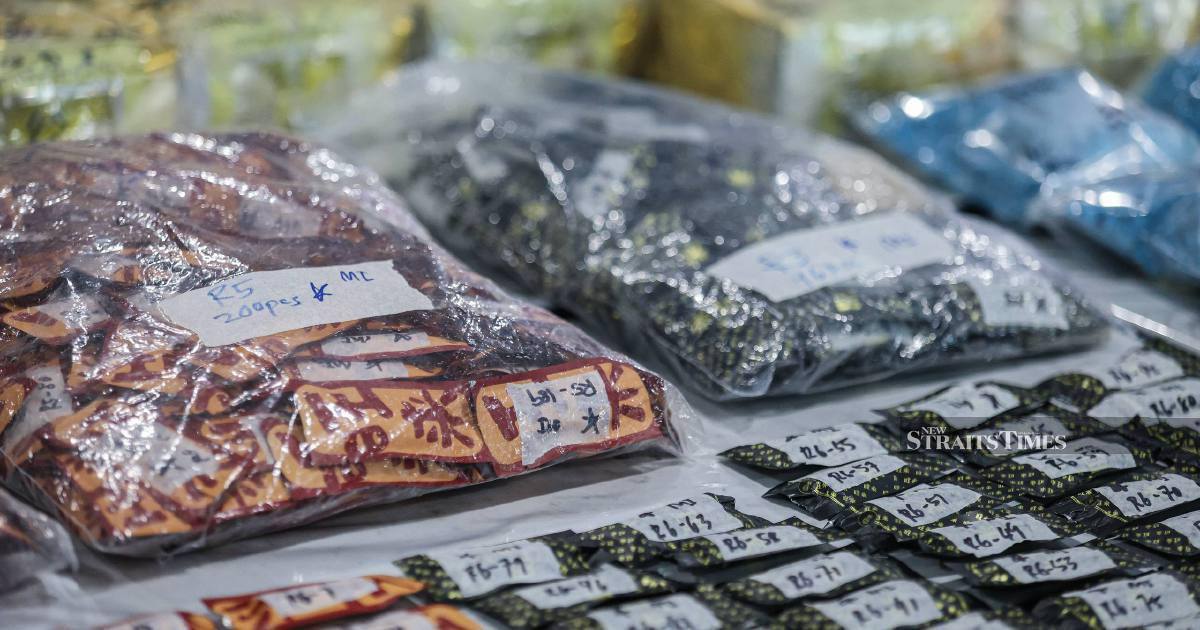
Authorities in Johor Baru have dismantled what law enforcement officials describe as a sophisticated maritime drug trafficking operation after the Malaysian Maritime Enforcement Agency (MMEA) apprehended two brothers aboard a vessel on Sunday. The seizure, valued at more than RM6.85 million, represents a significant blow against regional narcotics networks and highlights the persistence of transnational smuggling operations despite intensified coastal patrols and modern surveillance capabilities.
The arrest, made during what appears to have been a routine maritime inspection, uncovered evidence of an intended crossing to a neighbouring country. The operation underscores the continued reliance on sea routes by trafficking organisations seeking to circumvent land border checkpoints and airport security systems. The Straits of Johor and surrounding waters have historically served as convenient transit corridors for illegal contraband, offering smugglers cover in the form of legitimate maritime traffic and the jurisdictional complexities that characterise Southeast Asia's maritime domain.
Among the substances intercepted during the operation was 'Piu Piu', an emerging synthetic drug that represents the latest addition to Malaysia's expanding catalogue of illicit substances. This particular compound reflects the ongoing innovation and chemical reconfiguration tactics employed by international drug manufacturers to circumvent existing legal prohibitions. As regulatory bodies place restrictions on certain molecular structures, clandestine laboratories adapt by synthesising new variants that occupy legal grey areas, at least temporarily, before authorities gather sufficient intelligence to formally prohibit them. The emergence of 'Piu Piu' in Malaysian waters signals that the nation sits squarely within global supply chains for designer drugs, much like regional neighbours Thailand and the Philippines have experienced in recent years.
The scale of this single operation—RM6.85 million—provides insight into the enormous profit margins that motivate trafficking organisations. Converting raw materials or precursor chemicals into finished synthetic drugs yields markups that can exceed 1000 percent in some cases, generating capital that funds broader criminal enterprises encompassing money laundering, violence, and corruption. The fact that two individuals were attempting to transport such a substantial quantity suggests either a major regional distributor network or a consolidation point for smaller shipments destined for multiple end markets across Southeast Asia and potentially beyond.
Sea-based smuggling operations present particular enforcement challenges for agencies like the MMEA. The vast expanse of Malaysian territorial waters, combined with thousands of legitimate fishing vessels and merchant ships transiting the region daily, creates what smugglers view as a relatively permissive operating environment. Interdictions depend heavily on intelligence gathering, informant networks, and random inspections—all resource-intensive activities. The Sunday apprehension suggests that either tip-off information directed authorities to this specific vessel, or that MMEA's operational procedures succeeded in spotting suspicious indicators among routine traffic patterns.
The capture of 'Piu Piu' is particularly significant for regional public health authorities and addiction services. Synthetic drugs pose unique challenges because their potency, composition, and health effects remain poorly understood compared to traditional narcotics. Users lack baseline knowledge about appropriate dosing or dangerous combinations, leading to overdoses, acute psychiatric episodes, and organ damage. Emergency departments across Malaysia have reported rising presentations linked to synthetic compound use, straining hospital resources and creating secondary public health burdens. Communities in urban areas like Kuala Lumpur, Johor Baru, and Penang have expressed concern about clustering of addiction cases linked to novel synthetics.
International cooperation will prove essential in disrupting 'Piu Piu' supply chains at their source. Unlike heroin and methamphetamine, which originate from specific geographic regions (Afghanistan and Myanmar respectively), synthetic drugs can be manufactured in virtually any location with basic chemistry knowledge and access to precursor chemicals. This decentralisation of production complicates law enforcement efforts, as shutting down one laboratory merely displaces manufacturing to another jurisdiction. Intelligence sharing between Malaysia, Singapore, Thailand, Indonesia, and Philippines remains inconsistent, hampering coordinated region-wide strategies.
The two arrested brothers now face serious charges under the Dangerous Drugs Act 1952, which carries mandatory minimum sentences and potential capital punishment for trafficking offences exceeding specified thresholds. The RM6.85 million valuation suggests the quantity likely exceeds trafficking minimums, placing the defendants in genuine jeopardy of lengthy incarceration or worse. Their prosecution will serve as both a deterrent and a case study for understanding how trafficking networks operate within Malaysia's maritime domain.
This incident reflects broader patterns in transnational drug trafficking that Malaysian policymakers must address through enhanced maritime surveillance technology, expanded information-sharing protocols with regional partners, and investment in community-based prevention and treatment infrastructure. Without sustained commitment across these domains, synthetic drugs like 'Piu Piu' will continue finding their way into Malaysian communities, perpetuating cycles of addiction and crime that demand resources far exceeding the value of any individual seizure.

