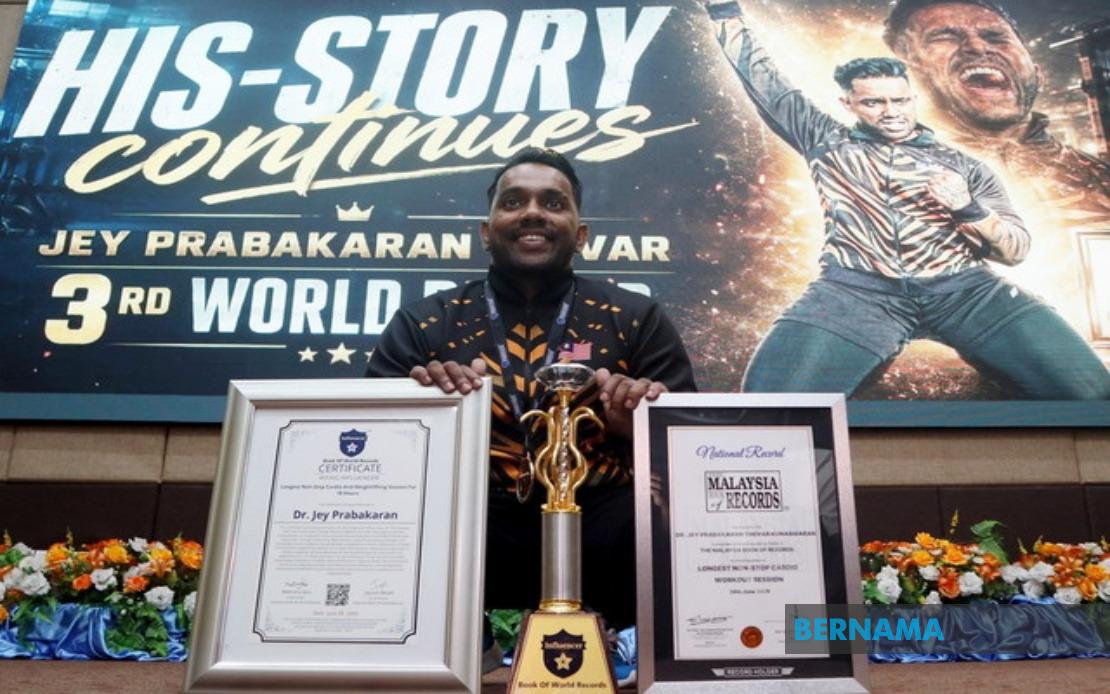
Malaysian fitness enthusiast K. Jey Prabakaran Thevar, professionally known as Dr Kjey, has etched his name into international sporting history by setting his third world record through a gruelling 18-hour continuous cardio and weightlifting marathon. The 29-year-old athlete from Kuala Lipis, Pahang, completed the extraordinary endurance test at Healthland Kuala Lipis last Sunday, beginning at 4 am and concluding at 11 pm, thereby securing recognition in both the Malaysia Book of Records and the Influencer Book of World Records.
What sets this accomplishment apart is its profound personal dimension. Dr Kjey has dedicated this remarkable achievement to the memory of his father, Kunasigaran Suppiya Thevar, who passed away on March 3, 1999, when the athlete was merely a child. Growing up without paternal guidance proved formative rather than debilitating; Dr Kjey has channelled the grief and longing into an unstoppable drive for excellence. In reflecting upon his journey, he emphasised that losing his father early in life became a wellspring of motivation rather than an obstacle, propelling him toward sporting glory on the global stage.
This latest milestone represents the culmination of a sustained trajectory of record-breaking pursuits spanning recent years. Dr Kjey previously shattered world records through 12-hour and 15-hour non-stop cardio and weightlifting challenges in 2023 and 2024 respectively, both recognised by the Malaysia Book of Records and Guinness World Records. Additionally, he holds an Asian record with a 13-hour performance. Each successive attempt has grown progressively more demanding, reflecting his commitment to expanding the boundaries of human endurance and physical resilience.
Preparations for this record attempt commenced immediately following his completion of a national record challenge held in conjunction with National Sports Day celebrations in October of the preceding year. The months of training and conditioning reveal the meticulous planning required for such an undertaking. Dr Kjey did not approach this challenge casually; instead, he implemented comprehensive lifestyle modifications designed to optimise his physical and mental readiness.
Among the most striking preparation measures was a radical dietary transformation. Dr Kjey adopted a completely vegetarian eating pattern in the months leading to the attempt, successfully shedding 32 kilogrammes in the process. This substantial weight loss was part of a deliberate strategy to enhance his endurance capacity and reduce the physiological burden during the extended exertion period. Beyond nutritional changes, he had to mentally prepare for the psychological toll that accompanies such extreme physical challenges, anticipating battles against fatigue, drowsiness, and the mental barriers that inevitably emerge during endurance events.
The actual execution of the 18-hour challenge exposed Dr Kjey to numerous obstacles beyond mere physical exhaustion. Maintaining focus, managing pain, and resisting the overwhelming urge to rest throughout an entire day and night cycle represents a formidable mental test. His commentary on the experience underscores the multifaceted nature of such achievements—they demand not only physical conditioning but also extraordinary psychological fortitude and mental discipline. The fact that he persisted for eighteen consecutive hours of intense cardiovascular and strength-based activity speaks to both his preparation and his extraordinary determination.
Beyond personal achievement, Dr Kjey's records carry significance for Malaysia's sporting profile internationally. In an era when Southeast Asian athletes often receive limited global recognition, individual records that garner international validation serve as sources of national pride and inspiration. His achievements demonstrate that Malaysian athletes can compete at the highest levels of human endurance and physical performance, challenging global standards and raising the nation's profile in the fitness and wellness sectors.
Dr Kjey's roles extend beyond athletics into community leadership. As president of the Malaysian India Fitness Association, he wields influence within the local fitness community and among Malaysian-Indian demographic groups. His stated ambition to inspire youth toward healthier lifestyles and greater participation in fitness activities reflects a conscious commitment to leveraging his athletic success for broader social benefit. His personal narrative—overcoming childhood adversity and channelling loss into achievement—resonates powerfully with young people navigating their own challenges.
Looking forward, Dr Kjey has already outlined his next objective, planning to attempt a national record of 5,000 jumping jacks within a five-hour timeframe in conjunction with National Sports Day celebrations scheduled for October this year. This announcement indicates no intention of resting on his laurels; rather, he appears determined to continue expanding the frontiers of endurance athletics while maintaining the symbolic connection to national sporting occasions. Each subsequent challenge will provide further opportunity to inspire communities and demonstrate the possibilities inherent in disciplined training and unwavering mental commitment.
The broader implications of Dr Kjey's achievements extend to how Malaysian society perceives fitness, wellness, and athletic achievement. In a regional context where lifestyle diseases and sedentary behaviours increasingly challenge public health outcomes across Southeast Asia, ambassadors who embody dedication to physical excellence and healthy living offer counter-cultural messaging. His vegetarian dietary approach and sustained endurance pursuits present alternative models to conventional fitness paradigms, potentially influencing how younger Malaysians approach their own health and physical development. Through records and recognition, Dr Kjey effectively transforms personal resilience into a vehicle for social influence and community inspiration.

