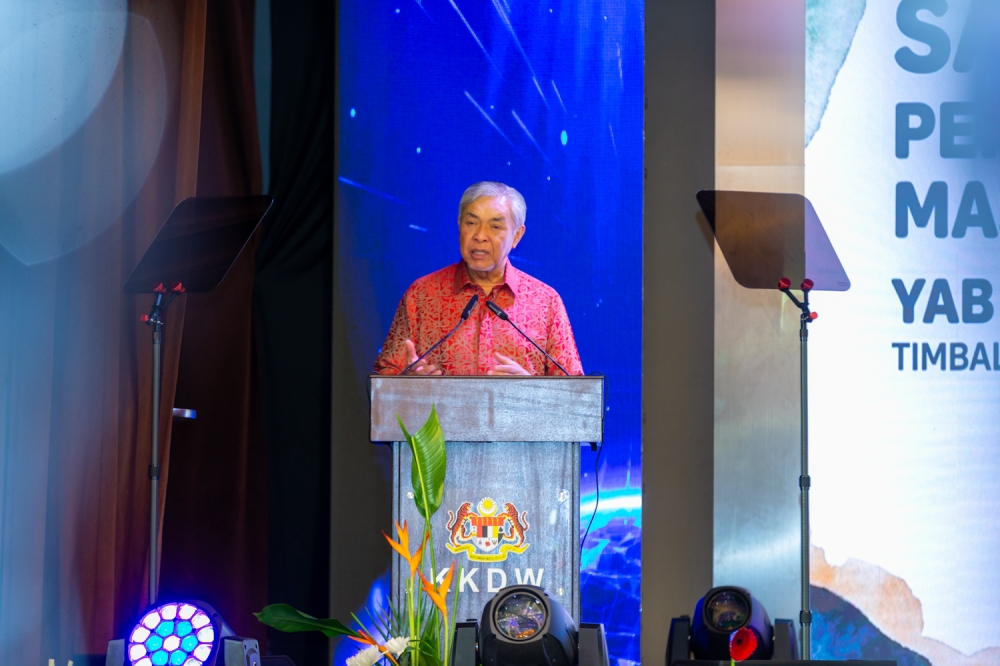
Deputy Prime Minister Datuk Seri Ahmad Zahid Hamidi moved to extinguish speculation about backroom political manoeuvres on July 21, categorically denying that senior leaders from Barisan Nasional, Perikatan Nasional, GPS, and GRS have held secret meetings to reshape the nation's governing arrangement. His swift denial came as social media chatter about such a gathering circulated widely, threatening to create uncertainty about the stability of the current administration just as parliamentary business resumed following the mid-year recess.
Zahid's statement represents the latest in a series of reassurances from government figures seeking to project cohesion amid persistent speculation about Malaysia's fractious coalition politics. Such rumours have become a recurring feature of the country's political landscape, particularly following the 2022 elections which produced a closely balanced parliament where no single bloc commands overwhelming dominance. The narrative of potential regroupings and realignments never entirely disappears from public discourse, fuelled by the fluid allegiances that characterise contemporary Malaysian politics.
The Deputy Prime Minister's intervention underscores the delicate equilibrium upon which the current unity government rests. Since its formation, the coalition has required careful management to maintain discipline among diverse partners whose interests do not always align. Any suggestion of high-level talks that might presage structural changes to the governing arrangement risks triggering anxiety among coalition members and investor confidence, particularly given the economic challenges Malaysia continues to navigate. Zahid's rapid response reflects awareness of how quickly such narratives can undermine political stability if left unchecked.
Zahid reiterated his personal commitment to the existing unity government framework, positioning himself as a steadying force within the administration. As Deputy Prime Minister and President of United Malays National Organisation, he occupies a pivotal role bridging Barisan Nasional's traditional dominance with the broader coalition architecture. His willingness to publicly defend the current arrangement carries weight precisely because he represents one of the establishment parties most affected by any reshuffling of the political order.
The denial also reflects the precarious mathematics of Malaysian parliamentary politics in the post-2022 era. With no clear majority party and coalition partners controlling crucial numbers of seats, any significant defection or reorganisation could rapidly alter the government's viability. This vulnerability means that even unsubstantiated rumours about leadership talks can temporarily destabilise parliamentary procedures and complicate the legislative agenda. Government business proceeds more smoothly when coalition partners feel secure about their respective positions and the overall stability of the arrangement.
For regional observers, Malaysia's coalition politics carries broader implications for democratic governance in Southeast Asia. The willingness of political competitors to shift alliances pragmatically, combined with the need to maintain multi-ethnic coalitions, creates unique governance challenges that test institutional resilience. The current unity government, despite its obvious tensions, has demonstrated an ability to function across ideological and ethnic lines in ways that some observers view as a potential model for managing political diversity in plural societies.
The timing of Zahid's statement, coming as parliament prepared to reconvene, suggests concern about legislative continuity. With numerous bills awaiting deliberation and the government pursuing its economic and reform agendas, any parliamentary instability could disrupt crucial business. Coalition partners need confidence that they are operating within a stable framework where seats are secure and decision-making processes remain predictable. Zahid's reassurance attempts to provide that confidence as lawmakers return to their duties.
Zahid's position also reflects awareness among senior Barisan Nasional figures that the party must stabilise its standing within broader coalition dynamics. Once the undisputed dominant force in Malaysian politics, UMNO and its partners now occupy a position requiring constant negotiation and compromise. This shift in relative power necessitates regular affirmations of commitment to current arrangements, distinguishing them from potential alternative configurations that rivals might propose.
The broader political environment continues to feature considerable speculation about various groupings and possible future alignments. Perikatan Nasional has emerged as a significant force particularly in certain regions, while GPS and GRS maintain their influence within their respective constituencies. Any genuine repositioning among these blocs could materially alter the government's composition and policy direction. However, Zahid's categorical denial suggests that for the immediate term, the leadership views the costs of disrupting the current arrangement as outweighing any benefits from pursued alternatives.
Looking ahead, the stability of Malaysia's coalition government will likely depend on whether coalition partners perceive adequate benefits from continued cooperation. Economic performance, distribution of ministerial portfolios, and policy outcomes all influence partner satisfaction. Zahid's defence of the unity government should be understood partly as an attempt to argue that the existing framework delivers sufficient gains to justify continued participation, despite the obvious compromises and constraints inherent in managing such a diverse alliance.

