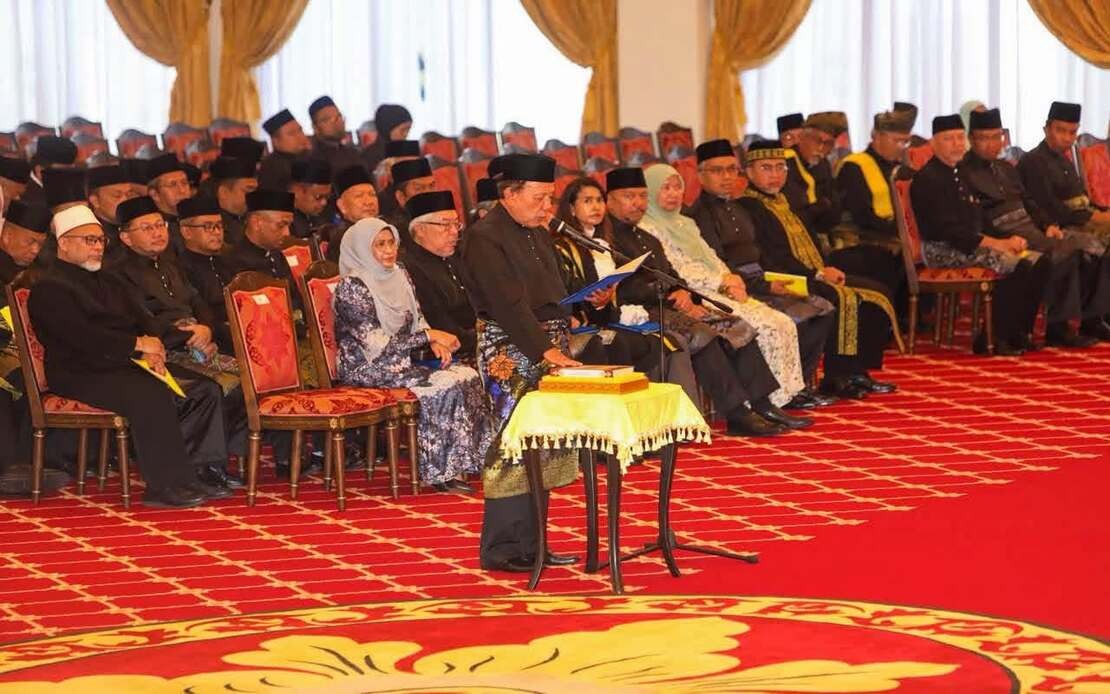
The federal government has rallied behind Datuk Ismail Lasim following his formal appointment as Negeri Sembilan Menteri Besar, with Deputy Prime Minister Datuk Seri Dr Ahmad Zahid Hamidi and several cabinet colleagues voicing their confidence in the state's new leader to drive development and stability in the central Malaysian state.
Ahmad Zahid, who holds the additional portfolio of Rural and Regional Development Minister, took to social media to extend his official felicitations, emphasising the magnitude of the trust that has been vested in Ismail. In his message, Ahmad Zahid underscored that the appointment represents both an honour and a weighty responsibility that demands excellence in governance and an unwavering commitment to improving the lives of ordinary Negeri Sembilan residents. The Deputy Prime Minister expressed confidence that Ismail possesses the capability and dedication necessary to steer the state toward renewed prosperity and advancement.
The wider cabinet establishment signalled its backing through multiple endorsements. Defence Minister Datuk Seri Mohamed Khaled Nordin echoed similar sentiments, framing Ismail's appointment within the broader context of the state's development trajectory. Mohamed Khaled characterised the public mandate as a sobering call to duty, one that demands the continuation of institutional momentum that has underpinned Negeri Sembilan's previous achievements in economic growth and social cohesion. He articulated a vision of sustained stability that would enable the state to consolidate gains already made while pursuing fresh opportunities for shared prosperity amongst its diverse population.
Plantation and Commodities Minister Datuk Seri Dr Noraini Ahmad similarly welcomed the transition, describing Ismail's elevation as a watershed moment for Negeri Sembilan's political leadership. Noraini's statement conveyed optimism that the appointment signals a chapter of renewed vigour in addressing the state's pressing challenges and opportunities. Her remarks reflected a ministerial consensus that leadership transitions, when grounded in institutional knowledge and experience, can catalyse fresh momentum toward achieving developmental objectives that benefit ordinary citizens.
Ismail, aged 67, formally assumed office before the Yang Dipertuan Besar of Negeri Sembilan, Tuanku Muhriz Tuanku Munawir, in a ceremony held at the Balairong Seri of Istana Besar Seri Menanti. The ceremonial occasion underscored the constitutional and traditional dimensions of the appointment, linking Ismail's leadership to the sultanate's important role in Negeri Sembilan's governance framework. This formal investiture marks a significant moment in the state's political cycle and reaffirms established protocols governing executive transitions within the Malaysian federation's structure.
Ismail brings to the position an extensive track record in state politics spanning nearly three decades. His electoral journey commenced in 1999 when he first secured a seat in the state assembly representing the Juasseh constituency, demonstrating sustained electoral appeal across multiple election cycles. This longevity at the grassroots level provides him with nuanced understanding of local concerns and community expectations, an asset that often proves invaluable for a chief minister navigating diverse stakeholder interests within a state administration.
Prior to his current appointment, Ismail served on the state executive council beginning in 2004, a tenure that extended uninterrupted through three consecutive terms until 2018. During this formative period in state government, he held the education portfolio, positioning him at the centre of policy formulation and implementation across a sector vital to human development. His involvement in crafting and executing educational policies and human capital initiatives provides direct exposure to the institutional machinery required to translate political vision into tangible public benefits, particularly in shaping the skills and competencies of Negeri Sembilan's workforce.
Ismail's background in the education sector carries particular significance for Southeast Asian readers mindful of the region's competitive positioning in the global economy. Education and skill development have emerged as critical determinants of state and national competitiveness, particularly as Malaysia and neighbouring economies navigate transitions toward knowledge-intensive industries and advanced manufacturing. An incoming chief minister with substantive experience in educational governance possesses frameworks for thinking about talent pipelines, workforce readiness, and institutional linkages between schooling and employment that extend beyond routine administrative concerns.
The appointment represents a continuity narrative within Negeri Sembilan's political establishment, suggesting that the state's leadership transitions are unfolding within relatively stable institutional parameters. In a Malaysian context where state-level politics occasionally experiences tumultuous realignments, the smooth succession to Ismail reflects institutional maturity and acceptance of established protocols among political stakeholders. The cabinet-level endorsements serve to integrate the state's new leadership more firmly into the broader federal administrative network, signalling commitment to coordinated approaches toward challenges spanning state and national boundaries.
For Negeri Sembilan itself, Ismail's stewardship arrives at a moment when the state faces multiple development imperatives. Located strategically between Kuala Lumpur and Selangor, the state commands important economic geography but must navigate questions regarding its distinct identity within the larger Klang Valley conurbation. The new Menteri Besar will need to balance regional integration with state-specific development priorities, a task that demands both political acumen and administrative competence. His experience in education governance suggests an orientation toward long-term human capital development, potentially signalling an administrative philosophy emphasizing foundational investments in people over short-term extraction-based economic gains.
The ministerial congratulations, while formulaic in tone, collectively underscore the federal government's intention to provide supportive coordination toward Negeri Sembilan's governance under Ismail's leadership. In Malaysian governance architecture, such symbolic affirmations carry practical weight, often translating into preferential consideration for state-level development projects and resource allocations. The explicit acknowledgement from portfolios spanning defence, rural development, and commodities suggests potential coordination frameworks that could facilitate integrated approaches toward economic diversification within the state.
Moving forward, observers of Malaysian politics will likely monitor how Ismail leverages his educational background and extended political experience to address the state's development agenda. Whether he pursues educational investments as a cornerstone strategy, collaborates effectively with federal counterparts on infrastructure and economic initiatives, and manages the delicate balance between state autonomy and federal integration will shape not only Negeri Sembilan's trajectory but also offer insights into how Malaysia's federal system allocates responsibilities and resources between state and national levels during periods of political transition.

