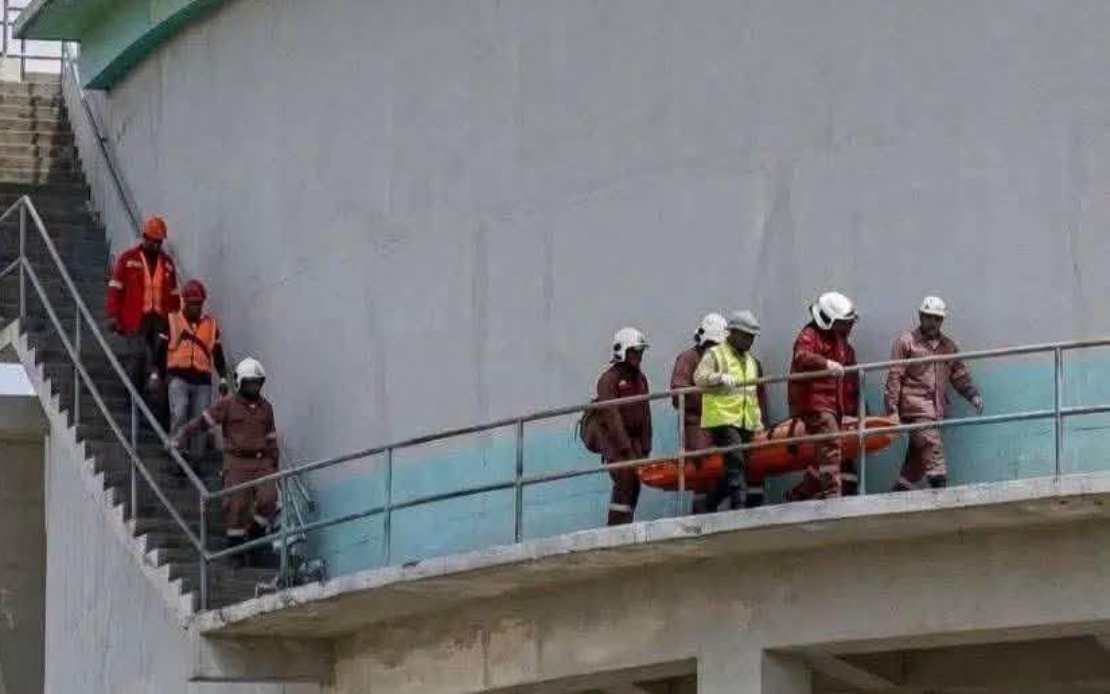
The Department of Occupational Safety and Health (DOSH) has launched a comprehensive investigation into a workplace fatality that claimed the life of an industrial trainee during water tank cleaning operations at Menara Saujana Perdana 1 in Sungai Buloh, Selangor, on June 16. The incident underscores persistent risks in Malaysia's construction and maintenance sectors, where workers face hazardous conditions despite established safety frameworks. DOSH Director-General Hazlina Yon confirmed that teams from the Selangor office have already visited the location and secured it with prohibitory notices to preserve evidence and prevent further disturbances.
The investigation is proceeding methodically across multiple fronts, combining site examination with detailed witness interviews. Hazlina stressed that DOSH will pursue enforcement action should the inquiry reveal breaches of occupational safety legislation. The legal framework underpinning the investigation—Sections 15, 17 and 18 of the Occupational Safety and Health Act 1994—establishes clear obligations for employers, self-employed operators, and all parties with control over work activities to safeguard worker welfare and protect anyone potentially affected by occupational operations.
Confined-space work represents one of Malaysia's most hazardous operational categories, yet remains commonplace across industrial maintenance, infrastructure projects, and facility management. Water tank cleaning exemplifies this category precisely because it combines multiple risk factors: oxygen depletion, toxic atmospheric accumulation, physical hazards during entry and exit, and limited rescue accessibility. Hazlina's directive to employers highlighted that every confined-space operation must follow documented safe procedures and obtain mandatory work permits before personnel deployment. Control measures must be verified as functional before any worker enters such environments, a requirement that distinguishes professional operations from dangerous shortcuts that cost lives.
The case illuminates a critical gap in Malaysia's industrial practice. Many employers, particularly small and medium enterprises subcontracting maintenance work, treat confined-space protocols as bureaucratic inconveniences rather than lifesaving procedures. The victim was an industrial trainee, a status that typically denotes inexperience and heightened vulnerability to workplace hazards. Hazlina pointedly noted that employers bear responsibility for ensuring trainees and newly engaged workers receive comprehensive occupational safety and health instruction, supported by practical briefings and placement under qualified supervisory oversight. This requirement exists precisely because inexperienced personnel lack the situational awareness and procedural familiarity necessary to recognise and respond to emerging dangers.
Risk assessment emerges as another foundational obligation that deserves particular attention in this context. Hazlina emphasised that employers must systematically identify and evaluate dangers inherent in each work activity before commencement, with heightened rigour applied to high-risk operations. Water tank cleaning undoubtedly qualifies as high-risk activity, yet many organisations still approach such tasks reactively, mobilising workers with minimal advance planning or hazard evaluation. Systematic assessment—conducted by competent personnel with relevant technical knowledge—would flag oxygen monitoring requirements, ventilation protocols, atmospheric testing procedures, and emergency extraction equipment, transforming theoretical compliance into practical protection.
The incident also reflects broader challenges within Malaysia's supply chain model for facility maintenance. Many building managers and property operators engage external contractors for specialised tasks like tank cleaning, creating accountability diffusion. Hazlina explicitly stated that employers must maintain safety responsibility across their entire operational ecosystem, including contracted vendors and subcontractors. This principle proves difficult to enforce consistently, as contractual relationships sometimes obscure liability and create incentive structures favouring cost minimisation over safety investment. Trainees and junior workers, frequently employed through labour agencies or apprenticeship schemes, occupy particularly precarious positions within these layered arrangements.
Competent supervision represents the practical dimension where safety theory meets workplace reality. Hazlina's emphasis on requiring competent supervisors to oversee trainees signals recognition that procedures alone cannot prevent accidents; implementation quality matters fundamentally. Competent supervisors possess technical knowledge of the specific hazards involved, authority to halt unsafe activities, and ability to demonstrate proper technique to less experienced workers. Yet Malaysia's construction and maintenance sectors frequently fail to distinguish between supervisors who hold formal qualifications and those merely designated as supervisors through organisational convenience. Professional development for supervisory staff would substantially strengthen on-site safety culture and incident prevention.
The timing of this fatal incident carries particular significance for Malaysia's ongoing industrial safety discourse. The country has progressively strengthened workplace legislation and regulatory capacity, yet deaths in clearly preventable categories persist. This gap between regulatory sophistication and operational practice suggests that compliance mechanisms alone prove insufficient; cultural transformation in how employers, supervisors, and workers conceptualise risk and safety remains necessary. Many Malaysian organisations still treat occupational safety as a compliance obligation to satisfy regulators rather than an integral operational responsibility. Where safety receives adequate priority and funding, companies demonstrate substantially better incident records.
Moving forward, the DOSH investigation will likely produce detailed findings regarding whether procedural gaps, inadequate supervision, missing equipment, or insufficient worker training contributed to the fatality. These findings will inform enforcement responses and potentially guide regulatory refinement. However, sustained improvement demands broader action: enhanced training and certification for supervisory personnel, improved risk assessment practices, stronger accountability mechanisms within contractor chains, and workplace cultures where safety concerns are raised without fear. The tragic loss at Sungai Buloh represents one among many preventable deaths that occur annually in Malaysian workplaces, each reflecting similar systemic vulnerabilities. Hazlina's statement serves as a reminder that employers possess both legal obligation and moral responsibility to prioritise worker safety above operational convenience or cost considerations.