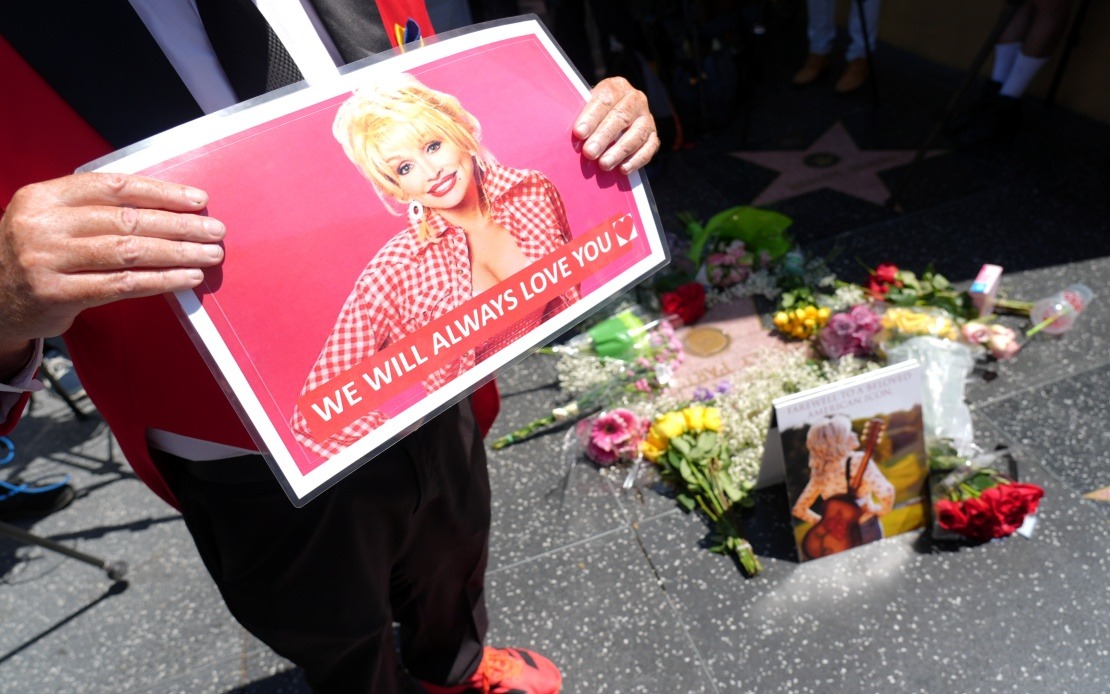
Dolly Parton, the storied American country musician whose catalogue of hits and cultural impact extended far beyond music, passed away on Tuesday at the age of 80. Her family made the announcement through a video posted on her social media channels by her nephew, Bryan Seaver. While the specific cause of death was not revealed, Parton had been managing health challenges in recent months, leading her to step back from several scheduled performances and postpone a residency in Las Vegas.
Just days before her death, Parton had publicly updated admirers about her condition, expressing optimism that she was making progress through medical intervention and responding positively to her treatment regimen. This glimpse into her struggle offered fans a final window into her determination to recover, a characteristic that defined much of her extraordinary life both on and off stage.
Born in 1946 in Sevierville, Tennessee, Parton emerged from circumstances of considerable hardship, raised in a family with limited financial resources in the foothills of the Smoky Mountains. Yet adversity became the crucible for her creative ambitions. She displayed musical inclination remarkably early, taking to the radio airwaves as a performer by age ten and securing her first recording opportunity—the single "Puppy Love"—when she was merely thirteen years old. That same year marked her debut performance at Nashville's Grand Ole Opry, the hallowed stage that has launched countless country music careers.
Parton's relocation to Nashville in 1964 represented a pivotal moment in her journey towards stardom. She quickly distinguished herself not merely as a performer but as a songwriter of exceptional skill, crafting compositions that other recording artists eagerly sought to interpret and record. Her songwriting talent attracted the attention of Porter Wagoner, under whose television variety programme umbrella she performed and developed her artistic voice throughout the late 1960s and early 1970s, appearing regularly from 1967 to 1974.
The 1970s crystallized Parton's position as a transformative force in country music. During this decade, she released some of her most universally recognized compositions, including "Jolene," a haunting ballad about romantic jealousy, and "I Will Always Love You," a tender romantic anthem that would later experience a resurgence in global consciousness when Whitney Houston recorded a rendition that dominated international charts in the 1990s. These songs transcended genre boundaries and demonstrated Parton's profound understanding of human emotion and storytelling through music.
Parton's ambitions, however, extended well beyond the recording studio and concert stage. She successfully ventured into acting, earning recognition for roles in films including the comedy-drama "9 to 5" and the Southern ensemble picture "Steel Magnolias," proving her versatility as an entertainer. Yet perhaps her most enduring legacy outside of music rests with her philanthropic enterprises, most notably the Imagination Library, an initiative that distributes complimentary books to young children, reflecting her commitment to literacy and educational opportunity.
Over a career that spanned more than sixty years, Parton amassed commercial and critical achievements that few artists in any genre have matched. She sold more than 100 million recordings worldwide, an extraordinary figure that speaks to the universal resonance of her work. Her accolades included eleven Grammy Awards and inductions into both the Songwriters Hall of Fame and the Rock and Roll Hall of Fame, institutions that recognize contributions to music history and cultural legacy.
For Malaysian and Southeast Asian audiences, Parton's death represents the passing of a figure whose influence transcended geographic and cultural boundaries. "I Will Always Love You" achieved particular prominence across the region, and her transition into film meant that younger generations encountered her work through cinema, not merely through radio and recordings. Her story of rising from poverty through determination and creativity resonates across cultures where similar narratives inspire hope and aspiration.
Parton's passing closes a chapter in popular music history that began in the post-war era of American country tradition and extended into the contemporary streaming age. She witnessed and shaped the evolution of country music from a regional American phenomenon into a globally recognized genre, proving that authenticity, emotional intelligence, and artistic evolution could sustain a career across multiple decades and platforms. Her influence on subsequent generations of musicians, particularly female artists who followed in her footsteps, underscores the significance of her artistic and entrepreneurial contributions.

