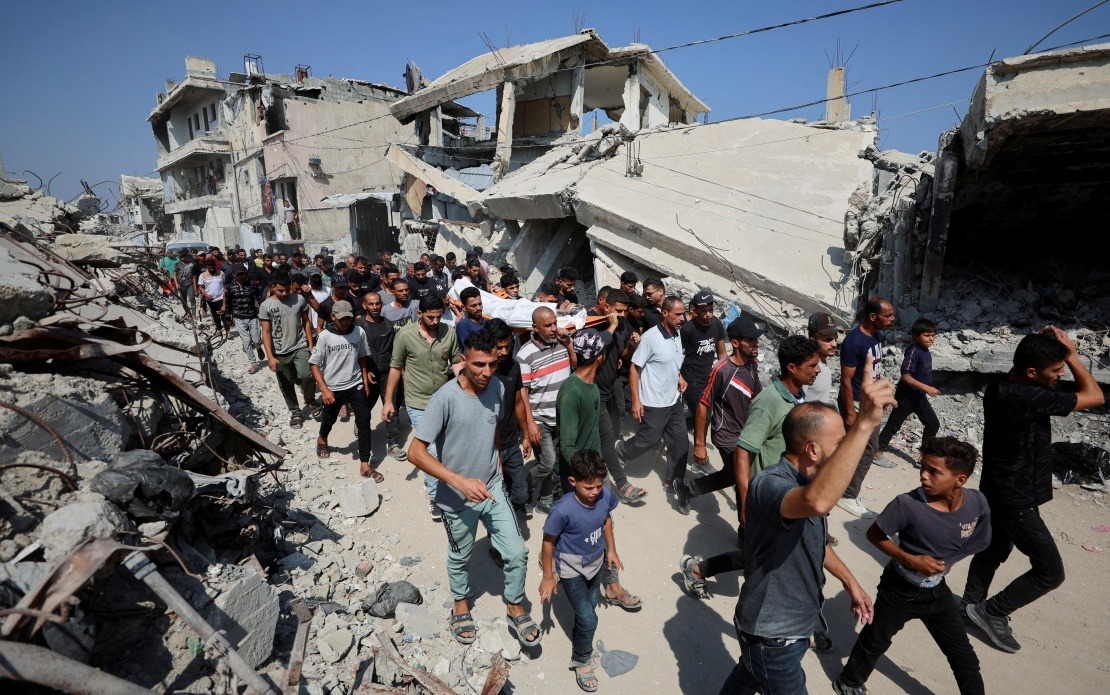
Doctors Without Borders (MSF) has launched a scathing critique of the Israeli military's decision to close investigations into the deaths of its staff members and their families in Gaza without initiating any criminal proceedings. The humanitarian organisation's statement, delivered on Thursday in Istanbul, represents an escalation in tensions between the international medical organisation and Israel over accountability for casualties occurring during military operations in the Palestinian enclave since October 2023.
The closure of these cases comes after nearly two years of MSF's persistent efforts to secure independent investigations into a series of incidents. The organisation had previously escalated its complaint to Israel's High Court of Justice, citing the Military Advocate General's repeated failure to respond to formal petitions requesting accountability and due process. This administrative closure, according to MSF, represents a fundamental abandonment of investigative responsibility rather than a thorough examination of the circumstances surrounding each death.
Central to MSF's grievance is the allegation that the Israeli military possessed detailed information about the organisation's presence and operations in Gaza, yet staff and civilians connected to the organisation continued to face lethal attacks. MSF has emphasised that identifying markers for its personnel were shared directly with Israeli forces and that its vehicles bore clear markings indicating their humanitarian mission. This information sharing, the organisation argues, makes the subsequent deaths inexplicable if proper precautions were genuinely observed during military operations.
One particularly notable incident involved the November 2023 attack on an MSF convoy that resulted in the deaths of two individuals related to staff members. Among those killed was Alaa Al Shawa, who held dual status as a volunteer supporting MSF medical operations at the Al-Shifa Hospital. The February 2024 attack on an MSF shelter located in Khan Younis proved equally devastating, resulting in the death of an MSF staff member's wife and daughter-in-law while injuring six others, the majority of whom were women or children.
The broader toll on medical personnel in Gaza underscores the humanitarian catastrophe unfolding in the territory. MSF has confirmed that fifteen of its own staff members have been killed by Israeli forces since the conflict's intensification in October 2023. This figure, while significant for the organisation, represents merely a fraction of the estimated 1,700 healthcare workers who have lost their lives during the same period. The decimation of Gaza's medical workforce has severely compromised the territory's capacity to provide basic health services to an increasingly desperate civilian population.
MSF's condemnation extends beyond specific incidents to encompass systemic deficiencies within Israel's military justice framework. The organisation argues that allowing the military to investigate itself has demonstrably failed to produce meaningful accountability or deterrence against potential violations that may rise to the level of war crimes. This internal review mechanism, in MSF's assessment, cannot substitute for genuine, independent scrutiny by impartial international bodies with the authority to examine patterns of conduct and impose meaningful consequences.
The timing and context of this closure carry particular significance for regional observers monitoring accountability mechanisms in the Middle East. Malaysia, as a nation actively engaged with international human rights frameworks and a member of organisations committed to humanitarian principles, has demonstrated consistent concern regarding accountability for civilian casualties in conflict zones. The MSF statement reflects growing frustration among established international humanitarian organisations at the apparent absence of legal recourse within existing Israeli institutional structures.
MSF has explicitly linked the case closures to what it characterises as ongoing genocide against Palestinians in Gaza, suggesting that the decision reflects broader patterns of systematic evasion of accountability rather than isolated administrative determinations. The organisation contends that there exists no military objective sufficiently compelling to justify the wholesale targeting or indiscriminate harm to civilian populations, including humanitarian workers engaged in life-saving medical activities.
According to Gaza's Health Ministry, the humanitarian situation continues deteriorating at an alarming rate. Daily casualty figures remain exceptionally high, with ten Palestinians killed and twenty-five wounded over a recent twenty-four-hour period. Since October 2023, cumulative deaths have reached 73,417 individuals, with an additional 174,360 people sustaining injuries of varying severity. Palestinian health authorities further report that Israeli actions involving alleged truce violations have resulted in 1,283 additional deaths and 4,248 injuries, highlighting the contested nature of ceasefire arrangements and the continued exposure of civilians to lethal force.
For Southeast Asian nations including Malaysia, this development raises pertinent questions regarding the effectiveness of international legal frameworks in addressing accountability gaps during armed conflicts. The MSF case illustrates the limitations of relying upon national military justice systems to investigate allegations involving state military forces, a challenge that extends beyond the immediate Israeli-Palestinian context. The closure of investigations without criminal proceedings sets a troubling precedent regarding the feasibility of securing justice for victims of military violence, particularly when affected individuals lack direct political representation or military capability.
The humanitarian imperative underlying MSF's protest cannot be divorced from the strategic implications for future military operations and the incentive structures they create. When organised violence against clearly identified humanitarian workers proceeds without criminal investigation, the deterrent effect against such violence diminishes substantially. This dynamic threatens not only established international humanitarian organisations like MSF but also the broader principle that medical personnel operating in conflict zones merit specific protection under international humanitarian law.
Moving forward, the resolution of this matter may depend upon mechanisms operating outside Israel's military justice system. International bodies such as the International Criminal Court or United Nations-mandated investigation commissions represent potential avenues through which MSF and affected families might pursue accountability. However, the Israeli government's historical resistance to international jurisdiction over its military operations suggests that achieving such external review will require sustained pressure from international civil society, regional governments, and humanitarian advocates.

