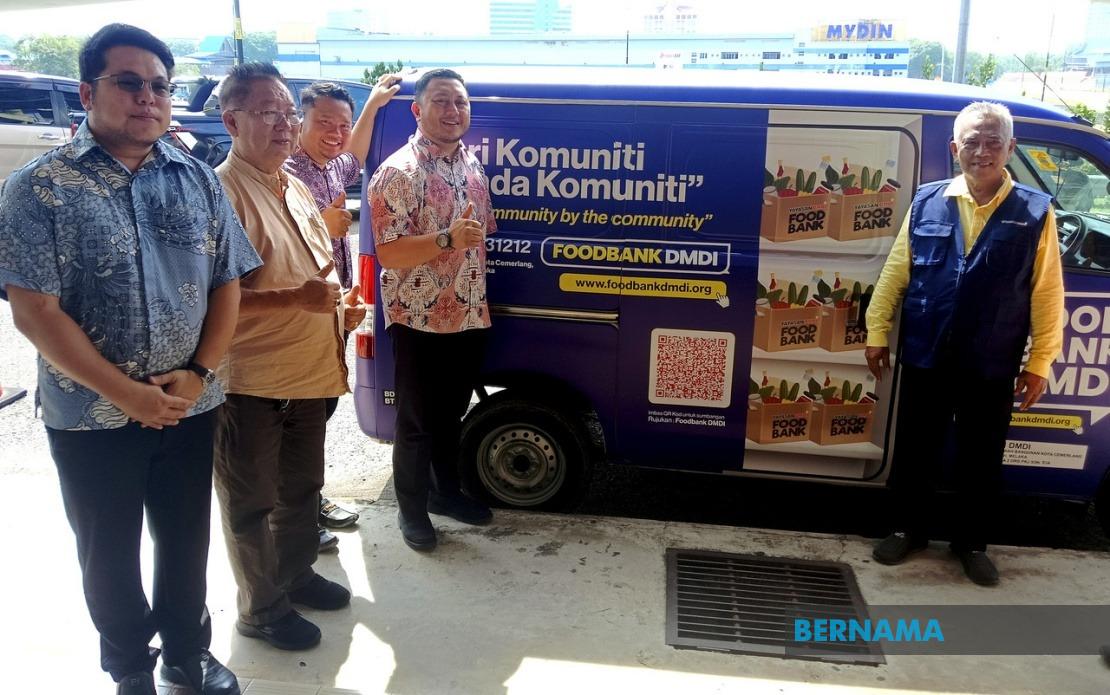
The Dunia Melayu Dunia Islam (DMDI) Foundation has unveiled an ambitious food security initiative designed to address poverty and hardship across Melaka, with plans to distribute monthly food kits to 2,000 vulnerable families over a twelve-month period. The scheme represents a phased approach to poverty alleviation, beginning with 200 families in the opening phase before methodically expanding to encompass the full 2,000-household target. According to Datuk Mohd Ridhwan Mohd Ali, who chairs the foundation, the Food Bank DMDI programme reflects a strategic commitment to easing the financial pressures faced by Melaka's most disadvantaged residents.
The foundation has deliberately structured its intervention to reach multiple categories of need. The beneficiary profile encompasses the chronically poor, individuals within the asnaf classification system—which designates the eight categories of individuals eligible for Zakat assistance under Islamic law—persons with disabilities who face employment barriers and reduced earning capacity, single mothers navigating systemic economic vulnerability, and households with irregular or unstable income streams. By casting its net across these overlapping populations, DMDI acknowledges the multifaceted nature of contemporary poverty and recognises that vulnerability extends beyond simple income metrics to encompass structural disadvantages and care responsibilities.
The operational mechanics of the programme demonstrate careful attention to equitable distribution and community validation. Rather than imposing externally determined eligibility criteria, DMDI leverages relationships between community leaders and vulnerable households, inviting local figures to nominate candidates based on intimate knowledge of neighbourhood conditions. These recommendations then proceed through formal screening by the Food Bank committee, establishing a two-tier verification process that balances grassroots insight with institutional accountability. This hybrid approach guards against both arbitrary exclusion and the potential for patronage distortion that might accompany purely top-down targeting mechanisms.
Each monthly food kit contains essential staples calibrated to provide nutritional basics and reduce the proportion of household budgets consumed by groceries. The contents remain unspecified in available details, but such programmes typically include rice, cooking oil, preserved proteins, legumes, and other non-perishable items that form dietary foundations across Malaysian households. The provision of consistent monthly supplies creates predictability in household budgeting, allowing recipient families to redirect resources from food security toward other necessities including education, health care, and housing maintenance that poverty often forces into secondary consideration.
The timing and scale of the initiative reflect both immediate humanitarian need and the practical constraints of charitable implementation. Rather than attempting to serve all 2,000 families simultaneously—an approach that would risk overwhelming operational capacity and straining supply chains—DMDI has adopted a managed expansion that permits quality control and logistical refinement during early phases. This graduated rollout, commencing in July with an initial 200 families, allows the foundation to identify and resolve procedural inefficiencies before scaling to full capacity.
Financial support for the programme has begun accumulating through donations from corporate and individual contributors. The foundation received food supplies valued at RM16,000 from donors for immediate distribution to programme participants, demonstrating the early responsiveness of Melaka's business community and philanthropic networks to the initiative. This initial commitment signals confidence in DMDI's implementation capacity and the perceived legitimacy of the foundation's approach to poverty alleviation.
Recognising the digital transformation of charitable giving, DMDI has established an online portal at www.foodbankdmdi.org where members of the public can contribute with donations as modest as RM1, effectively removing financial barriers to participation and aggregating small contributions into meaningful collective support. This accessibility-oriented fundraising model democratises the capacity to assist, enabling working-class Malaysians to participate in poverty relief alongside corporate donors. The foundation is simultaneously pursuing approval from the Inland Revenue Board (LHDN) to issue tax exemption certificates to contributors, a measure that would particularly incentivise donations from higher-income individuals and corporations while demonstrating the programme's institutional credibility through regulatory recognition.
Beyond the structured monthly assistance programme, DMDI maintains capacity for emergency response to sudden humanitarian crises. The foundation distributes food kits on an ad hoc basis to disaster-affected populations, including families displaced or impoverished by flooding events—a recurring challenge across Malaysia's monsoon season and increasingly frequent extreme weather incidents. This adaptive operational framework recognises that poverty is not static; disaster-triggered vulnerability demands rapid, flexible responses that transcend pre-planned beneficiary registers.
The Food Bank DMDI initiative reflects broader Southeast Asian trends in addressing poverty through collaborative, digitally-enabled platforms that leverage community knowledge while maintaining institutional oversight. For Malaysian readers, the programme illustrates how philanthropic foundations can scale social assistance by beginning modestly and expanding methodically, a model potentially replicable across other states and sectors of need. The emphasis on community validation rather than purely bureaucratic targeting offers lessons for government agencies designing social safety nets, suggesting that local embeddedness and expert verification need not be mutually exclusive approaches.
For Melaka specifically, the initiative addresses a recognised gap in targeted poverty support, directing resources toward households whose precarious economic circumstances often exclude them from government assistance schemes that impose income thresholds or documentary requirements. Single mothers, informal-sector workers, and individuals with disabilities frequently fall through institutional cracks despite meeting objective poverty criteria. By prioritising these populations, DMDI fills an important complement to government welfare provision while mobilising charitable resources toward systemic vulnerability rather than episodic crisis response.
The programme's success will likely be measured not merely in the number of families assisted but in demonstrable impacts on food security, household financial stability, and participants' capacity to invest in education and human development. The twelve-month assistance period provides a meaningful intervention window—substantial enough to produce measurable improvements in family circumstances yet structured to encourage transition toward economic self-sufficiency rather than indefinite dependency. As the foundation advances from pilot phases toward the 2,000-family target, the operational experience accumulated may yield insights valuable for other charitable and government initiatives seeking to calibrate poverty relief in Malaysia's increasingly complex social landscape.

