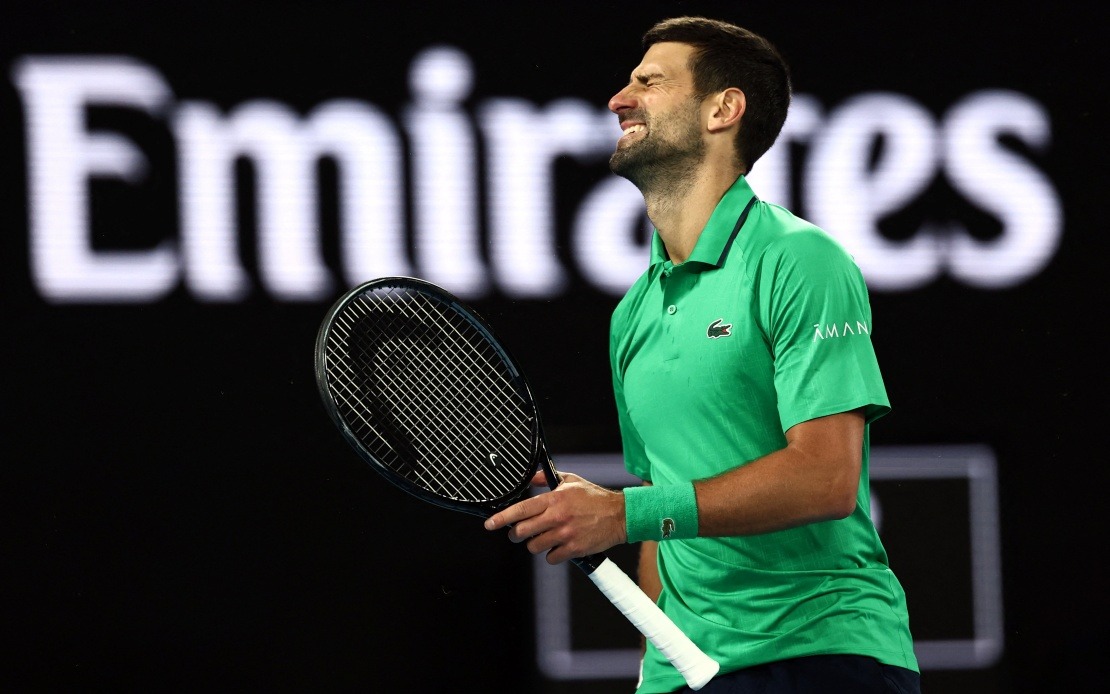
At the All England Club, Novak Djokovic has achieved a significant milestone in tennis history by matching the legendary Roger Federer's record of 105 men's singles match victories at Wimbledon. The Serbian champion dispatched France's Arthur Rinderknech over three compelling hours on Centre Court, claiming a 7-5, 6-4, 1-6, 7-6 (7-4) victory to book his passage into the fourth round on Friday. The achievement marks the 18th occasion on which Djokovic has reached the final 16 at the sport's oldest major championship, underscoring his enduring dominance on grass.
At 39 years old, Djokovic demonstrated the resilience and mental fortitude that have defined his extraordinary career, recovering from a third-set dip to secure victory in a tiebreaker. His seven Wimbledon titles place him among the tournament's greatest champions, yet the competitive fire remains undimmed. In characteristic fashion, the multiple Grand Slam record holder responded to his historic accomplishment with characteristic humour, proposing a head-to-head match between himself and Federer to determine who would claim the honour of reaching 106 wins. Yet beneath the levity lay genuine reflection on the magnitude of such longevity at sport's highest echelon.
The significance of Djokovic's record extends beyond mere statistics. For Malaysian and Southeast Asian tennis enthusiasts, the achievement represents a masterclass in sustained excellence across two decades of professional competition. Djokovic's continued presence at major championships into his fifth decade challenges conventional wisdom about athletic longevity and peak performance windows. His ability to compete at the highest level while managing the physical and mental demands of the professional tennis circuit offers broader insights into sports science, training methodologies, and psychological resilience.
Djokovic's path toward a potential eighth Wimbledon title remains uncluttered for now, as he prepares to face Russian qualifier Roman Safiullin in his fourth-round encounter. The draw has avoided pitting him against fellow top seeds until the later stages, presenting a theoretical opportunity to advance deep into the competition. His historical significance in the sport extends to his record as a 24-time Grand Slam champion, a distinction that underscores his superior claiming of major championships compared to his legendary rivals. Each tournament appearance carries implications for his ultimate ranking among tennis's immortals.
In the men's competition, defending champion Jannik Sinner demonstrated the form that propelled him to the number one ranking, dispatching American Jenson Brooksby with clinical efficiency through a 6-4, 6-3, 6-4 scoreline. The Italian's dominance extended his perfect record in third-round Grand Slam encounters to 20 consecutive victories, a remarkable open era benchmark for male players navigating the tournament's middle stages. Sinner's ascendancy in tennis represents a generational shift, with younger players now challenging the traditional dominance of established champions. For regional audiences, Sinner's rise signals that the sport remains dynamic and capable of producing fresh talent even as legends like Djokovic continue competing at elite levels.
The women's championship has developed its own compelling narrative, with world number one Aryna Sabalenka systematically progressing through her half of the draw. The Belarusian's defeat of former French Open champion Jelena Ostapenko by a decisive 6-4, 6-4 margin demonstrated the superior power and court positioning that has established her among tennis's elite performers. Sabalenka's quest for a first Wimbledon title carries significance for emerging Eastern European players seeking to claim major championships on grass, traditionally a surface where her aggressive playing style must adapt to subtle tactical requirements.
The prospect of a fourth-round meeting between Sabalenka and Japanese superstar Naomi Osaka promises to captivate global audiences and carries implications for both competitors' seasons. Osaka's commanding 6-1, 6-3 victory over Daria Kasatkina marked her first appearance in a Wimbledon fourth round, representing a career milestone for the four-time Grand Slam champion. For Malaysian followers of women's tennis, Osaka's resurgence after her mental health hiatus has provided a compelling redemption narrative, demonstrating that top athletes can successfully navigate personal challenges and return to championship contention.
Sabalenka's characterization of Osaka as another aggressive, powerful opponent reflected the elevated quality expected in major championship matchups. The psychological dimension of facing an opponent with comparable athleticism and tournament experience cannot be understated. Both competitors have demonstrated the capacity to elevate their performance under pressure and against elite opposition. Their impending clash represents more than an individual match; it reflects broader themes about how professional athletes manage expectations, pressure, and the pursuit of excellence on sport's grandest stages.
The tournament's progression has reinforced the notion that Wimbledon remains unpredictable despite the dominance of seeded players. Qualifier Safiullin's advancement to face Djokovic embodies this unpredictability, offering hope to emerging competitors that major championship breakthroughs remain possible even against world-class opposition. For Malaysian sports enthusiasts with aspirations in professional tennis, such stories validate the belief that pathway opportunities exist for determined competitors willing to navigate the demanding qualifying tournaments preceding major championships.
As the tournament enters its second week, the interplay between established champions and rising talents will continue shaping narratives around tennis's future direction. Djokovic's achievement of equalling Federer's Wimbledon record represents a bookend moment in tennis history, acknowledging both the Swiss maestro's legacy and the Serbian champion's extraordinary career longevity. Meanwhile, Sabalenka and Osaka's collision course offers audiences insight into the competing styles and temperaments defining contemporary women's tennis at the elite level. These developments collectively demonstrate why Wimbledon maintains its status as tennis's most prestigious and narratively compelling major championship.

