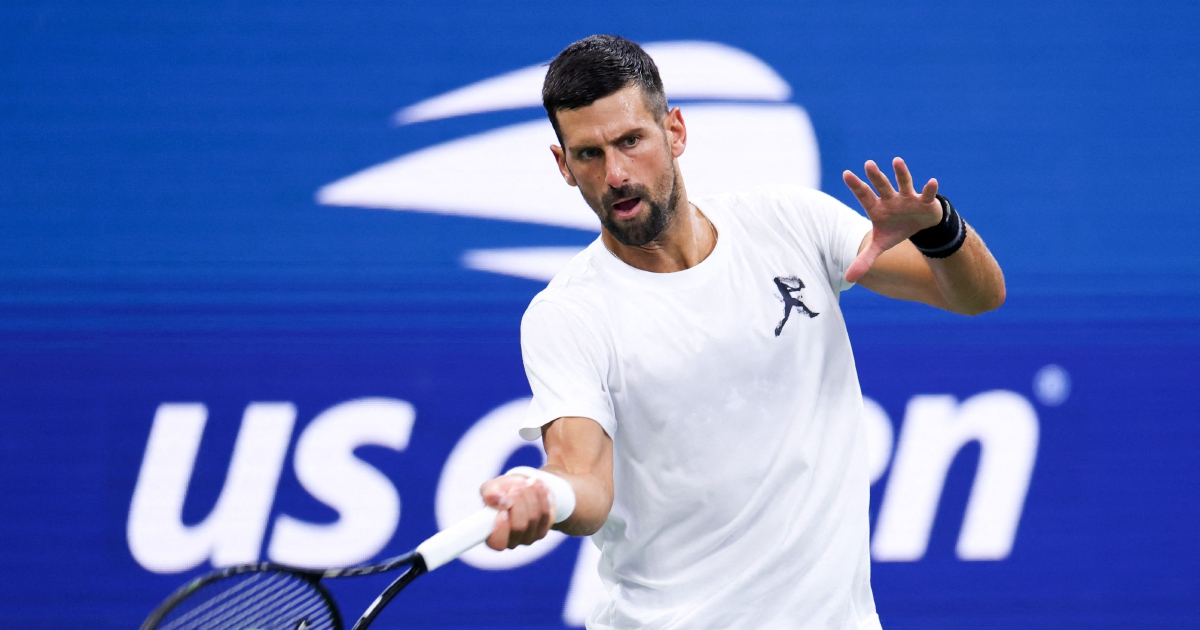
Novak Djokovic arrives at the US Open with unfinished business. Since the Serbian champion claimed his last Grand Slam victory at this venue in 2023, he has been singularly focused on achieving a milestone that would redefine tennis greatness: winning his 25th major title. That triumph brought him level with Margaret Court's seemingly untouchable record of 24 Grand Slam championships, a barrier many believed would never be breached. Now, nearly two years into his quest, Djokovic remains convinced that the record is within reach.
The significance of this pursuit extends far beyond statistics. In the modern era of professional tennis, where physical demands have intensified and competition has deepened, matching Court's achievement already represented an extraordinary accomplishment. Yet Djokovic's determination to move beyond 24 reflects the relentless competitive drive that has defined his career since he first captured a Grand Slam title in 2008. At an age when most elite athletes contemplate retirement, he continues to prepare with the discipline and intensity of a player still hungry for his first major.
Djokovic's preparation for this US Open demonstrates his unwavering commitment to the pursuit. The defending champion has maintained a rigorous training regimen and competed strategically in the lead-up tournaments to fine-tune his game. His experience at Flushing Meadows, where he has won four times previously, provides both familiarity with the courts and psychological advantage. The hard court surface of the US Open suits his game particularly well, allowing him to employ the aggressive baseline tactics and serve-and-volley combinations that have terrorised opponents throughout his career.
The storyline carries profound implications for Malaysian and Southeast Asian tennis fans. Djokovic's pursuit of record-breaking achievement serves as an inspiration to athletes across the region who dream of competing at the highest echelons of sport. His longevity and sustained excellence challenge conventional wisdom about athletic decline with age, demonstrating that champions can maintain their competitive edge through dedication and meticulous preparation. For young players developing their games in Malaysia and throughout Asia, Djokovic's example illustrates that consistency and mental fortitude matter as much as raw talent.
Historically, the record books have long belonged to Court, whose 24 major titles stood as the benchmark for greatness for decades. When Roger Federer reached 20 Grand Slams in 2018, the tennis world marvelled at this achievement. Rafael Nadal's subsequent chase of the record intensified the drama, ultimately reaching 22 major titles. Djokovic's ascension past both rivals to equal Court's record marked a generational shift in tennis dominance. The next milestone would represent not merely another trophy, but confirmation of his place as the greatest player tennis has ever witnessed.
The competition Djokovic faces at the US Open remains formidable. Young stars including Jannik Sinner, who recently captured two major titles, and Carlos Alcaraz, already a Grand Slam winner in his early twenties, represent the new wave challenging for supremacy. These emerging champions bring fresh physicality and aggression to the court, yet Djokovic has repeatedly demonstrated his capacity to overcome younger, hungrier competitors through tactical mastery and experience. His ability to read patterns, adapt strategy mid-match, and elevate performance in crucial moments provides advantages that cannot be taught.
Mentally, Djokovic enters this tournament with the psychological armor built through decades of competing on tennis's biggest stages. He understands the pressure that accompanies being the favourite in a Grand Slam event. He has navigated the expectations, the scrutiny, and the crushing disappointments that inevitably arrive when pursuing records. Whether past experiences at Flushing Meadows provide comfort or constraint remains an intriguing narrative thread. Previous losses at venues where he has tasted victory before can sometimes haunt champions, creating mental barriers that prove more difficult to overcome than physical fatigue.
For the broader tennis community, Djokovic's continued presence at the sport's summit keeps the narrative of his legacy in constant flux. Each tournament he plays represents both an opportunity and a deadline in his own mind. The window for capturing that 25th title, while still likely remaining open for another year or two, gradually narrows with each season. This awareness lends urgency to his preparation and intensity to his mindset. He approaches each match with clarity about what is at stake.
The US Open itself carries special resonance in Djokovic's quest. The New York venue, with its vibrant atmosphere and demanding conditions, has repeatedly tested his resilience. The hard courts demand explosive movement and powerful striking, qualities that Djokovic possesses in abundance. His previous victories here demonstrate his capability to elevate his game precisely when the stakes climb highest. Whether this edition of the tournament will be the stage where he finally etches his name alone atop the all-time Grand Slam winners list remains one of tennis's most compelling narratives heading into the season.

