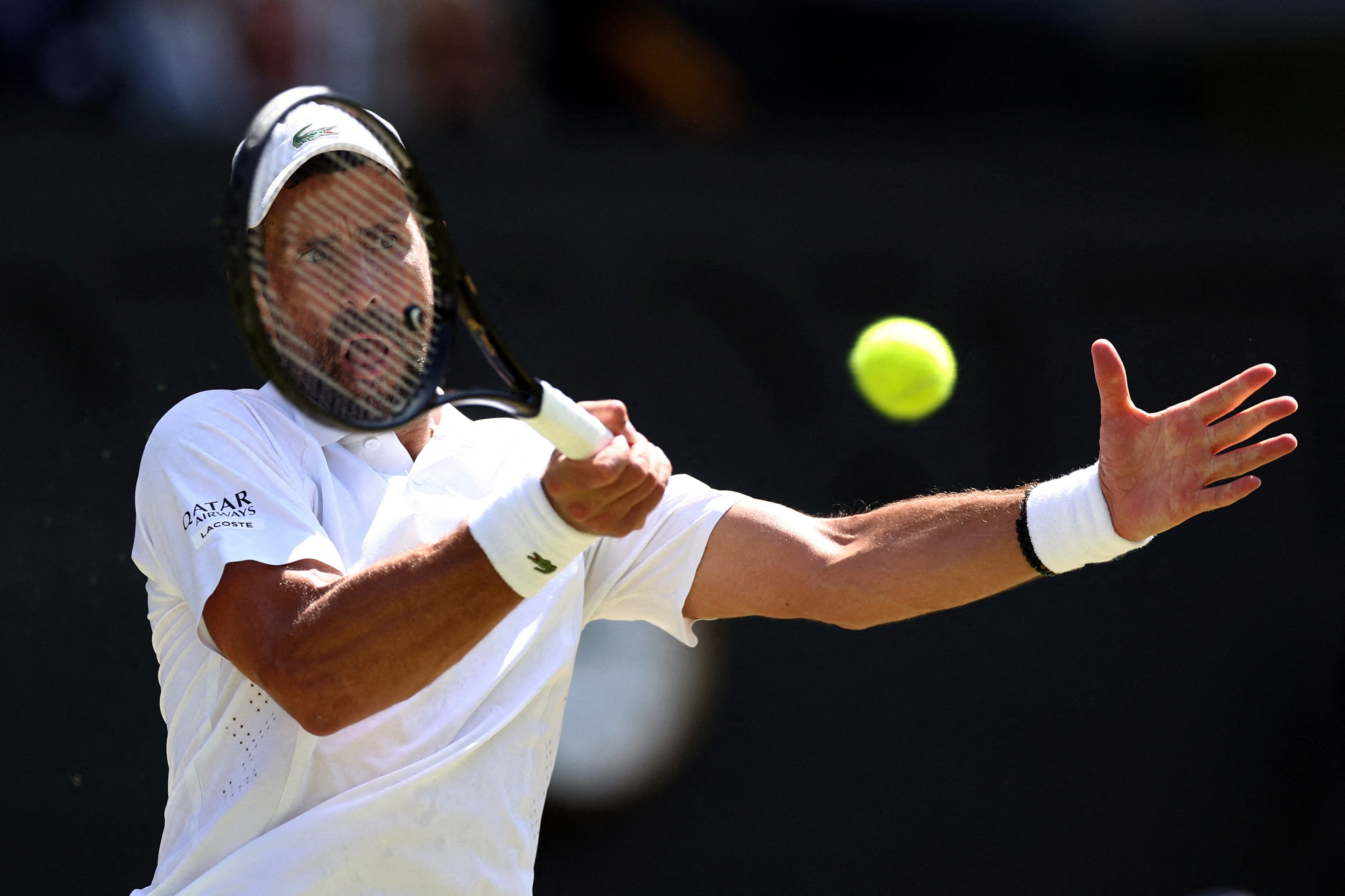
Novak Djokovic's remarkable run at Wimbledon this year deepened on July 8 when the 39-year-old Serbian clinched a spot in the semifinals after an exhausting five-hour-and-15-minute battle against Canada's Felix Auger-Aliassime. The encounter proved to be the longest quarterfinal match in the tournament's storied history, stretching the physical and mental limits of both competitors and concluding just six minutes before the 11pm curfew that governs play on Centre Court. His scoreline of 7-6 (12-10), 3-6, 6-3, 6-7 (4-7) 7-6 (10-4) now guarantees him a semifinal confrontation with defending champion Jannik Sinner, one of the tournament's standout performers this fortnight.
What distinguished this quarterfinal beyond its sheer length was the dramatic confrontation that erupted between Djokovic and tournament referee Denise Parnell midway through the contest. The flashpoint occurred at 7.40pm when the match had just returned to level terms at one set apiece, and Parnell approached the court to inform the players that Centre Court's retractable roof would be closed due to deteriorating light conditions. Rather than accepting this decision passively, Djokovic launched into a heated protest, questioning the consistency of the tournament's roof protocols and expressing frustration at what he perceived as arbitrary enforcement of the rules.
The Serbian star's argument centred on the notion that sufficient daylight remained to complete another entire set without artificial cover. He pointed to his own first-round encounter against Wu Yibing as evidence that the roof protocols had been applied flexibly on other occasions, noting that on that day the referee had permitted play to continue outdoors until approximately 8.20pm or 8.30pm. Djokovic's underlying concern appeared tactical as well as principled, given that Auger-Aliassime, at 25 years old, has established himself as a formidable player under indoor conditions, whereas Djokovic traditionally thrives in natural daylight on grass courts. His frustration boiled over into direct criticism of Parnell, sarcastically commenting on the tournament's pride in its rulebook while simultaneously appearing to disregard those very regulations.
Parnell's justification for the roof closure drew from recent Wimbledon history and a desire to prevent operational complications. She referenced Sinner's fourth-round match against Shintaro Mochizuki, during which the roof had required closure mid-set because natural light had become insufficient for proper match continuation. This precedent, she explained, guided her decision to close the roof proactively rather than risk a similar disruption. Djokovic's response to this reasoning was characteristically unbending, essentially dismissing the circumstances of another player's match as irrelevant to the current situation. His declaration that he did not care about the scheduling implications for Sinner's match reflected the intensity of the moment and the high stakes of reaching a Grand Slam semifinal at his advanced age.
The broader context of this dispute lies in the physical toll that such extended matches impose on aging professional athletes. At 39 years old, Djokovic was already competing at an age when most elite tennis players have retired or significantly reduced their schedules. The match itself presented physiological challenges beyond its duration, as Djokovic required medical attention during the first set when he appeared to sustain a minor injury to his left calf. The grimacing expression visible with each serve during that opening tie-break suggested genuine discomfort, yet he powered through to secure the set in a marathon tiebreak and ultimately recover his movement patterns as the match progressed. The tension surrounding the roof closure thus carried implications not merely about fairness in competition but about whether Djokovic's body could withstand five additional sets in outdoor conditions versus the strain of continuing under closed-roof conditions.
The quality of play fluctuated throughout the encounter, reflecting the demanding nature of such prolonged competition. Auger-Aliassime, seeded third at the tournament, had demonstrated exceptional consistency throughout the fortnight, surrendering his service game only once prior to this quarterfinal. Djokovic's breakthrough finally came when he managed to break the Canadian's serve to love, positioning himself to clinch the third set. The fourth set followed a predictable pattern of mutual breaks before reaching a tiebreak, which Auger-Aliassime secured convincingly, extending the match into a fifth-set decider. What transpired in that fifth set amounted to another gruelling duel, ultimately resolved through a first-to-10-points tiebreak that determined Djokovic's advancement to the next round.
The closing stages of this match revealed Djokovic's psychological resilience and his ability to find reserves of mental fortitude when physical resources begin to deplete. Television viewers witnessed Djokovic celebrating his victory with an intensity that reflected not merely the significance of reaching a Grand Slam semifinal but the profound relief of having survived one of the most demanding quarters of tennis at this stage of his career. Post-match, he offered reflections that underscored the emotional and nervous tension that permeates such tightly contested affairs. Djokovic acknowledged having relied not only on his technical racquet skills but on the capacity to manage his nerves and channel the extreme psychological tension inherent in matches where margins of victory narrow to single points in tiebreak situations.
For Malaysian and Southeast Asian tennis enthusiasts, Djokovic's continued presence in the latter stages of Wimbledon carries particular significance given his stature as one of sport's greatest competitors and most dominant figures across multiple decades. His approach to competition—characterised by meticulous attention to tactical detail, willingness to challenge authority when he believes principles are at stake, and an almost defiant refusal to concede matches even from seemingly disadvantageous positions—has influenced generations of professionals throughout the region. The confrontation with Parnell, while controversial, illustrated Djokovic's conviction that grand competitions should adhere to transparent and consistently applied regulations, a principle that resonates with audiences who value fairness in sport.
The semifinal encounter against Sinner promises to provide an intriguing stylistic contrast and a stern examination of Djokovic's capacity to sustain elite performance across multiple matches in succession. Sinner represents a newer generation of tennis excellence, commanding superior court speed and employing a power-based game that differs markedly from Djokovic's defensive acuity and movement economy. Should Djokovic overcome the defending champion and advance to the final, questions about his physical condition and recovery capacity between matches will become increasingly relevant. His own post-match observation—expressing a preference for an immediate final to avoid worrying about how his body would respond after one additional day of recovery—carried a poignancy that acknowledged the genuine uncertainties surrounding his fitness trajectory as he continues competing at the sport's highest level well into his fifth decade.

