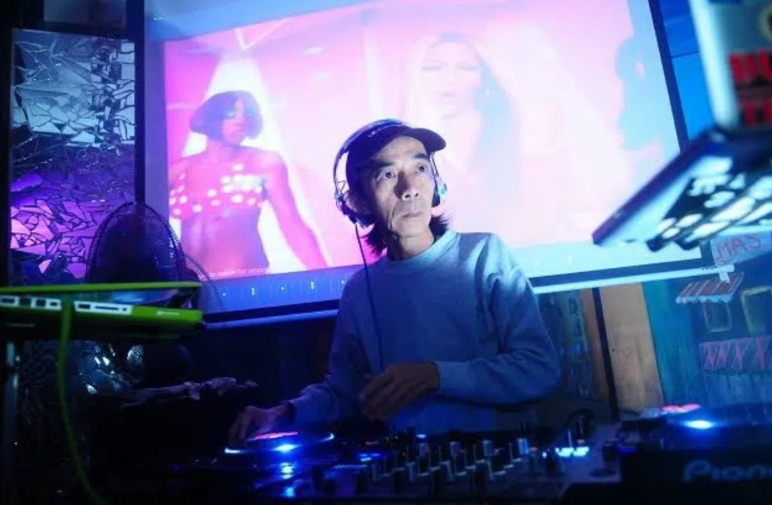
Singapore's underground music scene has lost one of its defining figures with the death of Andrew Chow, widely recognised as DJ Wiz, who succumbed to stomach cancer on August 3 at the age of 63. His passing marks the end of an era for Southeast Asia's clubbing community, as Chow stood among the earliest and most influential architects of hip-hop and turntablism culture across the island nation. The loss reverberates not only through Singapore's music circles but across the broader regional entertainment landscape, where his innovations and mentorship shaped multiple generations of DJs and producers.
Chow's artistic credentials were formidable and extensively documented across two transformative decades. Throughout the 1990s and into the early 2000s, he claimed three consecutive victories in the DMC Singapore competition, establishing himself as the region's pre-eminent turntablist. His technical prowess extended internationally when he captured the Singapore title in the 1998 Technics World DJ Championships, a globally recognised benchmark of mixing excellence. These accolades reflected not merely technical proficiency but a deep artistic understanding of how to manipulate sound and rhythm in ways that moved audiences and influenced peers.
The venue most closely associated with Chow's legacy was the original Zouk on Jiak Kim Street, where he maintained a residency from the mid-1990s through the early 2010s. This posting proved consequential for Singapore's entertainment infrastructure; Zouk evolved into the island's most influential nightclub franchise and a regional entertainment institution. As a resident performer, Chow helped define the sonic identity of the space and attracted audiences seeking authenticity and technical mastery. Within Zouk's structure sat Phuture, a dedicated hip-hop room where Chow's influence became particularly concentrated, creating what observers now recall as an irreplaceable cultural touchstone.
Kavan Spruyt, founder of the contemporary venue Rasa and himself a stalwart of Singapore's nightlife evolution, offered testament to Chow's artistic impact through personal memory. Spruyt recounted experiences as a younger club-goer witnessing Chow perform during the big beat era of the late 1990s, describing those encounters as transformative experiences that shaped his own trajectory in the industry. The descriptor "invincible during his prime" captures not merely technical supremacy but a wider cultural authority—Chow represented authenticity and mastery to audiences hungry for genuine expression in an increasingly commercialised entertainment landscape.
Chow's influence extended equally into mentorship and knowledge transfer, according to fellow veteran DJ Eddie Chan, who performs as DJ Small and maintained a friendship spanning four decades. Chan characterised Chow as simultaneously teacher, brother, and innovative force who maintained encyclopaedic knowledge across multiple musical genres while maintaining faultless execution at the mixer and turntables. This combination of pedagogical commitment alongside uncompromising artistic standards became increasingly rare as commercial pressures transformed nightclub culture, making Chow's dual role as both performer and educator particularly valuable to the community he served.
The broader Southeast Asian context matters considerably for understanding Chow's significance. Singapore's position as the region's economic and cultural hub meant that trends and talent originating there often permeated throughout Malaysia, Thailand, Indonesia, and beyond. Chow's pioneering work in establishing hip-hop and turntablism as legitimate artistic pursuits—rather than mere background accompaniment—contributed to raising standards and expectations across the region's entire club circuit. His international competition success brought international prestige to Singapore's music scene during a period when Asian DJ culture remained underrepresented in global competitions.
Chow's final public appearance came on May 24 at a DMC Warm-Up Battle event held at local club Kossa, where he served simultaneously as judge and performer. This dual role reflected his evolved status within the community—no longer solely pursuing competitive honours but contributing to the ecosystem's institutional development and nurturing emerging talent. The recognition he received within competitive frameworks was intended to culminate in September when he would have accepted the DMC Legacy Award at the DMC Singapore event scheduled for September 6 at Rasa. This honour specifically recognises lasting contributions to the art form, acknowledgment that came tragically too late for Chow to witness.
DJ KoFlow, the stage name of Wayne Liu, articulated how Chow's legacy transcends conventional mortality, existing in the methodologies, inspirations, and cultural attitudes now embedded within Singapore's contemporary hip-hop infrastructure. Liu emphasised that Chow's dedication to cultivating authentic hip-hop culture through masterful DJing and turntablism created permanent alterations to the region's artistic landscape. These contributions manifest not in monuments but in the continued practice of DJs who studied his techniques, absorbed his philosophy, and perpetuated standards of excellence he embodied.
The family's funeral arrangements reflected Chow's personality and artistic ethos. His daughter, Abby Chow, age 27, explicitly requested that attendees dress in "colourful and stylish" attire rather than traditional mourning clothes, characterising her father as fundamentally a "cool guy" whose life should be celebrated through joy rather than solemnity. This approach revealed how Chow's influence extended into his personal relationships and family values, transmitting his creative sensibility and rejection of unnecessarily rigid social conventions to the next generation. The wake was held at Block 406 Ang Mo Kio Avenue 10, with cremation scheduled at Mandai Crematorium Hall 4 on August 8 at 5pm.
Abby's social media tributes demonstrated the widespread affection Chow commanded across his community. She expressed gratitude for the "sweet and touching messages" that flooded in following his death, noting that Chow would have appreciated knowing how deeply people valued his contributions. This public outpouring suggested that his impact extended well beyond the relatively small community of professional DJs into the broader universe of music enthusiasts, dancers, and cultural participants whose formative experiences unfolded within spaces he shaped.
The loss arrives at a moment when Singapore's nightlife and music industries continue navigating significant structural transformations. The closure of the original Zouk location marked the end of a particular era in the island's cultural geography, and Chow's passing reinforces the sense that an entire generation of pioneering figures is transitioning out of active participation. Yet simultaneously, Chow's pedagogical legacy and the institutional frameworks he helped establish through competitions and mentorship networks persist, suggesting that his influence will continue shaping Singapore's music culture for decades to come, even as the original practitioners fade from direct engagement.

