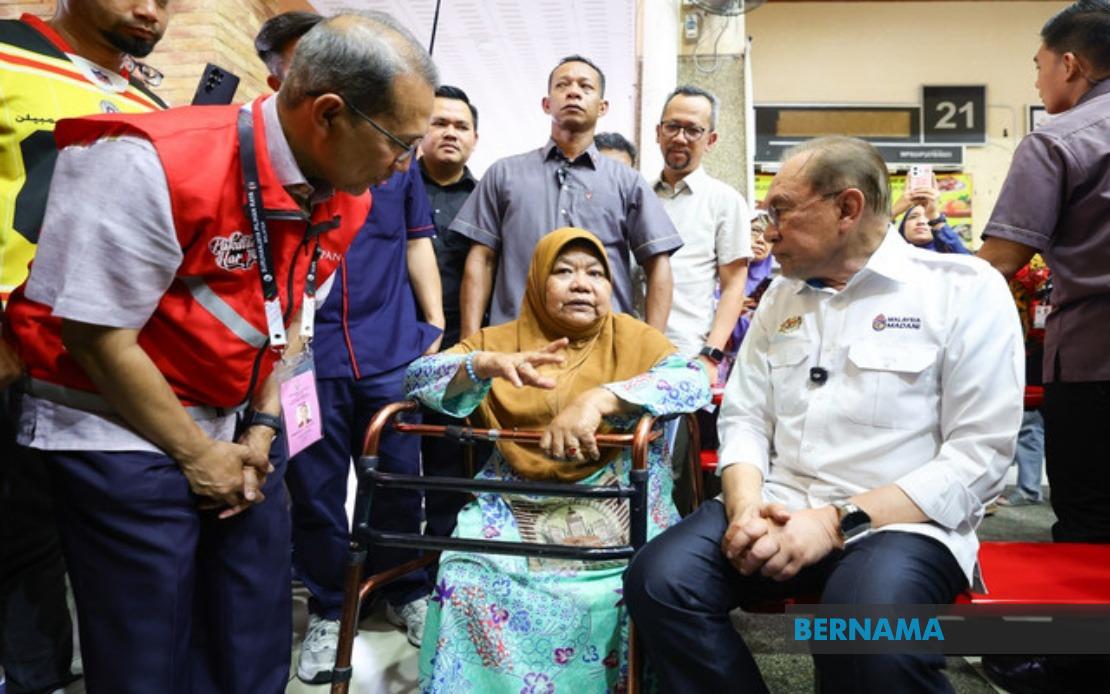
Jumaah Mohd Alif, a 68-year-old person with disabilities, defied inclement weather and physical challenges to ride her three-wheeled motorcycle from Kampung Gedung Lalang to Benteng Ampangan in Seremban on July 22. Her determination was driven by a singular objective: to meet Prime Minister Datuk Seri Anwar Ibrahim in person, a moment she had long cherished as an unfulfilled aspiration.
Jumaah's journey to this encounter bears the weight of personal resilience. She lost her left leg in an accident three and a half decades ago, a circumstance that has defined much of her adult life. Despite this significant mobility constraint, she made the decision to brave drizzling rain and navigate the roads on her adapted vehicle, underscoring the profound importance she attached to this meeting. For her, the prospect of standing before the country's leader represented far more than a ceremonial interaction; it embodied a deeply personal milestone.
When villagers informed her on the previous day that the Prime Minister would be present in Ampangan to campaign for the Pakatan Harapan coalition, Jumaah seized what she saw as a rare opportunity. Her decision to venture out immediately, despite the wet weather conditions, reflects the urgency with which she viewed this chance. She had previously only glimpsed Anwar from a distance or watched him on television broadcasts, and the prospect of direct engagement seemed improbable until that moment presented itself.
Anwar's visit to Negeri Sembilan was part of a broader political strategy to energise Pakatan Harapan's campaign efforts in the state election contest. As both Prime Minister and chairman of the coalition, his presence carried significant symbolic weight for party supporters and undecided voters alike. The timing of his campaign tour coincided with the escalating activities in what observers recognised as a critical electoral period for the state.
For Jumaah, the realisation of her dream extended beyond the mere act of meeting her nation's leader. The encounter represented validation of her continued participation in civic and national life despite her physical limitations. She articulated hopes that the government would maintain and strengthen its commitment to supporting the welfare of vulnerable populations, particularly elderly citizens and persons with disabilities who often find themselves marginalised in policy discussions.
The significance of Jumaah's story resonates within Malaysia's broader conversation about disability inclusion and accessibility. Her initiative to travel independently, even under challenging conditions, highlights both the determination of many individuals with disabilities and the underlying gaps in infrastructure and support systems that require such exceptional effort. Persons with disabilities in Malaysia continue to navigate a landscape where accessible transportation and public facilities remain inconsistently implemented, making journeys like Jumaah's noteworthy achievements rather than routine occurrences.
The incident also underscores the personal connections that political figures can forge with citizens during campaign periods. For Jumaah, this brief interaction promised to reshape her personal narrative, transforming a lifelong distance between ordinary citizen and national leader into a moment of recognition and direct engagement. Such encounters, when they occur, often reinforce citizens' sense of connection to their government and democratic processes.
Negeri Sembilan's state election campaign had already entered a critical phase by late July, with the Election Commission scheduling early voting for July 28 and polling day for August 1. The contest represented an important test for Pakatan Harapan's ability to consolidate support at the state level, building on its federal government status. Campaign activities intensified across constituencies as parties mobilised supporters and attempted to convert undecided voters.
Jumaah's presence at the campaign event, and her willingness to overcome physical obstacles to participate, embodied a form of grassroots engagement that political parties frequently highlight during electoral campaigns. Her story became part of the broader narrative surrounding the election, illustrating how political campaigns create spaces where ordinary citizens, regardless of circumstances, can attempt to bridge distances with national leadership.
The broader context of disability representation in Malaysian politics remains an area requiring sustained attention. While visible participation by persons with disabilities in political events attracts positive media coverage, systemic barriers affecting this demographic group extend far beyond symbolic moments of political engagement. Employment discrimination, inadequate social welfare provisions, and persistent accessibility challenges continue to constrain the life opportunities of many individuals with disabilities across the country.
Jumaah's determination and Anwar's receptiveness to meeting her during campaign activities reflects an ideal of inclusive political engagement. However, the exceptional nature of her story—the newsworthiness deriving largely from the remarkable effort required—paradoxically highlights how unremarkable such participation ought to be. In a genuinely accessible society, a woman with disabilities attending a political event would warrant no special comment.
As the Negeri Sembilan election proceeded toward its conclusion, stories like Jumaah's contributed to the broader electoral narrative, demonstrating various intersections between personal aspiration, political process, and democratic participation. Her three-wheeled motorcycle journey through the drizzle became more than a logistical feat; it represented a statement about citizenship, belonging, and the determination to participate fully in national life despite systemic and physical constraints.

