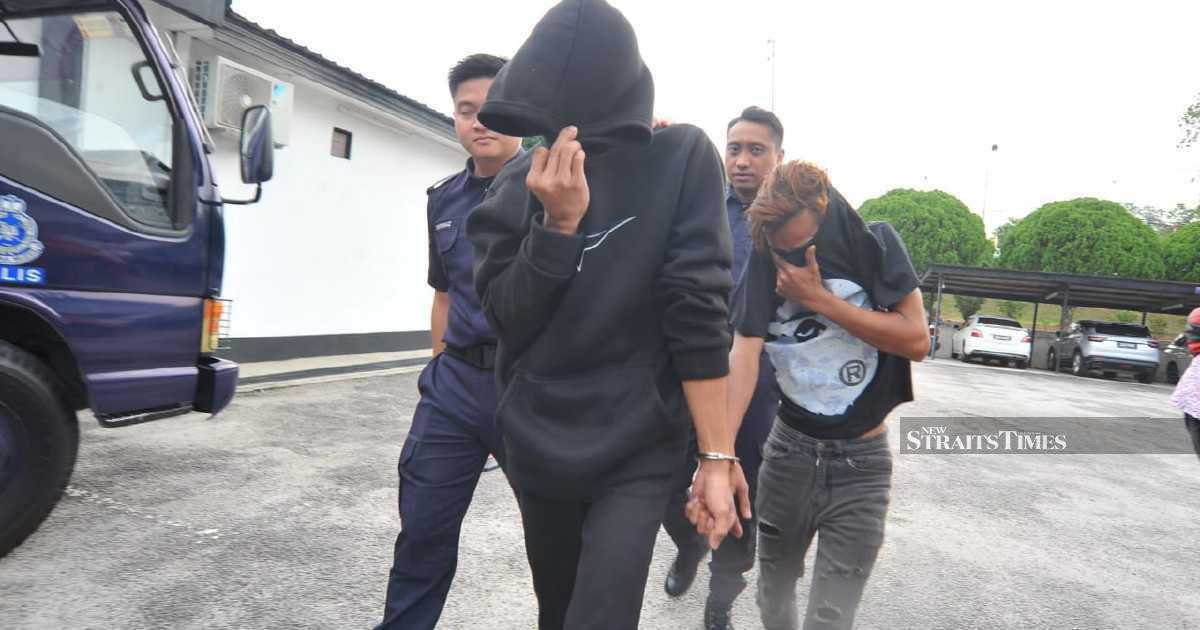
A disabled mechanic and a second man appeared before the Kulai magistrate's court on charges related to reckless and dangerous driving, stemming from what authorities allege was an illegal street race that took place on the Johor Second Link expressway last Saturday. The incident, which occurred on one of Malaysia's busier expressway corridors, has drawn attention to ongoing concerns about dangerous driving practices on major highways linking urban centres.
The case highlights a persistent problem of illegal racing activities on Malaysian expressways, despite increased law enforcement efforts and heightened public awareness campaigns. The Second Link, which connects Johor Bahru to Singapore, is a critical transport artery handling significant daily traffic volumes. Racing on such busy routes poses serious risks not only to the participants but to other road users and the general public. Authorities have intensified patrols and surveillance on expressways in recent years, yet incidents continue to occur, suggesting that enforcement measures alone may require supplementation through other interventions.
The involvement of a disabled mechanic in this case raises particular questions about how individuals with physical disabilities navigate vehicle operation and what circumstances may have motivated participation in such a high-risk activity. The charging of both individuals under reckless and dangerous driving provisions reflects the severity with which authorities treat illegal racing, recognizing the potential for catastrophic consequences when vehicles are operated at excessive speeds in inappropriate environments. These charges typically carry substantial penalties under Malaysian traffic and road transport legislation.
The Second Link expressway, inaugurated in 2008 as a crucial gateway between Malaysia and Singapore, has become a focal point for traffic regulation efforts. The route handles millions of vehicles annually, and maintaining safety standards is essential for uninterrupted commerce and personal mobility across the causeway. Incidents of illegal racing jeopardise this infrastructure's primary function and create unnecessary hazards for the commuting public. Previous enforcement operations on this corridor have yielded numerous arrests related to traffic violations, suggesting that education and deterrence require continuous reinforcement.
Mechanics and those involved in automotive trades occupy an interesting position relative to traffic law enforcement. Individuals with technical automotive expertise might be expected to possess greater awareness of vehicle safety principles and the mechanical consequences of high-speed driving. Their involvement in racing activities may therefore carry particular significance in public perception, potentially undermining the credibility of the broader profession and raising concerns about whether professional knowledge translates into responsible road behaviour. The presence of a disabled mechanic adds another dimension, inviting consideration of whether accessibility accommodations in vehicles might be compromised during racing activities.
The legal proceedings in the Kulai magistrate's court will likely establish the factual foundation for the charges, determining the specific nature of the dangerous driving involved and whether the activity constituted an organised illegal race or a spontaneous incident. The evidence presented may include traffic camera footage, witness statements, vehicle examination reports, and mobile phone data. Such cases often depend heavily on technological evidence given the difficulty of establishing intent without conclusive documentation of the racing activity itself.
For Malaysian readers and the broader Southeast Asian community, this incident reinforces the ongoing challenge of balancing personal freedoms with collective safety obligations. Despite modern vehicles' technological capabilities and road infrastructure improvements, human behaviour remains the most significant variable in traffic safety equations. The characterisation of such driving as reckless and dangerous reflects acknowledgment that speed and competition on public roads, regardless of vehicular capability, creates unacceptable risks for innocent parties.
The outcomes of this case will likely be watched closely by enforcement agencies, advocacy groups, and motoring associations. Penalties imposed will signal the seriousness with which Malaysian courts treat illegal racing, potentially influencing deterrence levels among other individuals considering similar activities. Conversely, the case also presents an opportunity for public discussion about underlying motivations for illegal racing—whether driven by thrill-seeking, automotive passion expressed dangerously, or other social factors requiring different preventive strategies.
Looking forward, this incident contributes to an ongoing conversation about road safety standards across Southeast Asia's major transport corridors. The region's rapid motorisation and economic integration create increasing demands on expressway systems, making safety maintenance increasingly urgent. Sustained efforts combining enforcement, education, infrastructure design, and public engagement remain essential for reducing preventable tragedies. The proceeding against these two mechanics will be one data point among many informing whether current approaches adequately address the problem of illegal racing on critical transport arteries.

