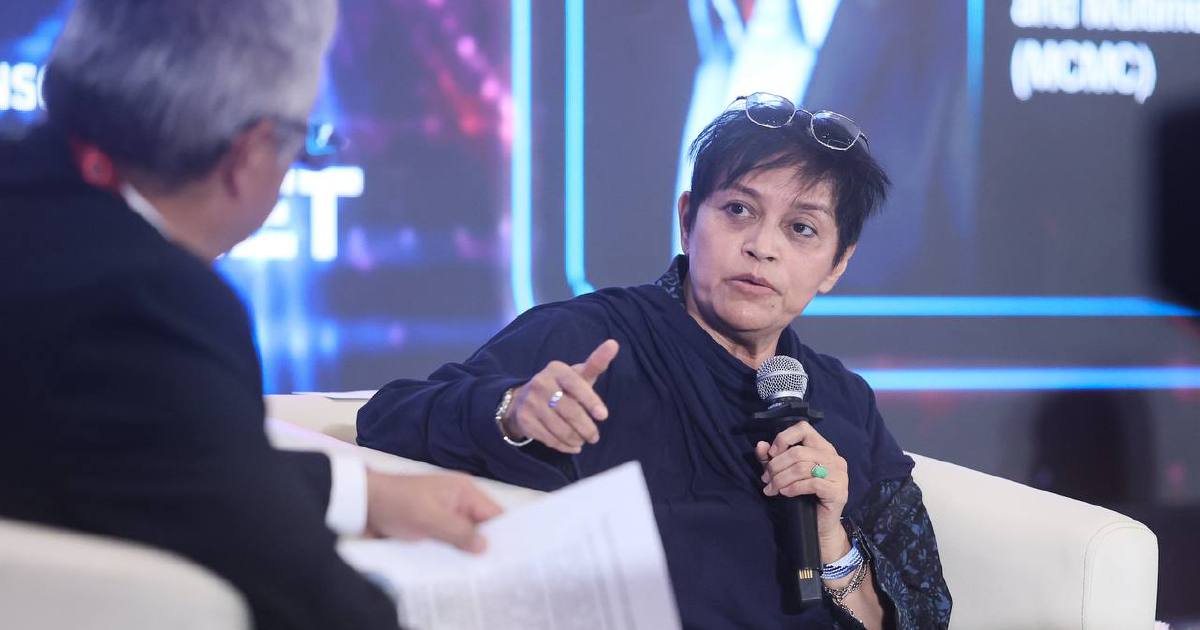
Malaysia's electoral integrity depends critically on how regulators manage the digital landscape during election campaigns, according to Datuk Seri Azalina Othman Said, the Minister in the Prime Minister's Department (Law and Institutional Reform). Speaking on the responsibilities of the Malaysian Communications and Multimedia Commission, Azalina underscored the necessity for consistent and even-handed monitoring of content circulating across online platforms throughout the voting process.
The remarks reflect growing concerns within government circles about the complex role that digital channels play in shaping public opinion during electoral cycles. Unlike traditional media, which operates under established licensing frameworks and clear editorial guidelines, the internet presents regulators with unprecedented challenges in policing multiple platforms, anonymous accounts, and rapidly evolving content formats. Azalina's emphasis on a level playing field signals awareness that without robust oversight, some political actors could gain unfair advantages through coordinated online campaigns, algorithmic manipulation, or the unchecked spread of misleading information.
The MCMC's mandate in this context extends beyond merely identifying and removing unlawful content. The commission must balance competing interests: protecting freedom of expression while preventing abuse, ensuring all political contestants operate under comparable constraints, and maintaining public confidence in the electoral process itself. During campaigns, scrutiny naturally intensifies as competing parties vie for voter attention through digital advertising, social media outreach, and grassroots mobilisation. The risk of uneven enforcement—whether intentional or unintentional—could undermine perceptions of fairness and delegitimise electoral outcomes in the eyes of losing parties and their supporters.
Malaysia's experience mirrors challenges faced across Southeast Asia and globally. Countries ranging from Thailand to the Philippines have grappled with how to regulate digital electioneering without crossing into censorship or perceived bias. The absence of clear, pre-agreed standards can create openings for accusations that regulatory action favours incumbent administrations or particular political groups. Azalina's call for consistency suggests the government recognises that public trust in elections depends partly on stakeholders believing that digital monitoring operates according to transparent, uniformly applied principles rather than ad hoc political convenience.
The proliferation of social media platforms, messaging apps, and online forums has fundamentally altered how political campaigns unfold. Traditional paid advertising in newspapers and television remains important, but grassroots mobilisation through WhatsApp groups, Facebook pages, TikTok videos, and Instagram stories now reaches voters directly and often evades conventional oversight mechanisms. This shift creates particular difficulties for regulators tasked with distinguishing between legitimate campaign speech, acceptable criticism of candidates or policies, and content that violates laws regarding sedition, religious sensitivity, or electoral conduct. The sheer volume of material generated daily makes comprehensive monitoring technically daunting without automated systems that themselves risk errors or bias.
Foreign interference represents another dimension of the digital challenge. Foreign state actors and private entities have demonstrated capacity to amplify certain narratives, create fake accounts, or weaponise disinformation to influence democratic processes. Southeast Asian nations remain vulnerable to such interference, particularly during pivotal elections. A strong, credible MCMC presence in the digital space can help counter external manipulation while signalling to the international community that Malaysia takes electoral sovereignty seriously. Azalina's emphasis on fair monitoring implicitly acknowledges that inconsistent or weak regulation invites both domestic abuse and external exploitation.
The minister's remarks also reflect institutional recognition that electoral commissions and broadcast regulators alone cannot manage digital oversight. The MCMC operates at the intersection of technical infrastructure, legal authority, and public perception. Its decisions about which accounts to investigate, which posts to remove, and which patterns constitute systematic abuse ripple across the entire political ecosystem. Establishing clear criteria for intervention beforehand—and communicating those criteria transparently to all political parties, media organisations, and the public—becomes essential for defending regulatory actions against accusations of partisanship after controversial removals.
Capacity and expertise remain persistent challenges. The MCMC requires staff trained in digital forensics, multilingual content analysis, and platform-specific dynamics to monitor effectively across YouTube, Facebook, TikTok, Instagram, and emerging platforms. Rapid staff rotation, inadequate budgets, and competition from private technology companies for talent can undermine regulatory effectiveness. Azalina's statement, while not explicitly addressing resourcing, implicitly signals that government views digital election monitoring as sufficiently important to warrant serious investment in MCMC capabilities.
Cooperation with political parties matters as well. When candidates, campaign managers, and party officials understand that digital conduct will be monitored fairly and consistently, compliance typically improves. Conversely, if stakeholders suspect selective enforcement, they become incentivised to exploit loopholes or challenge regulatory authority through litigation and public accusations. Azalina's emphasis on maintaining a level playing field invites all political contestants to accept that constraints apply universally—a message likely intended to build buy-in among parties that might otherwise resist regulatory intervention.
Looking forward, Malaysia's approach to digital election monitoring will shape not only the outcome of forthcoming polls but also broader norms around technology governance in the region. Countries watching how MCMC executes its mandate may adopt similar frameworks or learn from missteps. The minister's call for fairness thus carries significance extending beyond domestic electoral integrity; it signals Malaysia's commitment to principled governance of digital public space during contests that fundamentally determine how political power flows.

