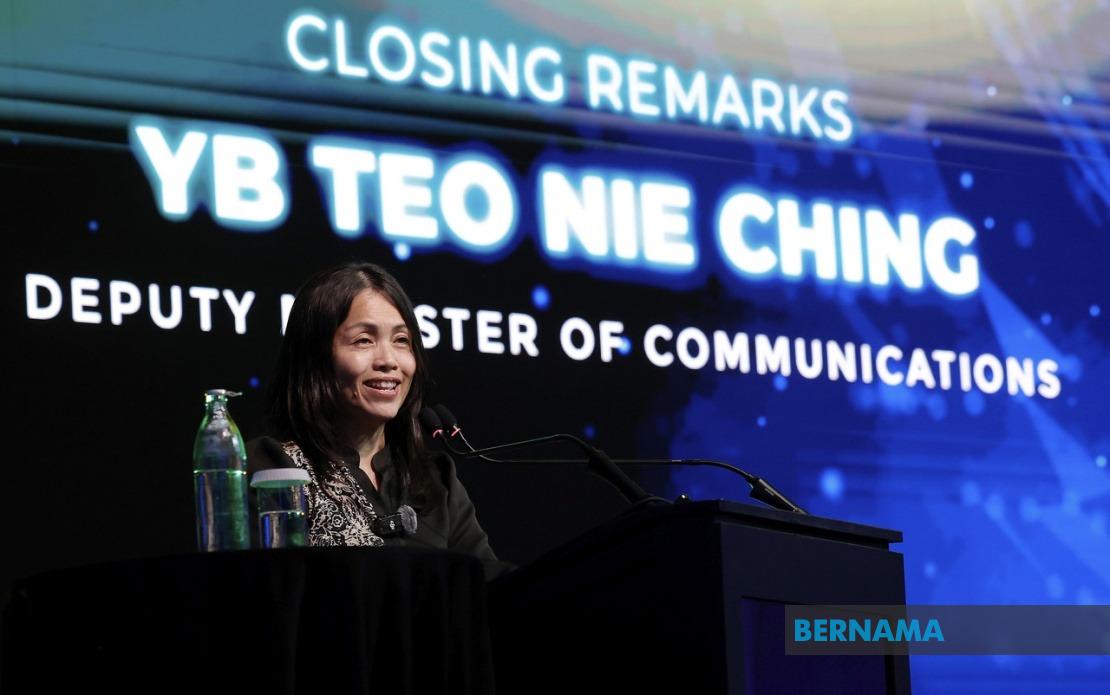
The measure of technological progress cannot be confined to processing power or algorithmic sophistication alone. Deputy Communications Minister Teo Nie Ching offered this perspective while closing the International Regulatory Conference 2026 in Kuala Lumpur, drawing attention to a more fundamental truth: citizens will ultimately judge digital systems by whether they feel safe and confident using them, not merely by how cutting-edge they are. This distinction carries profound implications for policymakers across Southeast Asia grappling with rapid technological adoption amid rising public concern over online harms.
Teo's remarks at the two-day gathering touched on an increasingly recognised tension in digital governance. The pace of technological innovation frequently outstrips the evolution of regulatory frameworks and public safeguards. She argued persuasively that technology and accountability must advance in tandem, suggesting that innovation detached from responsible stewardship will ultimately undermine public trust in digital ecosystems. This observation resonates particularly strongly in Malaysia and the wider region, where growing digital penetration has coincided with rising incidents of scams, misinformation and child exploitation.
The scale of the challenge becomes apparent when examining enforcement data. Malaysia's Communications and Multimedia Commission has been remarkably active, having issued 1.2 million content removal requests to social media platforms over the four-and-a-half-year span between January 2022 and July 2026. Of these, platform operators successfully took down 1.138 million pieces of harmful content, demonstrating both the magnitude of problematic material circulating online and the capacity of technology companies to respond when pressed. The compliance rate approaching 95 percent suggests that existing removal mechanisms function effectively when properly activated.
What is particularly striking, however, is the acceleration in recent months. From January through mid-July 2026, the MCMC issued 377,502 removal requests—nearly 78 percent of the entire 2025 annual total compressed into just 6.5 months. This translates to approximately 1,900 removal requests each day, an extraordinary operational tempo that underscores both the growing volume of harmful content and regulatory determination to address it. The platforms responded by removing 350,332 pieces of content during this same period, continuing their high compliance patterns despite the increased volume.
For Malaysian internet users and policymakers, these numbers carry important implications. The data suggests that regulatory pressure, when consistent and well-resourced, can drive meaningful compliance from global technology platforms. Yet the accelerating removal requests also hint at a concerning underlying trend: the volume of harmful content requiring intervention appears to be growing, not diminishing. This raises questions about whether current approaches can sustain pace with the problem's expansion.
Teo's framing of the challenge extended beyond enforcement metrics to governance philosophy. She contended that regulations, while necessary, cannot shoulder the full burden of protecting digital spaces. This recognition reflects a sophisticated understanding of the limitations of top-down regulation in the digital sphere, where content proliferates faster than any government agency can assess and where context and cultural nuance often matter profoundly in determining whether speech is harmful or protected.
Instead, Teo called for a collective responsibility model encompassing platforms, regulators, educational institutions, community organisations and industry stakeholders. This distributed accountability approach suggests shifting from reactive enforcement—removing content after it causes harm—to proactive design. She emphasised that safety protocols should be embedded into platform architecture from inception rather than bolted on afterwards as an afterthought. Such an approach aligns with emerging best practices in digital governance globally, though implementation across diverse platforms with conflicting commercial incentives remains contested.
The call for multi-stakeholder involvement carries particular weight in Malaysia's context. Schools face mounting pressure to equip young people with digital literacy skills that extend beyond technical competence to include critical evaluation of information sources. Communities, particularly in less urban areas where digital access is expanding rapidly, require support in understanding online risks. Civil society organisations can serve as watchdogs and advocates for user rights. Industry participants face pressure to balance innovation with responsible deployment.
Teo's remarks were delivered as the IRC, now in its third edition, convened under the theme "Shaping the Next Digital Era: Regulation, Resilience and Trust." The conference represents Malaysia's effort to position itself as a serious player in global digital governance conversations, bringing together regulators from multiple nations, technology company representatives and academic experts. The choice of resilience and trust as central themes reflects recognition that digital systems require not merely efficiency and innovation, but robustness against failures and public confidence in their operation.
The broader context matters here. Southeast Asia stands at an inflection point in its digital evolution. The region's high internet penetration rates have created both extraordinary economic opportunities and significant vulnerability to digital harms. Countries like Malaysia are developing regulatory approaches that must accommodate both domestic priorities—including combating scams, protecting children, and controlling misinformation—and international norms around free expression and cross-border data flows. Striking this balance without resorting to heavy-handed censorship or stifling innovation represents one of the defining governance challenges of this decade.
Teo's emphasis on public trust as a foundational requirement hints at a deeper truth often overlooked in technical discussions of regulation. Digital economies ultimately depend on user confidence. When citizens lose faith in online platforms' safety or fairness, they withdraw participation, diminishing the ecosystem's value. Countries that successfully build and maintain public trust in their digital systems while supporting innovation and economic growth will likely emerge as regional leaders. Conversely, those perceived as either abandoning users to harm or excessively restricting digital freedom risk lagging competitively.
Moving forward, the Malaysian approach appears to combine several elements: measurable enforcement action against specific harms, calls for platform accountability, emphasis on safety-by-design principles, and efforts to build collaborative ecosystems rather than relying solely on regulatory mandates. Whether this framework can scale effectively as digital challenges inevitably evolve will significantly shape Malaysia's digital future and potentially influence regulatory approaches across Southeast Asia.

