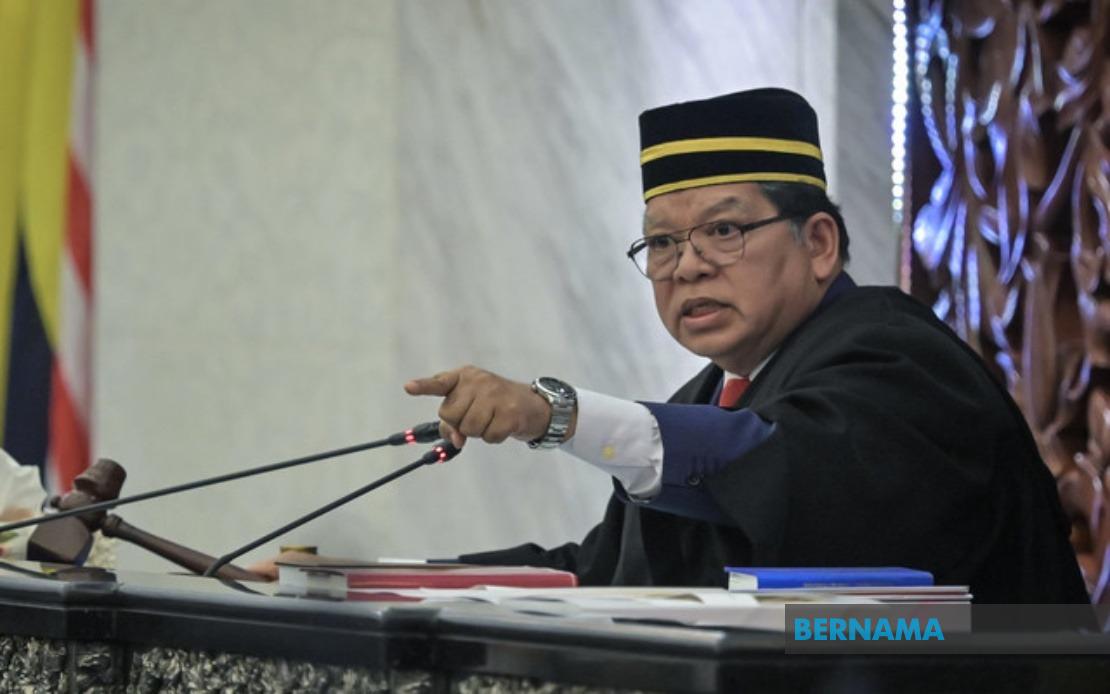
The Speaker of the Dewan Rakyat, Tan Sri Dr Johari Abdul, formally acknowledged on Monday that he had received Wong Chen's resignation letter from his position as Member of Parliament for Subang the previous day. Speaking during a Special Dewan Rakyat Sitting, the Speaker outlined the constitutional procedures that followed the submission, emphasising that the resignation had taken effect with immediate consequence. The formal notification marked the official end of Wong Chen's parliamentary tenure in the seat he had previously held.
Wong Chen had publicly announced his decision to step down through a Facebook post on Sunday, making clear that his departure from the Subang constituency was entirely voluntary. Accompanying his public announcement was a copy of the resignation notice dated August 5, which he had submitted directly to the Speaker of the Dewan Rakyat. The timing of the disclosure, coming just hours after the formal letter had been lodged, left little room for speculation about the authenticity or circumstances surrounding his decision to leave Parliament.
Following established constitutional protocol, Tan Sri Dr Johari Abdul informed the Election Commission of the resulting vacancy in the Subang parliamentary seat in accordance with Article 54(1) of the Federal Constitution. This procedural step is mandatory whenever a Member of Parliament relinquishes their seat, whether through resignation, death, or other circumstances. The notification triggers a formal process that ultimately leads to the scheduling of a by-election to fill the vacant position, a mechanism designed to ensure constituencies are continuously represented in the national legislature.
Wong Chen's departure carries significance beyond the mechanics of parliamentary procedure. As an MP representing an urban constituency in the Klang Valley, one of Malaysia's most politically sensitive regions, the Subang seat has historically been closely contested and subject to intense political scrutiny. The timing of his resignation, occurring mid-term rather than at the conclusion of a parliamentary cycle, suggests a deliberate choice rather than circumstances beyond his control.
The Subang constituency, located within Selangor, is part of a broader political landscape where representation has shifted significantly over recent election cycles. Urban constituencies like Subang have become increasingly important battlegrounds as Malaysian politics has evolved, with these areas often reflecting broader trends in voter sentiment and coalition dynamics. Wong Chen's decision to vacate the seat ahead of a general election cycle adds an element of unpredictability to calculations about the district's electoral prospects.
For political observers monitoring parliamentary dynamics, Wong Chen's resignation represents a potential realignment of forces within the Subang constituency. The by-election that will follow the Election Commission's formal announcement will provide an early test of voter sentiment and coalition strength in a key urban area. Such mid-term by-elections frequently serve as important barometers of public opinion, offering insights into whether governing coalitions maintain their support or face erosion among their base.
The constitutional framework governing parliamentary vacancies ensures that constituencies do not remain unrepresented for extended periods. Once the Election Commission receives formal notification—as it has now done—the body is obligated to determine the election date for the by-election within a stipulated timeframe. This procedural certainty provides political parties with clarity about when they must mobilise campaign resources and organise grassroots activities in the affected constituency.
Wong Chen's parliamentary career represents a particular strand of Malaysian politics that emphasises urban representation and engagement with younger, more cosmopolitan constituencies. His decision to relinquish the seat voluntarily, rather than contest it in future elections or remain until parliament dissolves, suggests a deliberate closure rather than a forced departure. Such voluntary resignations, while not uncommon in mature democracies, remain notable within the Malaysian political context where seats are typically fiercely contested.
The Subang by-election will unfold against the backdrop of Malaysia's broader political environment, where coalition dynamics remain fluid and voter preferences continue to shift. The constituency's urban character means it may attract particular attention from political strategists keen to understand whether existing coalition arrangements retain their grip on metropolitan areas. Results from such by-elections often reverberate beyond the specific constituency, influencing perceptions of broader electoral trends and informing planning for eventual general elections.
As the Election Commission processes the formal vacancy notification, political parties are likely already assessing their strategic options for the impending contest. The by-election represents both an opportunity and a risk for the sitting coalition, while simultaneously offering opposition forces a chance to test their appeal in a constituency that will be freshly contested under new circumstances. The outcome will provide valuable intelligence about voter priorities and coalition performance in one of Malaysia's most politically significant urban areas.

