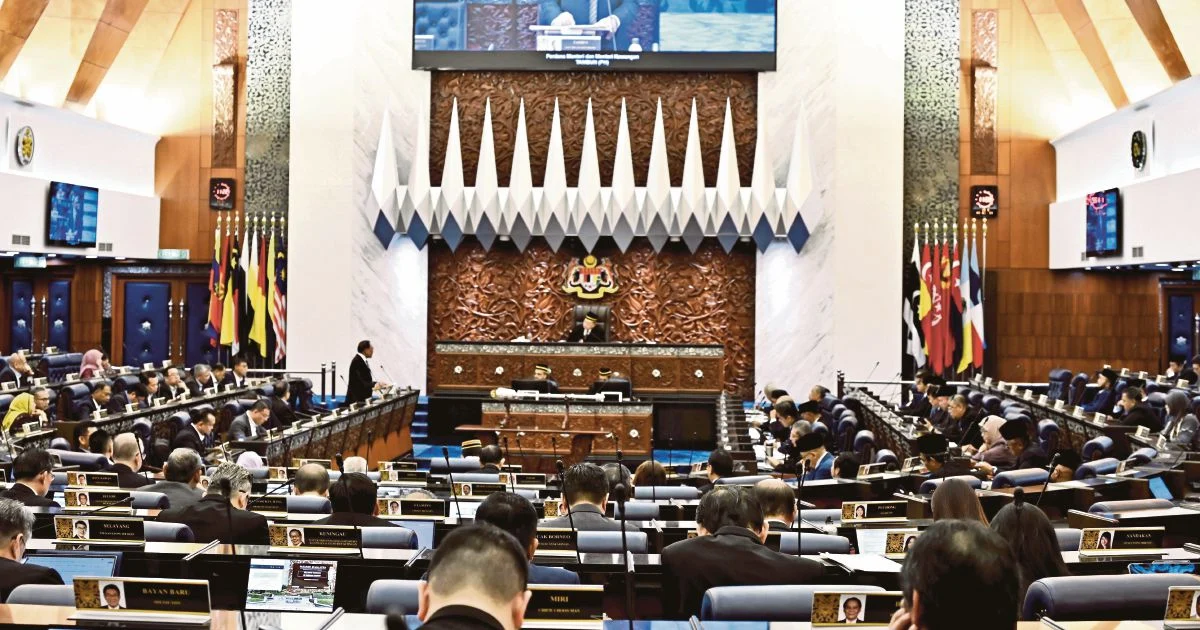
Tensions flared on the parliamentary floor during this morning's sitting as lawmakers from opposing benches locked horns over allegations of political pressure within the government's own ranks. The dispute, which centred on the relationship between PAS and Bersatu within the Perikatan Nasional framework, quickly escalated into a pointed exchange that dominated the early proceedings of the chamber.
The confrontation highlighted the simmering frictions that continue to characterise Malaysia's fractious political landscape, where the stability of governing coalitions remains perpetually tested by disagreements among constituent parties. These internal tensions, while ostensibly about parliamentary procedure and party conduct, reflect deeper anxieties about the balance of power within the Perikatan Nasional-Barisan Nasional alliance that currently controls Parliament.
Takiyuddin Hassan, a senior opposition figure, raised the matter directly, challenging what he characterised as bullying behaviour directed at Bersatu by its coalition partner PAS. His intervention triggered an immediate and forceful response from government-aligned MPs, who disputed the characterisation and turned the criticism back on the opposition for allegedly seeking to exploit divisions within the ruling coalition.
The row underscores the delicate nature of Malaysia's current political arrangement. The Perikatan Nasional-Barisan Nasional coalition has never been a particularly comfortable marriage of convenience, bringing together parties with divergent ideologies, regional strongholds, and competing leadership ambitions. PAS, with its Islamic orientation and growing parliamentary strength, contrasts sharply with Bersatu's multi-ethnic positioning and former UMNO personnel, creating a coalition of fundamentally misaligned interests.
For Malaysian observers, the exchange serves as a reminder that the government's parliamentary majority, while mathematically secure in numerical terms, remains vulnerable to defections or walkouts on contentious matters. Any further deterioration in relations between PAS and Bersatu could expose the coalition to genuine legislative challenges, particularly on matters requiring substantial support or consensus among coalition members.
The timing of the dispute, erupting within minutes of the sitting commencing, suggests that grievances have been accumulating and finally found expression at the earliest opportunity. This pattern typically indicates that behind-the-scenes negotiations have failed to resolve outstanding issues, pushing discontented parties to air their complaints publicly rather than manage them through private channels.
From a regional perspective, Malaysia's coalition instability carries broader implications. While neighbouring countries have watched the post-2022 political reshuffling with interest, continued parliamentary tensions risk projecting an image of governmental fragility precisely when regional economic challenges demand strong, coordinated policymaking. Southeast Asian investors and trading partners often view political stability as a prerequisite for economic confidence.
The opposition's exploitation of these divisions, while tactically opportune, reflects their limited ability to influence major legislation given the coalition's numerical advantage. By publicising internal coalition disputes, opposition figures can amplify the pressure on government partners and potentially persuade wavering MPs to reconsider their allegiances or voting patterns on specific issues.
Bersatu's position within the coalition remains particularly precarious. As the numerically smallest major government partner, the party faces constant pressure from larger coalition members while simultaneously maintaining the facade of united governance. Any perception that the party is being marginalised or treated unfairly could accelerate a political realignment that could prove catastrophic for the current government arrangement.
The parliamentary confrontation also reflects shifting dynamics within PAS itself. The party's growing influence within the coalition has emboldened its leadership to adopt more assertive stances on policy and parliamentary procedure, sometimes at the expense of coalition harmony. This growing confidence has not gone unnoticed by rivals, who view PAS's assertiveness as an attempt to consolidate advantages gained through successive electoral successes in recent years.
Looking forward, the nature and frequency of such exchanges will likely determine whether the current coalition can maintain sufficient cohesion through its remaining term. Should similar confrontations become routine parliamentary occurrences, they may signal a government sliding toward greater instability and reduced legislative effectiveness. Conversely, if leadership from both coalition partners can contain such disputes, the arrangement may prove more durable than recent history suggests.
The incident ultimately demonstrates that governing Malaysia remains as much about managing internal coalition rivalries as about implementing policy. With elections potentially several years distant, both government and opposition will continue seeking every parliamentary opportunity to test the limits of coalition solidarity and signal to voters their respective visions for the nation's political future.