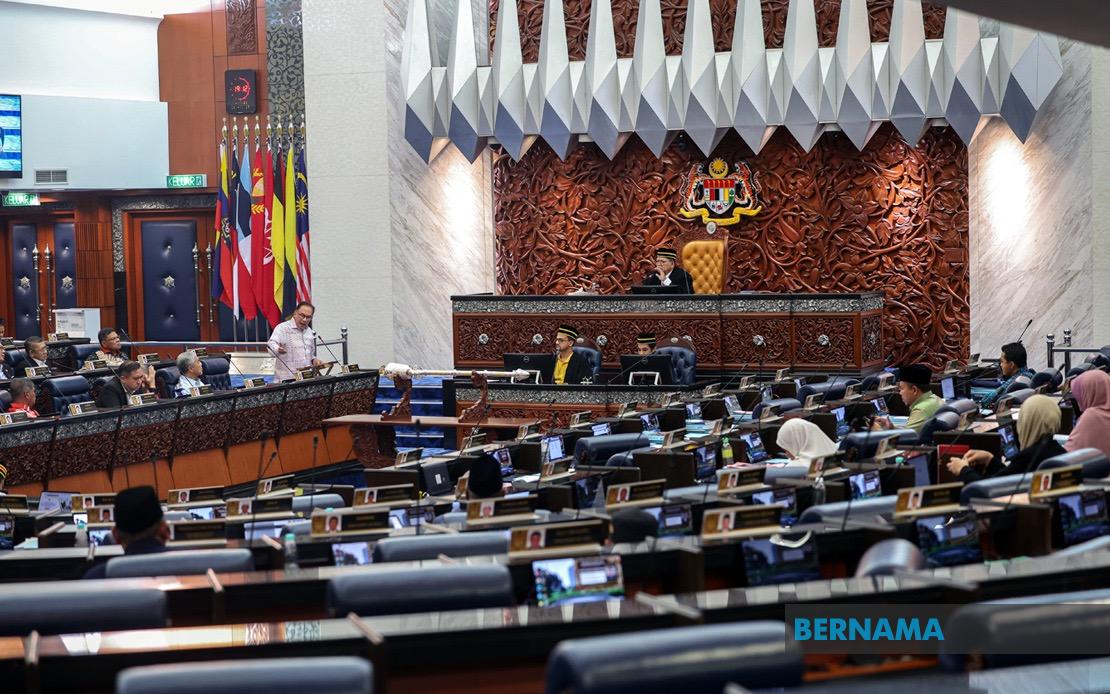
Malaysia's parliament has passed a motion to redirect RM14.5 billion in remaining proceeds from Malaysian Government Investment Issues (MGII) issued between January and May 2026 into the Development Fund. The Dewan Rakyat approved the technical resolution through majority voice vote following parliamentary debate, moving forward a key element of the government's financing strategy for the fiscal year.
Deputy Finance Minister Liew Chin Tong presented the resolution, explaining that the Development Fund draws its resources from multiple channels including transfers from the Consolidated Revenue Account and Consolidated Loan Account, repayments of earlier borrowings, and receipts from development-related activities. The mechanism represents a structured approach to separating development spending—which can be financed through borrowing—from operating expenditure, which must come from tax revenues and other government income.
The broader MGII issuance programme totals an estimated RM95 billion for the year, serving multiple financing objectives. Within this envelope, RM55 billion addresses the refinancing of MGII that have reached maturity, ensuring continuity in the government's debt management. An additional RM2 billion supports partial redemption of Malaysian Islamic Treasury Bills (MITB), shariah-compliant short-term securities that form part of the government's Islamic financing toolkit. The remaining RM38 billion contributes towards bridging the fiscal deficit anticipated for 2026, the broadest application of these funds.
Between January and May this year, actual MGII issuance reached RM40 billion. However, RM25.5 billion of that amount was earmarked for refinancing existing maturing obligations, leaving a net RM14.5 billion available for new development financing. This distinction between gross and net proceeds reflects the ongoing challenge of managing an existing debt portfolio while funding new initiatives, a dynamic that affects many emerging market governments facing similar fiscal pressures.
Under Malaysia's legal and constitutional framework, the government operates under strict constraints on how different categories of spending can be financed. Development expenditure—capital projects with lasting economic value—may be funded through borrowing, reflecting the principle that such investments can generate future returns. Operating expenditure, by contrast, must be covered entirely through revenue sources, creating a structural incentive for fiscal discipline in day-to-day government operations. This division has shaped Malaysian budget policy for decades and continues to guide financing decisions.
Liew indicated that a further transfer proposal will be brought before parliament at its next sitting, this time covering MGII issuances from June through December 2026. This staged approach allows parliament to maintain oversight of major financing decisions while providing the executive with flexibility to respond to economic conditions and market opportunities as they unfold. The sequential presentation also enables legislators to monitor how the government's borrowing programme is progressing relative to targets.
One concern raised during the debate centred on potential "crowding out" effects in Malaysia's domestic financial markets. When the government issues substantial amounts of new debt securities, there is theoretical risk that institutional investors such as the Employees Provident Fund (EPF) and Retirement Fund Incorporated (KWAP) might purchase these government instruments in preference to lending to private sector businesses, potentially constraining credit availability for corporate expansion. However, Liew countered this concern by noting that the government has been progressively reducing its year-on-year borrowing requirements over the past several years, suggesting the crowding-out risk remains manageable.
Beyond risk mitigation, Liew articulated a positive case for government securities issuance. These instruments provide essential investment vehicles for Malaysia's large institutional investors, enabling the EPF, KWAP, and other funds to deploy capital while earning returns within Malaysia's financial system. By offering such domestic investment opportunities, the government helps retain wealth within the country and supports the ringgit's stability. Without attractive domestic debt securities, substantial institutional capital might seek returns overseas, potentially exerting downward pressure on the currency and complicating monetary policy.
The approval reflects broader patterns in Southeast Asian fiscal management, where governments balance the need to finance development against concerns about debt sustainability and market health. Malaysia's approach of ring-fencing development borrowing, maintaining parliamentary oversight of major financing decisions, and carefully managing the volume of securities issued represents a middle path between minimalist fiscal conservatism and expansionary borrowing. For Malaysian observers, the decision underscores the government's intention to continue funding infrastructure and capital projects while managing fiscal discipline.
The RM14.5 billion approved for development funding will likely support transportation infrastructure, urban renewal, energy transition projects, and other capital initiatives that enhance long-term productive capacity. In the context of Malaysia's development aspirations and ongoing regional competition for investment, such spending can strengthen the country's attractiveness to both domestic and foreign investors by improving underlying economic infrastructure. The parliamentary approval process, while occasionally lengthy, ensures public accountability in how these substantial sums are deployed.
Looking ahead, the government faces the familiar challenge of balancing multiple fiscal pressures. Economic growth targets demand continued investment in productive capacity, demographic trends require enhanced social spending, and debt servicing costs consume a growing share of revenues. The MGII framework and Development Fund mechanism represent established tools for navigating these competing demands, though their effectiveness depends on prudent management of overall borrowing levels and maintaining market confidence in Malaysian government securities.

