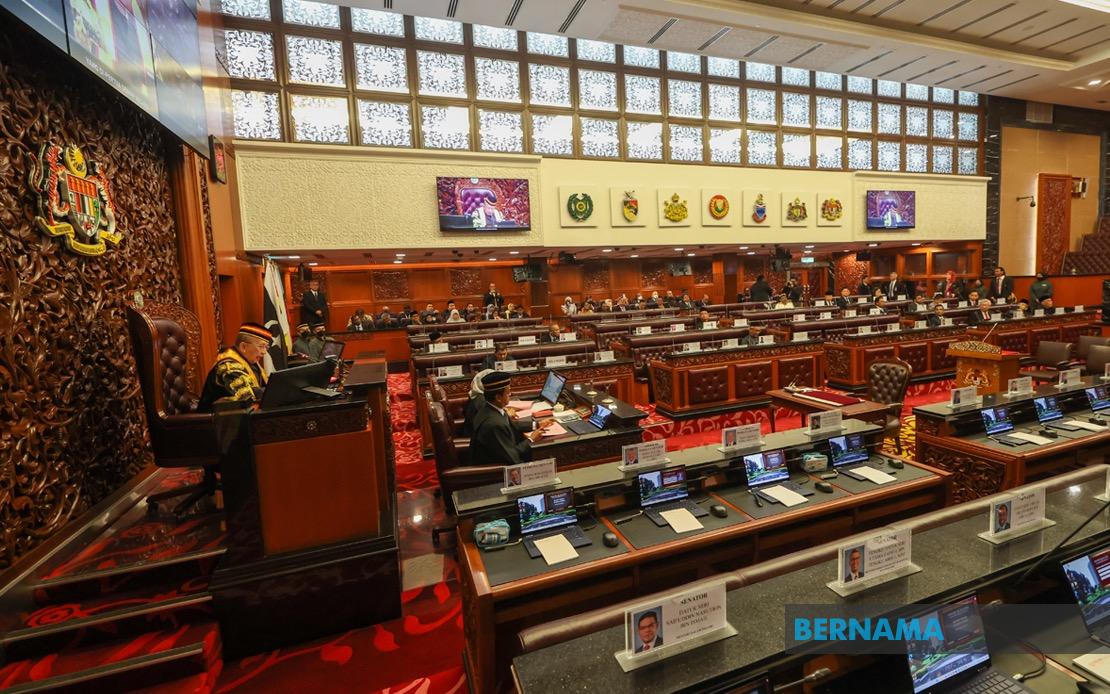
The Dewan Negara formally ended its second meeting of the fifth session of the 15th Parliament after a 10-day sitting that produced two significant pieces of legislation aimed at modernising Malaysia's governance infrastructure. The passage of the National Trust Fund (KWAN) Bill 2026 and the Statistics Bill 2026 marked substantive progress on the government's legislative agenda, with both measures designed to strengthen institutional frameworks across key economic and administrative domains. Deputy Finance Minister Liew Chin Tong championed the KWAN legislation, which seeks to impose stricter withdrawal discipline and enhance governance standards for the nation's trust fund, while Deputy Economy Minister Datuk Mohd Shahar Abdullah navigated the Statistics Bill through the chamber, establishing a modernised legal foundation for Malaysia's national statistical operations.
The sitting, which commenced on July 20, reflected broader governmental priorities extending well beyond these two bills. Legislators and government representatives engaged extensively on measures targeting fiscal sustainability, energy security, and the attraction of quality foreign investment—issues increasingly critical as Malaysia navigates regional economic uncertainties. The government utilised parliamentary proceedings to reassure stakeholders that despite geopolitical tensions affecting West Asia, Malaysia remains committed to safeguarding public welfare while maintaining sustainable growth trajectories. Specific policy interventions outlined during the session included efforts to secure essential supplies, moderate inflationary pressures, and bolster industrial competitiveness through strategic economic resilience initiatives.
A particularly notable moment emerged when Prime Minister Datuk Seri Anwar Ibrahim addressed the performance of the Retirement Fund (Incorporated) (KWAP), drawing parliamentary attention to the pension fund's reported net profit of RM12.9 billion. The Prime Minister's remarks contextualised the fund's investment in eFishery as providing instructive lessons for future capital deployment decisions, underscoring how Malaysia's sovereign wealth and pension institutions are expected to balance return generation with prudent risk management. This transparency around major institutional performance indicators reflects evolving parliamentary scrutiny of large public funds and their investment strategies, a development relevant to Malaysian investors and citizens concerned with retirement security and state asset stewardship.
The government also utilised the parliamentary session to outline Pos Malaysia's ongoing transformation strategy, emphasising network rationalisation, digital channel expansion, and stringent cost management to reverse mounting operational losses. More significantly, the administration disclosed that it is examining proposals for a dedicated Postal Service Fund to provide long-term financial support for the troubled national postal service. This signals recognition that Malaysia's postal infrastructure requires structural funding mechanisms beyond conventional budgetary appropriations, reflecting international trends toward ring-fenced financing for universal service obligations that generate limited commercial returns.
Energy security emerged as a paramount concern during the July 23 parliamentary briefing, when legislators received detailed presentations on strengthening national energy resilience. Government representatives outlined ongoing assessment of strategic petroleum reserve establishment, carefully examining fiscal costs, operational logistics, governance architecture, and international precedents. The Economy Ministry simultaneously highlighted a recently finalised 20-year fuel supply agreement with Russia encompassing petrol, diesel, crude oil, and gas, positioning this arrangement as complementary to Malaysia's National Energy Transition Roadmap (NETR) objectives. For Malaysian policymakers and energy sector stakeholders, this dual-track approach—simultaneously exploring domestic reserve capacity whilst securing long-term international supply contracts—reflects pragmatic energy strategy balancing transition imperatives with security and economic considerations.
Foreign investment announcements provided encouraging momentum during parliamentary sessions. Government officials disclosed that Japanese investments in Malaysia's electrical and electronics sector reached RM10.5 billion across 46 projects between 2021 and 2025, anticipated to generate 9,009 employment opportunities. This concentration of high-technology manufacturing investment underscores Malaysia's continued appeal to premium industrial investors despite regional competition intensifying across Southeast Asia. The projection that such investments will strengthen high-technology industrial capabilities addresses long-standing national development goals around value-added manufacturing and technological upgrading.
Economic competitiveness metrics generated discussion on July 27 when Deputy Economy Minister Mohd Shahar reported that Malaysia remains positioned to achieve placement among the world's twelve most competitive economies by conclusion of the 13th Malaysia Plan period. This projection draws support from improved rankings within the 2026 World Competitiveness Ranking, suggesting that macroeconomic reforms undertaken across recent years are generating measurable competitive improvements. The government simultaneously announced implementation of a new Performance Measurement Framework for Development Financial Institutions commencing July 1, 2027, designed to comprehensively evaluate these entities across development impact, governance quality, and operational efficiency dimensions—reflecting growing international emphasis on impact assessment beyond purely financial metrics.
The electric vehicle ecosystem featured prominently in economic strategy discussions, with the Ministry of Investment, Trade and Industry emphasising continued private-sector-led development without government price controls on public charging infrastructure. As of May 31, Malaysia had deployed 6,416 public EV chargers nationwide, indicating gradual but measurable progress toward charging network density required for mass adoption. This market-driven approach contrasts with some neighbouring economies' heavier-handed government intervention, positioning Malaysia as favouring competitive development within a supportive regulatory framework.
Fiscal management remained centred in parliamentary deliberations, with Finance Ministry reports confirming that the federal fiscal deficit had contracted for the fifth consecutive year following implementation of economic and fiscal reforms. Federal debt remained within statutory limits despite persistent global economic headwinds affecting emerging market economies. Notably, Deputy Finance Minister Liew disclosed that expenditure controls deployed during the first half of the fiscal year achieved approximately RM5 billion in spending restrictions whilst preserving critical public service delivery. This achievement demonstrates that fiscal consolidation need not invariably compromise government service quality—a finding with significance for Malaysian citizens concerned with whether austerity measures translate to service degradation.
The concentration of topics addressed during this parliamentary session reflects Malaysia's complex simultaneous navigation of multiple economic and governance imperatives. Policymakers must balance energy transition objectives against security concerns, pursue fiscal consolidation while maintaining public services, attract quality foreign investment whilst managing currency and inflation pressures, and modernise governance institutions without disrupting ongoing operations. The passage of the KWAN and Statistics bills, whilst legislatively significant, constitutes merely one component of broader governmental strategy spanning monetary policy, infrastructure development, workforce capabilities, and international positioning. For Malaysian businesses, investors, and citizens, these parliamentary deliberations signal governmental awareness of contemporary challenges and commitment to evidence-based policymaking, though execution remains the ultimate arbiter of policy effectiveness across these multifaceted domains.

