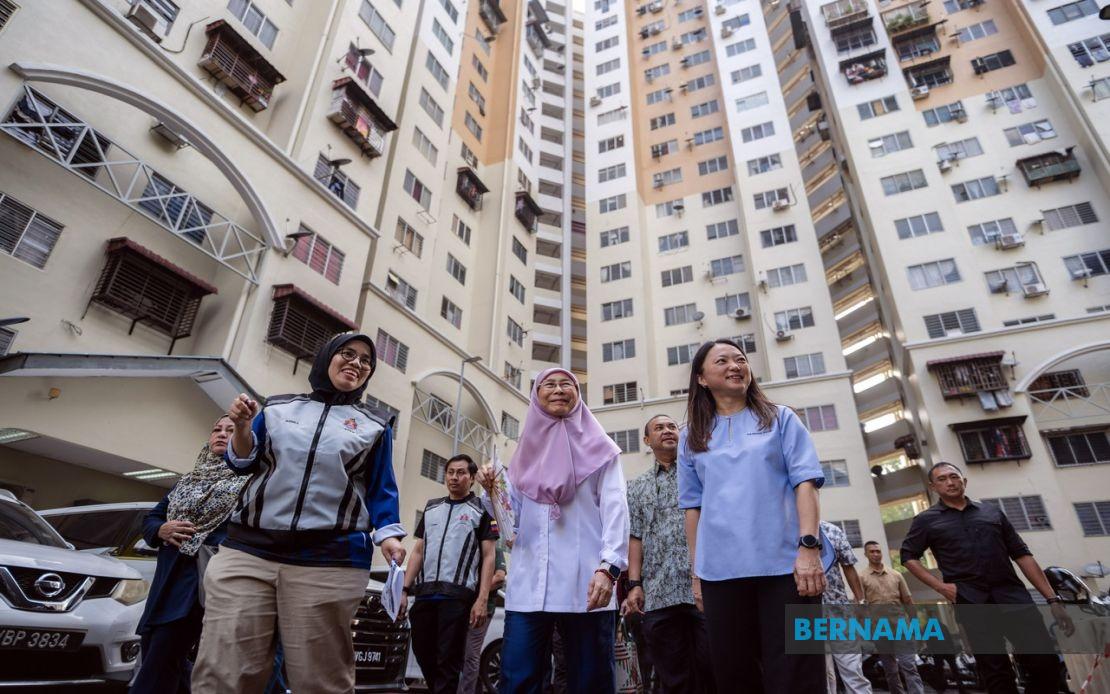
The Desa Tun Razak People's Housing Project (PPR) in Kuala Lumpur has crossed a significant milestone with the completion of its RM9.6 million upgrading programme, marking tangible progress in the federal government's broader push to revitalise public housing across the capital. The project represents one of 22 completed upgrades out of 61 scheduled across all of Kuala Lumpur's PPR facilities, signalling steady implementation of infrastructure improvements that directly affect thousands of residents living in these developments.
Minister in the Prime Minister's Department (Federal Territories) Hannah Yeoh emphasised during her inspection of the completed works that the government had earmarked an additional RM300 million this year to systematically address maintenance and enhancement needs at all PPRs in the federal territory. This budget allocation, she noted, had been collectively endorsed by all Members of Parliament representing Kuala Lumpur constituencies, reflecting a coordinated approach to housing infrastructure management rather than scattered, reactive interventions. The commitment underscores recognition that public housing developments require sustained investment beyond initial construction to maintain liveable standards for residents.
For the Desa Tun Razak PPR specifically, which has housed residents since 1998 and currently provides accommodation for more than 8,000 people, the upgrade works addressed several critical safety and maintenance concerns that had accumulated over more than two decades of operation. Yeoh articulated a fundamental principle driving this initiative: that systematic, preventive maintenance approaches must supersede ad hoc repairs, as inadequately maintained facilities inevitably compromise resident safety and quality of life. She stressed the importance of establishing dedicated maintenance funding streams rather than relying on sporadic allocations, a perspective increasingly common among urban planners and housing administrators across Southeast Asia grappling with ageing public housing stock.
The physical scope of improvements at Desa Tun Razak PPR encompassed several interconnected upgrades. Electrical wiring throughout the residential complex was systematically replaced to modern standards, a particularly important intervention given the aging infrastructure and associated fire risks inherent in older developments. Road resurfacing work brought the external environment into better condition, while fire safety facilities received particular attention following a series of fire incidents that had occurred at the PPR in the preceding year. These incidents had highlighted vulnerabilities in the existing fire prevention infrastructure, prompting authorities to prioritise safety systems as part of the comprehensive upgrade strategy.
Kuala Lumpur Mayor Datuk Fadhlun Mak Ujud provided detailed financial breakdowns of how the RM9.6 million allocation was distributed across different improvement categories. Repainting works, which provide both aesthetic renewal and protective coating against deterioration, consumed RM7 million of the total budget. Fire prevention systems and electrical wiring enhancements together accounted for RM1.68 million, reflecting the prioritisation of safety systems following the previous year's fire incidents. Road resurfacing required nearly RM1 million, while additional critical infrastructure improvements included upgrades to the fire riser system and drainage infrastructure, both essential for resident safety and environmental health.
The upgrade programme also extended to water management systems, with comprehensive drainage improvements forming part of the broader infrastructure rehabilitation. The fire riser system overhaul represented a significant investment in fire response capacity, ensuring that firefighting equipment could function effectively should emergencies arise. These complementary improvements, while perhaps less visible than aesthetic renovations, form the backbone of functional, safe residential environments. For residents of PPR facilities, such behind-the-scenes upgrades often make the greatest practical difference in daily living conditions and overall security.
Fadhlun projected that nearly all 61 PPR upgrading projects under the RM300 million allocation should reach completion by the end of the calendar year, indicating an accelerated implementation timeline. This timeline, if achieved, would represent substantial progress in addressing deferred maintenance across Kuala Lumpur's public housing portfolio. The pace of completion suggests coordination across multiple project teams and streamlined approval processes, factors that have sometimes constrained public infrastructure work in Malaysia.
Beyond completed works, the Kuala Lumpur City Hall has identified ongoing challenges requiring attention. Parking shortages at Desa Tun Razak PPR, a perennial concern at densely populated residential developments throughout Malaysia and the region, prompted the local authority to identify suitable vacant land nearby for temporary parking arrangements. This pragmatic approach to space constraints acknowledges the gap between infrastructure designed decades ago and transportation patterns in contemporary urban Malaysia, where vehicle ownership continues to rise.
Bandar Tun Razak Member of Parliament Datuk Seri Dr Wan Azizah Wan Ismail used the occasion of the upgrade completion to appeal to residents for stewardship of the improved facilities. Her emphasis on fostering a culture of property care, both public and private, reflected awareness that infrastructure longevity depends not solely on initial investment quality but on sustained resident engagement and accountability. This message carries particular importance in PPR contexts, where maintenance challenges can multiply rapidly if facilities are not actively protected by occupants, creating cycles of deterioration that ultimately undermine the government's infrastructure investments.
The Desa Tun Razak project completion reflects broader evolution in Malaysian urban governance toward structured, long-term approaches to public housing maintenance. As Southeast Asian cities grapple with ageing housing stock and growing populations, the model of dedicated maintenance funds coordinated across political constituencies offers potential lessons for neighbouring countries managing similar challenges. The success of Kuala Lumpur's RM300 million initiative will likely influence future national policy approaches to public housing infrastructure across Malaysia, particularly as developments from the 1980s and 1990s increasingly require substantial rehabilitation.

