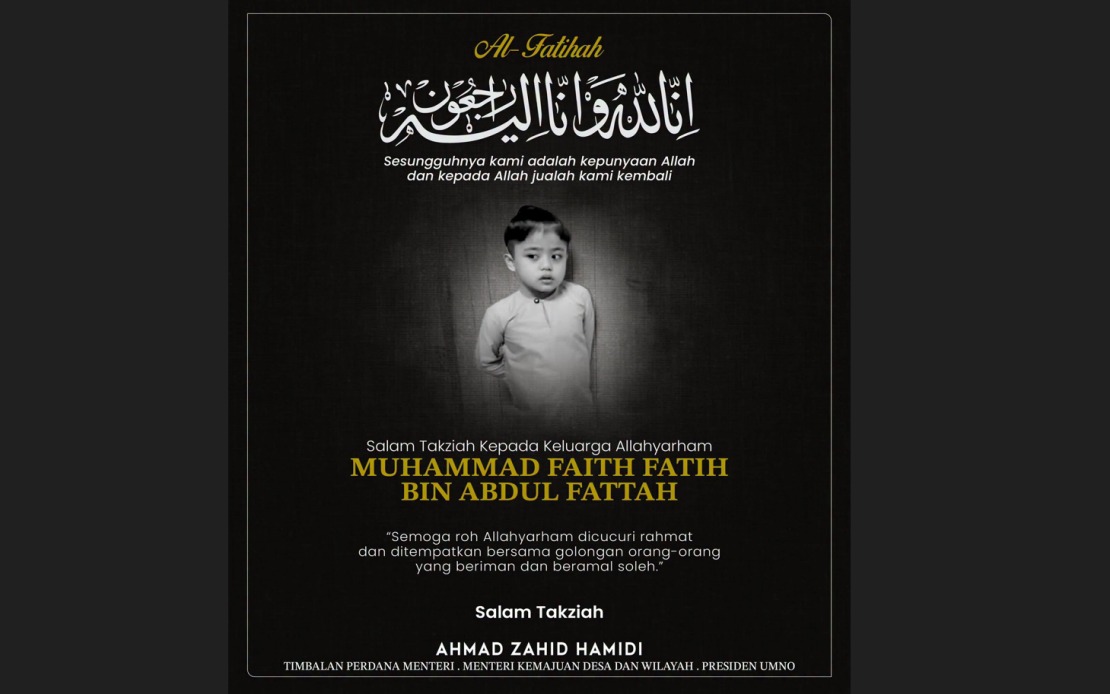
Deputy Prime Minister Datuk Seri Dr Ahmad Zahid Hamidi has offered his heartfelt condolences to the family of six-year-old Muhammad Faith Fatih Abdullah Fattah, a child with autism who was discovered dead in an oil palm plantation area near Sungai Sumun in Hutan Melintang, Perak. The tragic incident has drawn widespread attention as it highlights the vulnerability of children with special needs and the challenges facing families who care for them in rural communities.
Ahmad Zahid, who represents the parliamentary constituency of Bagan Datuk, shared his sympathies through a Facebook post, acknowledging the profound grief that accompanies the loss of a young child, particularly one with special needs. The Deputy Prime Minister recognised the extraordinary emotional and psychological toll such a loss places on parents and extended family members, emphasising the unique anguish that accompanies the death of a child who required ongoing care and support.
The child went missing from his home yesterday afternoon and was subsequently located within the oil palm plantation area at approximately 10.08 pm during an active search and rescue operation. According to Bagan Datuk police chief Superintendent Mohammad Ali Mohd Jali, authorities received their initial report at around 4.54 pm, when family members reported that the boy had last been seen in the living room of the family residence. The discovery came after hours of searching, with rescue teams combing the plantation grounds in what became a tragic recovery operation.
The circumstances surrounding the child's death underscore broader concerns about safeguarding for children with autism and special needs in Malaysia. Families caring for autistic children face particular challenges in ensuring their safety, as children on the autism spectrum may have communication difficulties, unpredictable responses to their environment, and limited awareness of danger. This tragic case has inevitably prompted questions about support systems available to families in rural areas and the adequacy of community resources for child welfare and supervision.
In his statement, Ahmad Zahid emphasised the profound spiritual and emotional dimensions of parental loss, noting that there exists no greater trial for a mother and father than the death of a beloved child. He called upon the community and the faithful to recite Al-Fatihah and offer prayers for the victim's soul, encouraging collective remembrance and spiritual support for the grieving family during their time of mourning.
The incident raises important questions about child safety infrastructure in agricultural communities throughout Malaysia, particularly in areas where plantation work is predominant. The discovery of the child's body in an oil palm plantation area highlights potential hazards within these work environments that may inadvertently endanger local populations, especially vulnerable children who may wander into such areas.
Autism spectrum disorder affects a significant proportion of Malaysian children, yet awareness and support services remain unevenly distributed across urban and rural areas. Families managing autistic children's care often struggle with limited access to specialised healthcare, educational facilities, and community support networks, particularly in less developed regions. The tragedy serves as a reminder of the need for enhanced child protection measures and improved access to services for families with special needs children throughout the country.
The loss has resonated across political and social circles, with senior government figures acknowledging both the human tragedy and the systemic concerns it raises. For the Perak community and beyond, this incident underscores the importance of strengthening child welfare protocols, improving coordination between local authorities and community organisations, and ensuring that families caring for children with special needs have adequate support and resources.
As investigations into the exact circumstances surrounding the child's death continue, the focus remains on providing comfort and assistance to the bereaved family. The incident will likely prompt renewed discussions about child safety policies, the adequacy of supervision and monitoring systems in rural communities, and the need for enhanced awareness and training among parents and caregivers of children with autism regarding risk mitigation and emergency response protocols. For Malaysia's autism community and parents nationwide, this tragedy underscores the ongoing challenges in providing comprehensive, equitable care and protection for one of the country's most vulnerable populations.

