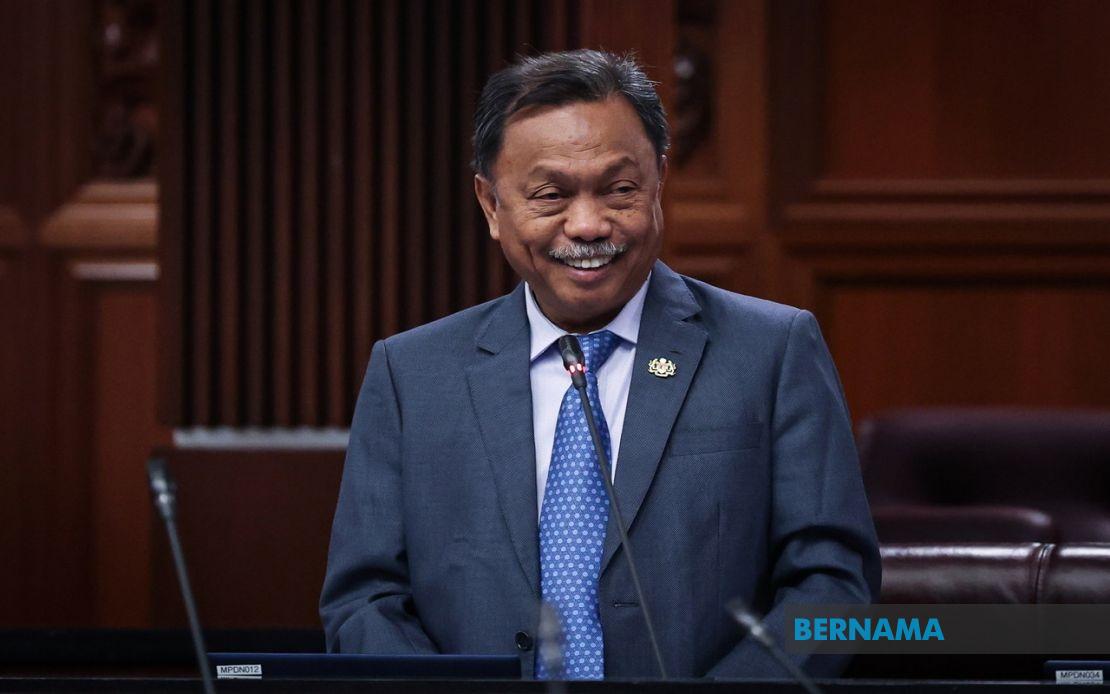
Datuk Dr Mohammad Yusof Apdal, the Deputy Minister of Science, Technology and Innovation, has categorically refuted allegations that he has stepped down from his role within the federal administration. The Lahad Datu Member of Parliament made the denial through a formal statement, emphasising his continued participation in the Unity Government and his commitment to fulfilling the responsibilities assigned to him.
The controversy emerged following a social media post that circulated widely online, claiming that the Parti Warisan politician had decided to withdraw from his ministerial position with immediate effect. Rather than allowing the unsubstantiated claim to persist unchallenged, Yusof Apdal moved swiftly to address the matter publicly, characterising the narrative as malicious misinformation designed to undermine his standing.
In his statement, Yusof Apdal expressed concern about the broader implications of such false claims, noting that the dissemination of unverified information serves to confuse the public and erode trust in government communications. He highlighted how such posts not only mislead citizens but are deliberately crafted to damage the reputation of targeted officials, a growing concern in Malaysia's digital information ecosystem where viral claims can spread faster than corrections.
The incident underscores the vulnerability of political figures to coordinated disinformation campaigns on social media platforms, where false narratives can gain significant traction before verification mechanisms take effect. For a government that has faced ongoing questions about internal cohesion and ministerial stability, such rumours can trigger wider speculation about the Unity Government's institutional health and the commitment of individual members to the coalition framework.
Yusof Apdal's swift response reflects standard practice among Malaysian officials when confronted with resignation or departure claims, as such announcements carry significant political weight and can influence market sentiment, investor confidence, and public perception of governmental stability. The deputy minister's insistence on referring to official channels for accurate information highlights the challenge facing contemporary governance: establishing credible communication pathways in an environment saturated with competing narratives.
As the Member of Parliament representing Lahad Datu, Yusof Apdal represents constituencies in Sabah, a state whose political dynamics have been particularly fluid in recent years. The region's importance to the federal government's stability makes claims about ministerial departures especially sensitive, as the loss of any Sabah-based representative could trigger broader coalition realignments or internal disputes about representation and resource allocation.
The deputy minister's call for the public to reject unverified news and prioritise official sources represents a broader institutional effort by the Unity Government to maintain message discipline and prevent internal tensions from being weaponised through social media. This approach reflects lessons learned from previous political transitions in Malaysia, where informal announcements and rumours have sometimes preceded formal government statements, creating periods of uncertainty that damage ministerial authority.
Yusof Apdal's portfolio in science, technology and innovation positions him within one of the government's growth-focused sectors, where continuity of leadership is valued for maintaining research partnerships, international collaborations, and long-term technological development initiatives. Any disruption at the ministerial level can create delays in policy implementation and research funding decisions, making clarity about personnel changes important beyond mere political symbolism.
The incident also reflects the particular challenges facing the Unity Government as a coalition spanning Barisan Nasional, Pakatan Harapan, and Sabah-Sarawak based parties, where individual ministers must simultaneously maintain loyalty to their parent parties while supporting broader coalition objectives. In such contexts, rumours about resignations can sometimes reflect real tensions or disagreements that have not yet crystallised into formal departures, requiring swift official denial to prevent speculation from becoming self-fulfilling.
Moving forward, the episode highlights the ongoing need for the government to establish more robust mechanisms for verifying and controlling the flow of information about ministerial changes, particularly in an era when social media can create crises of confidence before official channels have opportunity to respond. Yusof Apdal's reaffirmation of his commitment provides short-term clarity, but the underlying challenge of protecting institutional credibility in an information-rich environment remains a significant concern for Malaysian governance.

