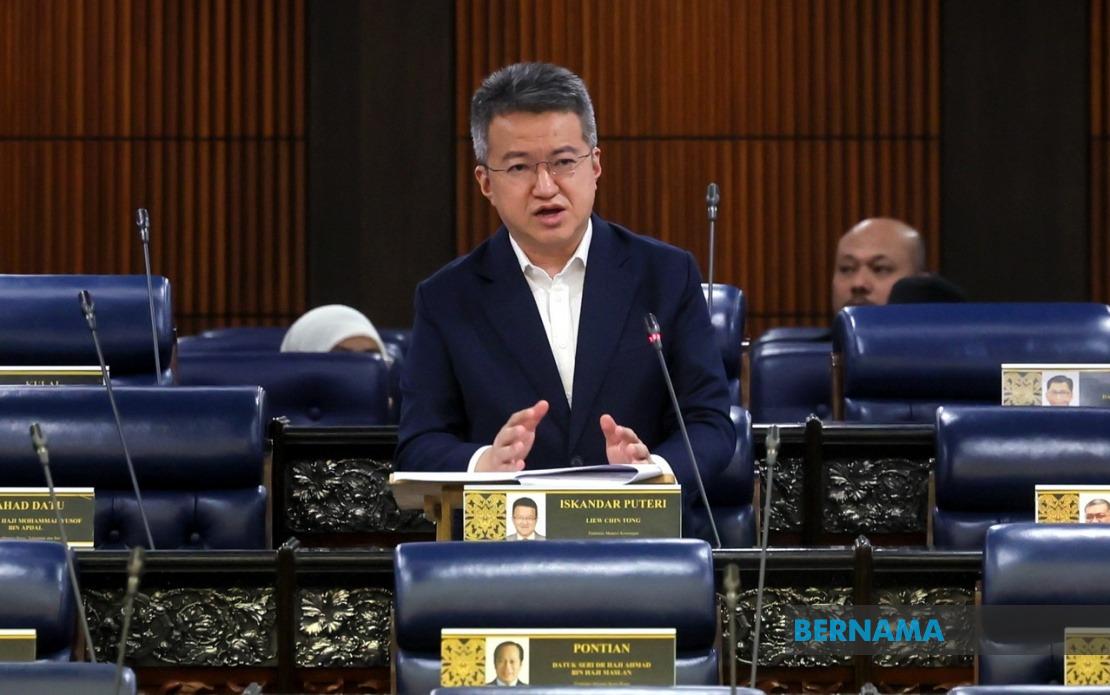
Deputy Finance Minister Liew Chin Tong has categorically rejected claims that fugitive businessman Low Taek Jho, commonly referred to as Jho Low, slipped into Malaysia under cover of a Chinese delegation last year to conduct backroom negotiations regarding the sprawling 1Malaysia Development Berhad (1MDB) scandal. The denial came during Question Time in Parliament on July 9 when Liew responded briefly to a supplementary query from Syed Saddiq Syed Abdul Rahman, the Muar member for MUDA. His terse statement—simply "I deny the allegation"—cut short speculation that had circulated based on media reports suggesting such a clandestine meeting had taken place in late 2024, ostensibly to broker a repayment arrangement involving the Ministry of Finance.
The question of whether Jho Low, the alleged orchestrator of the 1MDB misappropriation scheme, could have re-entered Malaysian soil remains a sensitive topic given his status as a fugitive wanted in connection with one of the world's largest financial scandals. Syed Saddiq's supplementary question appeared designed to extract clarity on the matter, citing specific media reports about the purported secret meeting. However, Liew's emphatic denial provides no additional detail about what investigations, if any, were conducted to verify the claims, nor does it address the broader geopolitical implications of China's potential involvement in facilitating such negotiations. The brevity of the government response suggests either confidence in the denial's validity or an unwillingness to elaborate on sensitive diplomatic channels that may exist between Malaysia and China regarding 1MDB resolution.
In his substantive response to an earlier question from Chong Chieng Jen, the Stampin representative, Liew outlined the government's multifaceted approach to recovering funds siphoned from 1MDB and pursuing accountability. The administration continues to prosecute both criminal and civil cases against those implicated in the scandal, with particular emphasis on former Prime Minister Datuk Seri Najib Tun Razak, who remains the most prominent political figure caught in the 1MDB web. This comprehensive strategy reflects recognition that asset recovery demands coordination across multiple legal instruments and jurisdictions, a challenge that has proven formidable given the scheme's international scope.
Najib's conviction represented a watershed moment in Malaysia's anti-corruption efforts. The High Court's December 26, 2025 judgment found him guilty on 25 charges encompassing money laundering and abuse of power to solicit bribes, sentencing him to 15 years' imprisonment while imposing a staggering RM11.38 billion fine. This dual punishment—combining substantial custodial time with a financial penalty exceeding the nation's gross domestic product by a considerable margin—underscores the court's determination to signal that even former heads of government will face severe consequences for financial crimes of this magnitude. The sentence also reflects the judiciary's assessment of the gravity of Najib's conduct in allowing the 1MDB fund, intended for sovereign wealth generation and national development, to become a vehicle for personal enrichment.
Beyond Najib, the government is pursuing civil recovery against his former wife, Datin Seri Rosmah Mansor, seeking to reclaim approximately US$380 million (roughly RM1.56 billion) allegedly misused to purchase luxury consumer goods including designer handbags and jewellery. This civil action targets the proceeds of crime doctrine, attempting to demonstrate how 1MDB funds flowed directly into personal consumption by associates of the former prime minister. The Rosmah case illustrates how the scandal extended beyond political offices into the personal wealth accumulation of ruling family members, a pattern that undermined public confidence in institutional integrity and governance standards.
The most substantial ongoing financial recovery effort targets Jho Low himself. The government has mounted civil proceedings against the fugitive businessman seeking damages totalling approximately US$3.78 billion (about RM15.4 billion), making him the focus of Malaysia's largest asset-recovery operation. Low's status as the alleged mastermind behind the 1MDB misappropriation elevates the importance of capturing and convicting him, yet his continued ability to evade arrest across multiple jurisdictions suggests the complexities inherent in pursuing transnational financial crimes. The magnitude of the civil claim reflects authorities' assessment that Low and his associates managed to systematically extract roughly half of 1MDB's initial capitalisation through a series of layers that obscured the ultimate destination of funds.
Liew's parliamentary remarks also acknowledged the multidimensional harm inflicted by the 1MDB scandal beyond the directly measurable financial losses. The deputy minister identified four principal categories of damage: direct financial losses encompassing the approximately US$4.5 billion misappropriated from 1MDB's coffers; opportunity costs representing the development and growth that Malaysia forgone by failing to deploy these resources toward sovereign wealth accumulation and infrastructure investment; irrecoverable losses stemming from value destruction and transaction costs incurred throughout years of investigation and litigation; and broader reputational damage to Malaysia's international standing. This fourth category, though difficult to quantify in ringgit terms, has profound implications for Malaysia's ability to attract foreign investment, maintain diplomatic relationships, and project soft power globally.
The 1MDB affair fundamentally altered Malaysia's international reputation during a critical period of regional competition for investment and influence. The scandal became synonymous with Malaysian governance failures, providing ammunition to critics questioning institutional checks and balances, judicial independence, and political accountability. Recovery of this reputational damage remains an ongoing project, one that depends partly on demonstrating through successful prosecutions and asset recovery that Malaysia's legal system can function effectively even against powerful political figures. Liew's parliamentary statement, while focused narrowly on denying Jho Low's alleged return, implicitly forms part of this larger narrative of institutional restoration.
The denial of Jho Low's secret visit also carries implications for Malaysia's relationship with China, a nation that has grown increasingly influential in Southeast Asian geopolitics and capital flows. If the media reports had merit, they suggested China might be interested in facilitating 1MDB-related negotiations—potentially reflecting Beijing's broader strategic interests in Malaysia or its preference for settled bilateral relationships. The government's outright denial suggests either that no such approach materialised or that Malaysian authorities deemed it inappropriate or ineffective as a channel for 1MDB resolution. Either way, the incident highlights how high-profile financial scandals with international dimensions inevitably entangle sovereign relations and diplomatic considerations alongside purely legal concerns.
Moving forward, the government's continued emphasis on criminal and civil prosecution, combined with international cooperation through agencies and judicial systems in jurisdictions where 1MDB funds were traced, represents Malaysia's primary avenue for achieving accountability and asset recovery. The Najib conviction provided crucial momentum, establishing legal precedent and demonstrating that even former leaders face consequences. However, the ongoing pursuit of Jho Low and the recovery of his estimated assets—reportedly scattered across multiple countries and held through complex corporate structures—will require sustained commitment and international cooperation that may extend for years. Liew's parliamentary denial, while clearing the air regarding Low's alleged visit, leaves unresolved the fundamental challenge of locating and recovering assets attributable to the alleged mastermind of Southeast Asia's most significant financial scandal.

