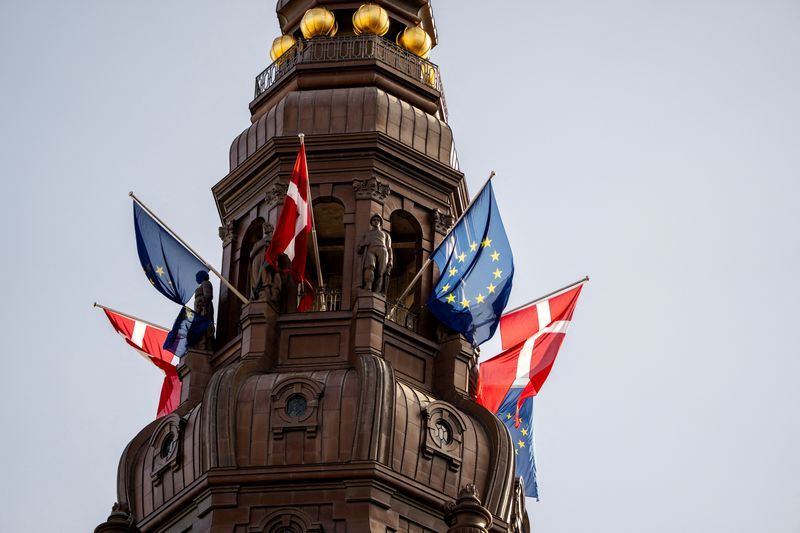
Denmark's government has waded into a pivotal battle at the European Court of Justice, filing a formal written intervention to support Belgium in a case that threatens to reshape how technology giants interact with the news industry across the European Union. The Danish Culture Ministry announced the decision on Monday, signalling that Copenhagen views the outcome as having serious implications not just for Danish media houses but for the viability of journalism across the bloc. The case pits Streamz, Google, Meta, Spotify, and Sony against the Belgian government, with the tech companies challenging how Belgium has implemented Article 15 of the EU's Digital Single Market Directive, which grants publishers rights to compensation when their content is used by digital platforms.
The dispute erupted in 2023 when the technology consortium launched its lawsuit, arguing that Belgium's approach to implementing the DSM Directive contravenes broader European law on publisher protections. At its core, the case asks whether platforms should be compelled to negotiate licences and pay fees when news articles or journalistic content appear on their services. The tech companies contend that the Belgian framework is overly restrictive and imposes unreasonable financial burdens on their business models. Denmark's decision to formally intervene—participating in oral hearings scheduled for July 6 and 7—indicates that smaller EU member states view this as far more than a bilateral dispute between one country and a handful of multinational corporations.
Denmark's Culture Minister Zenia Stampe framed the intervention in stark democratic terms, warning that allowing tech giants to use media content without compensation would "hit the Danish media hard and damage our democracy." This argument carries particular weight in Nordic countries, where public support for journalism and media pluralism remains relatively high and where several newspapers and broadcasters depend substantially on digital revenue streams. By intervening on Belgium's side, Denmark is essentially asking the European Court of Justice to establish clear legal boundaries that prevent Silicon Valley and other tech companies from profiting from publishers' work without sharing revenue. The Danish procedural delegation will focus its arguments on holding Meta, Google, Spotify, Sony, and Streamz accountable for paying when they display or distribute journalistic content to their audiences.
The underlying tension reflects a fundamental asymmetry in the digital economy. News organisations invest significant resources into investigative reporting, fact-checking, and editorial standards, only to see their work aggregated, summarised, or republished by platforms that capture advertising revenue and user attention. Publishers across Europe have argued for years that this arrangement is economically unsustainable and that platforms function as essential distributors of news without bearing the costs of news creation. The DSM Directive's Article 15 was specifically designed to address this imbalance by granting publishers negotiating power, yet the tech companies' legal challenge suggests they view even modest payment obligations as incompatible with their operating model.
For Malaysia and other Southeast Asian countries watching from outside the EU, the precedent could matter significantly. If the European Court of Justice rules against the tech giants and upholds strong publisher rights, it could embolden governments in the region to pursue similar legislative protections for their own news industries. Conversely, if the court sides with Google, Meta, and their allies, it would signal globally that tech platforms can resist compensation schemes and may discourage policymakers from attempting similar measures. The case thus represents a critical juncture in the decades-long struggle between legacy media and digital platforms over who controls the distribution and monetisation of information.
Denmark's intervention will push the court to interpret Article 15 expansively and to define precisely what obligations platforms owe to publishers. The Danish delegation will urge clarity on the scope of publisher rights and the corresponding responsibility that tech companies must shoulder when they profit from journalistic content. This is more than a technical legal argument; it touches on fundamental questions about who funds journalism in the digital age and whether market concentration among a handful of platforms should be permitted to dictate the financial viability of news organisations. In an era of declining trust in institutions and heightened concerns about misinformation, robust local journalism becomes even more critical, yet many regional newsrooms are already understaffed and underfunded.
The Danish intervention also reflects broader EU strategy on rebalancing power between digital platforms and other sectors. Brussels has pursued a multi-pronged approach through the Digital Markets Act, the Digital Services Act, and targeted copyright directives—all attempting to constrain the monopolistic practices of tech giants. Denmark's decision to formally support Belgium signals that member states are willing to leverage their resources and diplomatic weight to ensure these regulatory frameworks achieve their intended effect. Should the court rule in Belgium's favour, it could strengthen the hand of publishers negotiating with platforms across the EU and potentially inspire similar litigation or legislation elsewhere.
Beyond the Streamz case, Denmark has also been active in parallel copyright battles, including a landmark lawsuit examining whether Google's use of press releases to train artificial intelligence systems violates copyright protections. These overlapping legal challenges suggest a coordinated push to establish that technology companies cannot simply appropriate creative and journalistic work as raw material for their algorithms without consent or compensation. The implications extend beyond traditional news; they touch on how artificial intelligence companies source training data and whether creative industries more broadly can retain control over how their output is used and monetised in the age of machine learning.
The outcome remains uncertain, but Denmark's intervention ensures that the court will hear robust arguments about the relationship between publisher sustainability, platform power, and democratic health. If Europe's highest court sides with publishers, it could establish a model for regulating digital platforms that emphasises fair compensation and negotiated licensing. If it favours the tech companies, it may signal that dominant platforms can resist even EU-mandated payment schemes. For journalists, media owners, and citizens concerned about the future of independent news in an increasingly digital world, the case represents a pivotal moment in determining whether the internet will be governed by the interests of multinational technology firms or by the public interest in diverse, well-funded journalism.

