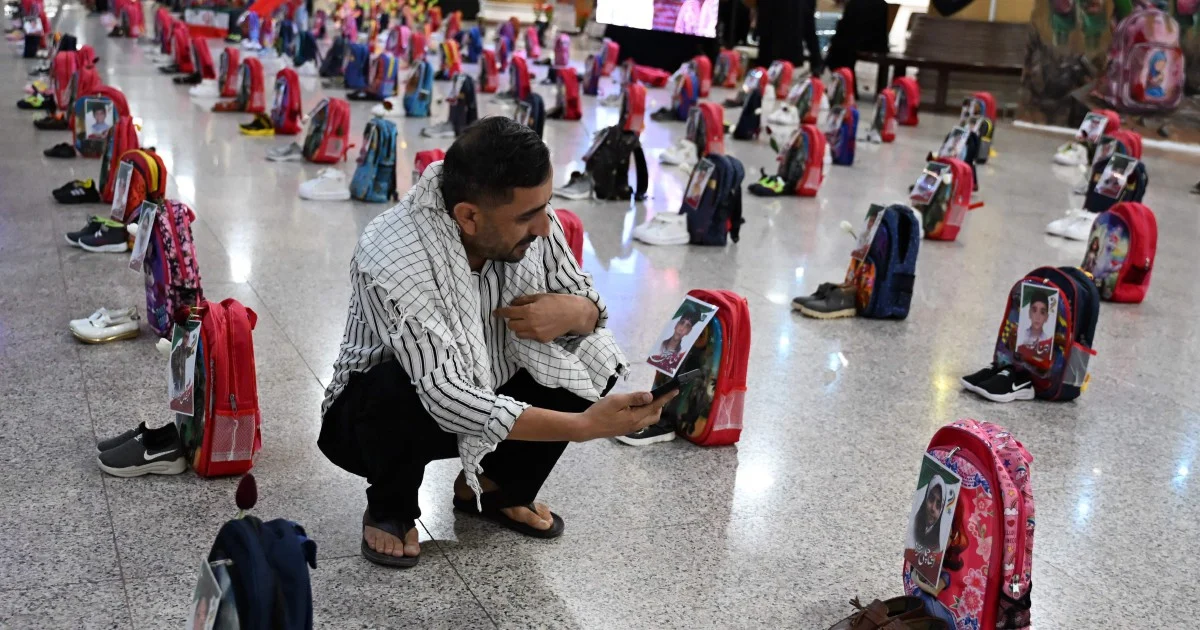
Democratic senators led by Kirsten Gillibrand have pressed the Trump administration to make public the conclusions of a Pentagon investigation into an airstrike that struck a girls' school in Iran on February 28, with the lawmakers calling for disclosure within the next week. The demand reflects mounting congressional pressure to shed light on the circumstances surrounding a controversial military operation that has drawn international scrutiny and raised questions about civilian casualty protocols.
The timing of the senators' request carries significance within the broader context of Iran-US military tensions. The February 28 incident occurred during a period of heightened regional instability, and details surrounding the strike have remained largely compartmentalized within defence and intelligence circles. By seeking rapid public disclosure, the Democratic contingent is attempting to prevent a situation where findings remain classified or delayed indefinitely, a concern that has gained prominence across both political parties when civilian casualties are involved.
Gillibrand's leadership on this matter underscores a pattern within congressional oversight whereby senators increasingly challenge the executive branch to justify military operations affecting civilian populations. The Democratic senators' position reflects broader legislative sentiment that transparency regarding overseas military actions strengthens rather than undermines national security, particularly when preliminary assessments may indicate targeting errors or collateral damage.
The Pentagon's investigation would typically examine multiple dimensions of the strike, including pre-strike intelligence assessments, targeting procedures, weapon system accuracy, and post-strike assessments of the impact. Such investigations are standard protocol for significant military operations, particularly those in sensitive regions or those potentially affecting civilian infrastructure. The school's status as an educational facility makes the investigation particularly consequential, as attacks on schools generate substantial diplomatic and humanitarian concerns.
From a regional perspective, the incident and subsequent demands for transparency carry implications for US relations throughout the Middle East and South Asia. Countries in Southeast Asia and beyond monitor how Washington addresses allegations of civilian harm, as such incidents influence perceptions of American military conduct and adherence to international humanitarian standards. Malaysia and other ASEAN nations have longstanding interests in maintaining international norms around civilian protection during armed conflict.
The one-week timeline requested by the senators suggests confidence that investigation findings already exist and require only administrative clearance for release. This framing places responsibility squarely on the Trump administration's decision-making rather than on incomplete analysis, implying that withholding results would constitute a deliberate choice rather than a procedural necessity. Such pressure tactics often prove effective in expediting information that bureaucracies might otherwise delay through standard classification review processes.
Congressional demands for military transparency have intensified across administrations in recent years, reflecting deeper public concern about the human cost of overseas operations. The specificity of the senators' request—naming a particular date and location—demonstrates that this is not abstract concern but relates to a documented, identified incident that affected an actual institution. This particularity strengthens the lawmakers' position and makes it more difficult for the administration to deflect through generalized security arguments.
The investigation's findings will likely address whether the school was correctly identified as a legitimate military target before the strike, whether proper precautions were taken to minimize civilian harm, and whether post-strike assessments accurately captured the scope of damage and casualties. Each of these dimensions has precedent in previous US military investigations, and the investigative framework itself represents established military doctrine rather than novel inquiry.
Public disclosure could influence broader debates about rule of engagement compliance and civilian protection standards. If the investigation substantiates concerns about targeting procedures or intelligence failures, it could prompt policy adjustments. Conversely, if findings indicate proper protocol adherence despite tragic outcomes, the administration could leverage the report to defend operational procedures while potentially proposing compensatory measures for affected families.
The Democratic senators' intervention illustrates how congressional pressure can function as a constraint on executive military decision-making, even when the executive possesses substantial autonomy in overseas operations. By establishing public expectations for transparency within a specific timeframe, legislators create political costs for non-compliance that can prove decisive when other institutional checks prove limited.
The broader significance extends beyond this single incident to encompass questions about how democracies balance military effectiveness with accountability. The senators' position reflects confidence that transparency and security can coexist, a premise that has animated congressional oversight of military affairs for decades despite periodic tensions between classification needs and democratic accountability.
Within the context of US-Iran relations specifically, the demands for investigation disclosure carry additional weight. Any findings suggesting systematic errors, intelligence failures, or procedural lapses could become diplomatic talking points and complicate already fraught bilateral dynamics. Conversely, thorough and credible investigation findings released publicly could help mitigate reputational damage and demonstrate institutional commitment to accountability even when operations prove tragic.

