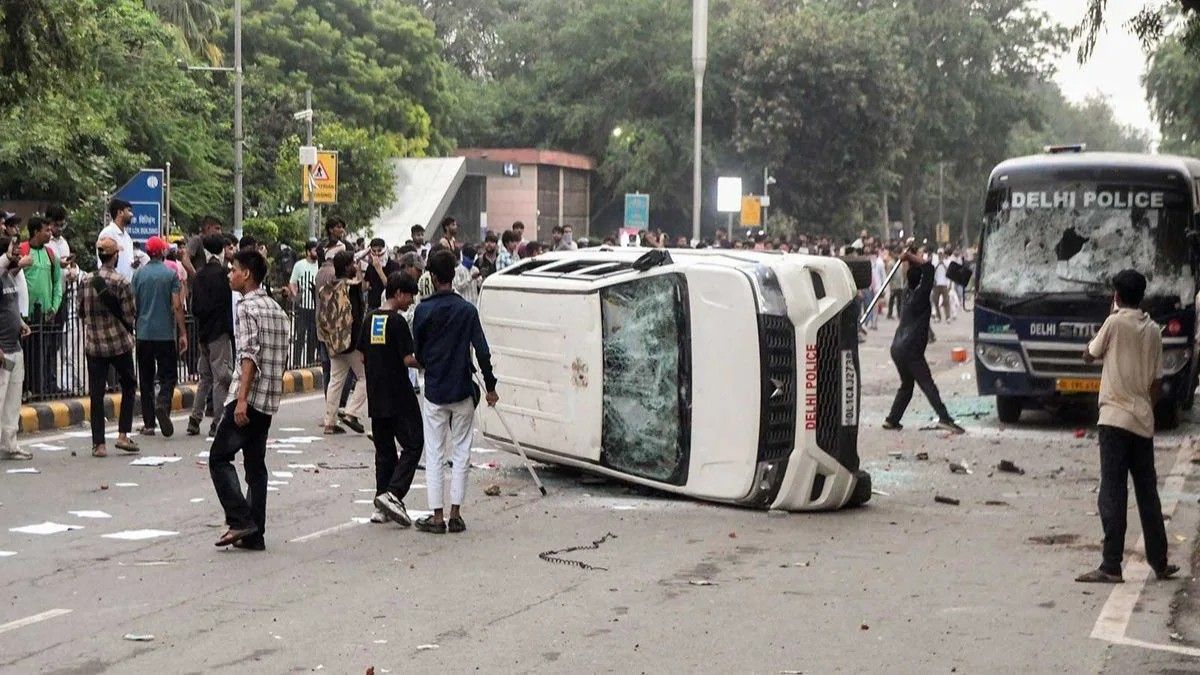
Authorities in the Indian capital have initiated criminal proceedings against multiple individuals involved in Monday's tumultuous demonstration by the Cockroach Janta Party, as the movement continues to dominate headlines and generate heated debate across social media platforms. The New Delhi police have lodged a total of 10 First Information Reports across various stations in the district, each addressing distinct incidents and alleged violations recorded during the CJP's "Sansad Chalo" march directed at Parliament. The offences span from vandalism and public disorder to more serious accusations including conspiracy and assaults on uniformed personnel, with investigations now expanding to examine hundreds of video recordings to establish patterns of coordinated violence.
The march on Monday centred on demands for Union Education Minister Dharmendra Pradhan's removal from office, with protesters citing concerns over alleged irregularities in national examinations. The demonstration escalated dramatically when participants clashed with security forces deployed in the capital's central business district, leading to scenes of stone-throwing and confrontations at multiple locations. Subsequent reports circulating on various social networks claimed that violence resumed at Jantar Mantar, the traditional protest site in New Delhi, prompting authorities to issue a categorical denial on Tuesday through official channels.
The New Delhi Deputy Commissioner of Police used the social media platform X to address what they characterized as deliberately deceptive content suggesting fresh disturbances had occurred. Officials explicitly stated that footage and claims depicting stone-pelting or police interventions on Tuesday were fabricated and designed to mislead the public, urging citizens to validate information only through government announcements. This intervention reflects broader anxieties about disinformation during politically sensitive demonstrations, particularly when visual evidence—genuine or doctored—circulates rapidly among populations with limited ability to verify authenticity.
The geographical distribution of the registered cases reveals the scale and reach of Monday's unrest across New Delhi's administrative zones. Parliament Street police station has been assigned four separate investigations, while the Connaught Place station is handling three cases. Single investigations are proceeding from Mandir Marg, Barakhamba Road, and Kartavya Path stations, indicating that incidents unfolded across a broad area rather than concentrating at one location. Each case addresses particular incidents reported throughout the protest, though police have maintained operational secrecy regarding specific details of alleged misconduct.
Among the allegations pursued is an incident during which a member of the Rapid Action Force reportedly faced a life-threatening assault, elevating the severity of confrontations beyond routine protest management. Investigators are additionally examining claims concerning the unauthorized operation of a drone within New Delhi's boundaries during the parliamentary session, suggesting potential security breaches warranting attention from multiple agencies. The legal framework invoked encompasses the Bharatiya Nyaya Sanhita—India's recently enacted criminal code—alongside provisions from weapons legislation and statutes protecting public infrastructure from deliberate destruction.
Police narratives emphasize that demonstrators exhibited what they describe as bellicose and disruptive conduct despite official prohibitory orders and multiple warnings from security personnel. The department has committed substantial resources to examining more than 250 video clips obtained from various sources, seeking to identify individuals implicated in violent episodes and establish whether the disorder represented spontaneous reactions to police deployment or reflected organizational coordination preceding the march. This investigative methodology mirrors approaches adopted during comparable incidents in recent years, attempting to distinguish between organic crowd behaviour and potentially orchestrated destabilization.
Monday evening footage released by law enforcement depicted stone-throwing in commercial areas, accompanying their public appeals for restraint and cooperation with authorities. The visual evidence was offered as documentary support for their accounts of protester aggression, though opposition groups have contested these narratives and presented contrary interpretations of the same incidents. Such competing testimonies have contributed to the polarized discourse surrounding the demonstration, with each faction leveraging available evidence to support predetermined conclusions about police and protester conduct.
The protest's continuation at Jantar Mantar despite security personnel's removal of demonstration infrastructure indicates the CJP's determination to maintain visible pressure regarding their central demand. Security apparatus remained heavily concentrated at the location, with Delhi Police and Rapid Action Force personnel maintaining surveillance and readiness to respond to potential renewed disturbances. This sustained deployment reflects official assessment that tension remains elevated and that further confrontations remain plausible if demonstrators persist with planned activities.
Spokesperson Ashutosh Ranka conveyed the movement's unwavering commitment to pursuing Minister Pradhan's resignation, signalling that participants will sustain their presence until authorities respond to stated demands. Simultaneously, he catalogued allegations of protester injuries during Monday's clashes and specific claims regarding mistreatment of women participants, including Geetanjali J. Angmo, spouse of environmental activist Sonam Wangchuk. These counter-narratives dispute the police characterization of events and position demonstrators as victims of excessive state force rather than perpetrators of disorder. The competing accounts underscore fundamental disagreements about accountability and proportionality in crowd management, tensions that extend well beyond this particular demonstration to encompass broader questions about democratic space and protest regulation in South Asian democracies. For Malaysian observers, the episode illustrates persistent challenges confronting neighbouring democracies regarding the balance between maintaining order and protecting civic freedoms during contentious political mobilization.

