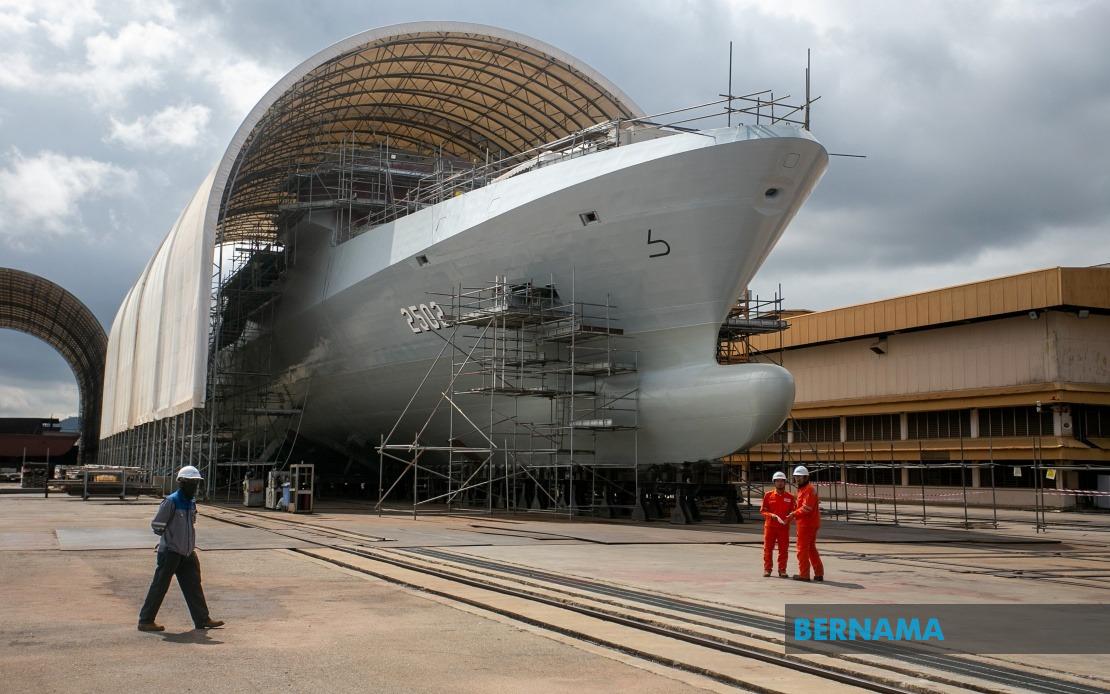
The Ministry of Defence has moved to clarify the controversial RM571.9 million payment made to Norway for the Naval Strike Missile anti-ship missile system, rejecting assertions that the government released funds prematurely or without adequate contractual safeguards. According to MINDEF's parliamentary response, the payment was structured in accordance with progress-based contract terms rather than dispensed as an advance without corresponding physical deliverables.
At the time the payment was transferred, MINDEF stated that all NSM systems had completed full manufacturing and passed rigorous testing protocols established by the Royal Malaysian Navy. The missiles were consequently ready for immediate delivery to Malaysia, creating a logical justification for the fund release. This timeline positioning differentiates the transaction from typical advance payments, where funds flow before work completion, and instead aligns it with standard defence procurement practices where money follows demonstrated progress.
The controversy emerged after Norwegian authorities revoked the export licence for the systems, creating significant complications for the Littoral Combat Ship project—a cornerstone of Malaysia's maritime modernisation strategy. Parliamentary questioners, including Hassan Abdul Karim from Pasir Gudang, had challenged whether the government had exercised sufficient prudence in releasing the complete contract value and whether the procurement agreement contained adequate protective mechanisms for Malaysian interests.
MIDEF's response addresses these concerns head-on, asserting that the contract does indeed incorporate protective provisions. The ministry specified that contractual clauses exist enabling government action should the supplier fail to perform or breach obligations, directly countering claims of inadequate safeguarding. Furthermore, the ministry indicated it is actively invoking these contractual mechanisms to pursue recovery of the payment and associated damages resulting from the licence revocation.
The Norwegian government's decision to revoke the export licence introduced an external variable beyond either party's control, according to MINDEF's explanation. This distinction carries strategic weight in contractual disputes, as force majeure or government action clauses often absolve private suppliers while still obligating governments to pursue remedies. Malaysia's position appears to rest on the argument that the payment was legitimate under the contract terms at the time of disbursement, and the subsequent licence revocation constitutes a separate governmental action that triggers compensation obligations.
From an operational perspective, MINDEF sought to minimise concerns about immediate naval readiness. The ministry emphasised that the Royal Malaysian Navy maintains existing weapons systems and assets sufficient to maintain maritime defence operations and protect Malaysia's sovereign waters, even with the NSM system unavailable. This reassurance addresses broader anxieties about capability gaps and the nation's ability to respond to maritime security threats in the interim period.
The LCS project itself remains on schedule despite the missile system complications, according to the ministry's statement. Rather than allowing the export licence revocation to derail the entire programme, the Royal Malaysian Navy is actively evaluating alternative missile systems that could serve comparable roles and integrate with the existing LCS platform. This forward-looking posture suggests contingency planning was already underway, or at minimum, the navy has commenced rapid assessment of viable replacements to maintain project momentum.
The NSM dispute reveals tensions in defence procurement that extend beyond Malaysia's immediate circumstances. Norwegian decisions regarding military exports reflect domestic political and strategic considerations that may not align with Malaysia's priorities or contractual expectations. This dynamic underscores broader questions about dependence on Western suppliers for critical military capabilities and the political risks attached to such arrangements. Southeast Asian nations navigating geopolitical complexities may increasingly factor such variables into vendor selection and procurement strategy.
MIDEF's defensive posture also reflects domestic political pressure surrounding defence spending accountability. Parliamentary scrutiny of the RM571.9 million payment reflects legitimate governmental and public interest in ensuring military acquisitions represent sound investments and incorporate adequate risk management. The ministry's detailed response, emphasising contractual compliance and active remedy pursuit, appears designed to demonstrate competent stewardship of public resources while acknowledging the genuine complication posed by Norway's unilateral action.
The broader context involves Malaysia's modernisation of its naval capabilities amid shifting maritime dynamics in Southeast Asia. The LCS programme represents a significant investment in frigate-class vessels intended to enhance the Royal Malaysian Navy's capacity to patrol Malaysia's extensive maritime exclusive economic zone and respond to contemporary security challenges. The missile system's absence creates a meaningful capability gap that alternative procurement must address.
Looking forward, the situation may prompt Malaysian defence planners to reconsider procurement strategies with greater emphasis on indigenous capabilities, diversified supplier bases, or alternative defence partnerships. The NSM experience illustrates how external geopolitical decisions can disrupt carefully planned military modernisation timelines, potentially influencing future acquisition decisions toward suppliers perceived as having greater strategic alignment with Malaysian interests or fewer politically volatile domestic constituencies. This lesson extends throughout Southeast Asian defence establishments similarly dependent on international suppliers for advanced military systems.

