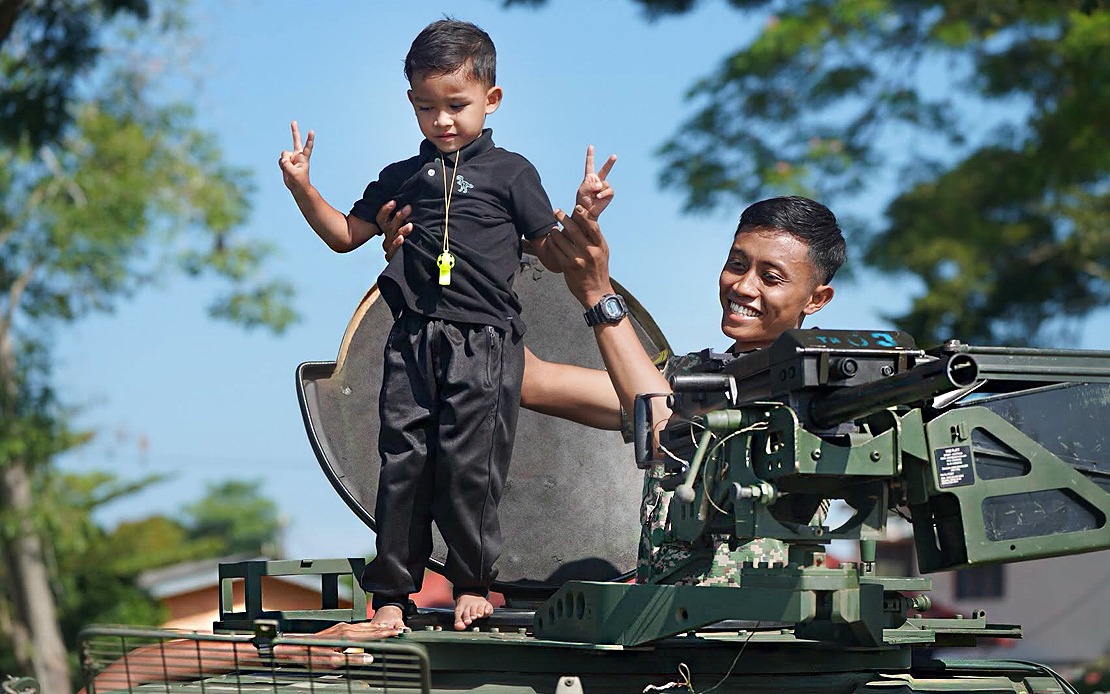
The Ministry of Defence has reinforced its commitment to bridging the gap between the military and civilian populations in Alor Gajah, rolling out comprehensive welfare and engagement initiatives that reflect a strategic pivot towards community-centred defence policy. The push, materialised through the 'Program Jiwa Murni MADANI', represents an evolution in how Malaysia's armed forces position themselves within society, moving beyond purely security functions to become active contributors to local social development and grassroots problem-solving.
Deputy Defence Minister Adly Zahari presided over the launch of activities at Padang Awam Kampung Gadek, underscoring the political weight attached to civil-military cooperation (CIMIC) as a cornerstone of national defence doctrine. The Programme Jiwa Murni MADANI serves as an umbrella framework through which the Ministry of Defence and Malaysian Armed Forces channel resources directly to communities, essentially establishing the military as a visible force for tangible improvements in citizens' daily lives. This positioning carries particular resonance in rural and semi-urban districts like Alor Gajah, where infrastructure gaps and service delivery challenges remain pronounced.
The tangible investments speak plainly to scale and commitment. Five distinct infrastructure projects undertaken by the 9th Squadron of the Royal Engineers Regiment totalled RM179,200, targeting facilities that serve as anchors for community life. Repairs to the Multi-Purpose Hall playground in Kampung Baru, Pondok Batang, and the futsal court in Taman Seri Kelemak, Rembia, address recreational deficits that disproportionately affect younger populations. Simultaneously, restoration work on the fence surrounding Sekolah Jenis Kebangsaan (Tamil) Durian Tunggal and improvements to the Madrasah Seri Kemuning and Surau Madrasah Khairiah signalled institutional respect across religious and ethnic lines, reinforcing inclusion as an operational principle.
Beyond infrastructure, the Service Centre Initiative distributed RM133,000 across eight recipients, with funds directed towards both religious facilities and educational advancement. The list of beneficiaries—ranging from surau boards and temple associations to educational institutions—deliberately cuts across Malaysia's religious and cultural spectrum. SJKT Batang Melaka's allocation for developing a GreenLab, for instance, demonstrates willingness to support pedagogical innovation alongside worship space improvements. This deliberately pluralistic distribution strategy serves dual purposes: it genuinely addresses localised needs while simultaneously projecting an image of military neutrality and respect for community diversity, a critical messaging channel in Malaysia's multi-ethnic context.
The distribution of 500 RAHMAH baskets represents another layer of the outreach strategy, directly targeting military veterans and economically vulnerable residents. The RAHMAH initiative, a government-wide initiative focused on cost-of-living relief, gains particular credibility when administered through military channels, lending it institutional weight and reaching populations that might otherwise feel disconnected from state welfare systems. For veterans, the gesture carries symbolic weight, acknowledging their service and integration into broader community support frameworks rather than treating them as isolated from civilian society.
Paralleling the material interventions, the Religious Corps of the Malaysian Armed Forces (KAGAT) organised the 'Program Ilmu dan Muafakat MADANI' at Masjid Kelemak, blending spiritual enrichment with community engagement. The structured format—combining congregational prayers, lectures, charitable activities, and congregational dialogue—positions religious leadership within the military as facilitators of social cohesion rather than purely institutional actors. This spiritual dimension addresses community needs that material provision alone cannot satisfy, recognising that trust-building in Malaysian society carries significant cultural and religious dimensions.
These initiatives align explicitly with Core 4 of the National Defence Strategic Plan (PSPN) 2026-2030, indicating that community welfare has graduated from peripheral activity to central strategic doctrine. The integration of CIMIC into long-term defence planning suggests recognition that national security ultimately rests not merely on military hardware or operational capability, but on the legitimacy and social acceptance that flows from perceived responsiveness to citizen welfare. For Malaysia, a nation navigating complex ethnic and religious dynamics while confronting evolving security threats, this ideological shift carries substantial weight.
The Alor Gajah deployment offers instructive lessons applicable across Malaysia's diverse districts. By positioning the armed forces as problem-solvers addressing infrastructure deficits, economic vulnerability, and institutional maintenance, MINDEF creates positive associations that transcend traditional security narratives. Communities develop tangible reasons to regard the military as beneficial rather than distant or threatening, a critical consideration given Malaysia's history and the ongoing need to ensure civilian-military relations remain healthy and mutually reinforcing.
Implementation challenges persist nonetheless. Sustainability requires ongoing resource allocation and coordination across multiple military units and civilian agencies. Ensuring that initiatives generate measurable, lasting improvements—rather than performative gestures—demands rigorous monitoring and accountability. Communities in Alor Gajah and beyond will ultimately judge these programmes by whether playgrounds remain functional, schools maintain improved facilities, and vulnerable residents experience genuine uplift in living standards. The military's credibility increasingly depends on follow-through and demonstrated commitment beyond ceremonial launches.
For Southeast Asian observers, Malaysia's integration of community welfare into defence strategy reflects broader regional trends. As countries across the region grapple with non-traditional security challenges—economic inequality, social fragmentation, climate pressures—militaries increasingly present themselves as multifaceted institutions capable of addressing diverse national needs. Whether this represents genuine institutional evolution or rebranding of existing structures remains an open question, but the trajectory is clear: defence establishments are repositioning themselves within societies, seeking legitimacy and relevance through direct community engagement alongside traditional security functions. The Alor Gajah experience will inform whether this approach generates sustainable improvements in civil-military relations across Malaysia's districts.

