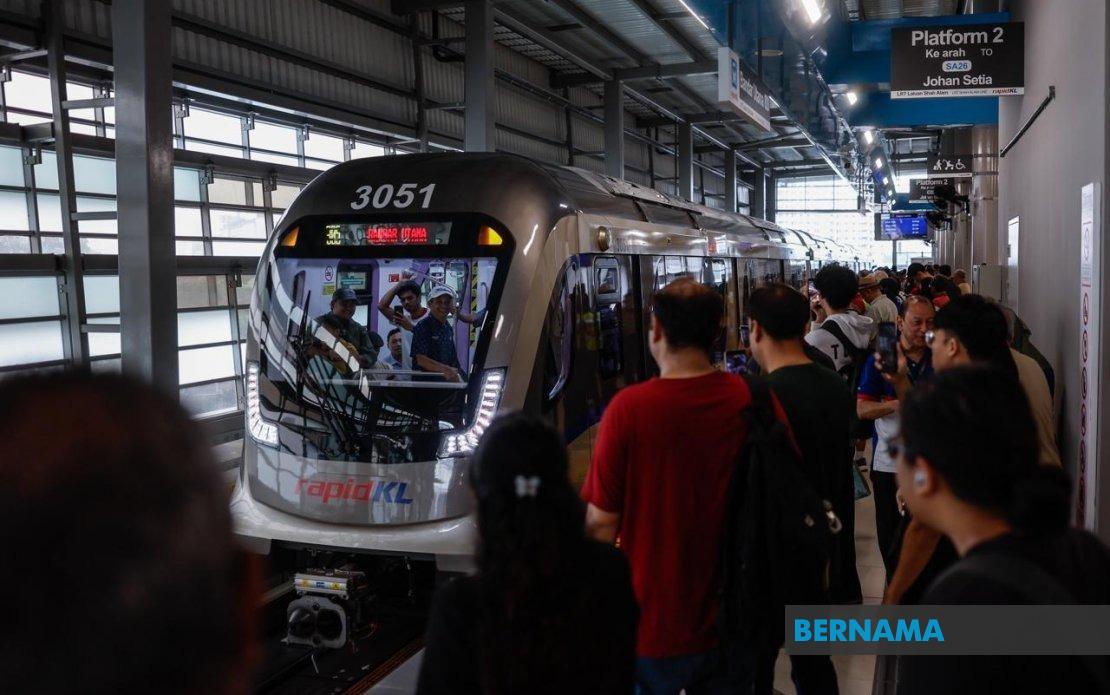
A malfunctioning component on one of the Light Rail Transit 3 trains made contact with the power conductor on July 4, triggering a minor incident at Shah Alam Stadium Station, according to Rapid KL's investigation findings released this week. The technical fault resulted in a loud explosion-like sound and visible sparks, which briefly alarmed passengers and staff at the busy transport hub, though the operator confirmed that no one sustained injuries in the event.
The incident unfolded at 7:05 pm when the faulty component on the train struck the power conductor system, creating electrical discharge effects that were visible and audible to commuters in the vicinity. Despite the dramatic nature of the occurrence, train operations resumed without significant disruption to the evening service schedule. Rapid KL's immediate response involved withdrawing the affected train from the active fleet and safely disembarking all passengers at the subsequent station, from where travellers were able to continue their journeys aboard a replacement train.
Following standard safety protocols, the train in question was transported directly to the maintenance depot for comprehensive technical assessment and repairs. Engineers conducted an in-depth inspection of all systems to identify the faulty component and determine the precise cause of the malfunction. Once the problematic part was identified, technicians proceeded with its replacement using approved spare components to restore the train to proper working condition.
The thorough inspection process concluded with clearance certifications confirming that the train met all operational safety standards before returning to regular service. Rapid KL emphasised that the decision to return the train to the network followed rigorous testing and verification procedures designed to prevent similar incidents from occurring. This approach reflects the operator's commitment to maintaining service reliability whilst ensuring passenger confidence in the LRT3 system's safety measures.
Beyond addressing the immediate issue with the single train, Rapid KL took precautionary measures across the entire LRT3 fleet to identify and prevent comparable faults. The operator initiated comprehensive inspections and monitoring of other trains operating on the Shah Alam Line as part of a broader preventive maintenance strategy. These additional checks were designed to catch potential component failures before they could lead to operational incidents, demonstrating a proactive rather than purely reactive approach to fleet management.
The incident represents a relatively minor disruption in the context of the LRT3's daily operations, which typically serve thousands of commuters across the Klang Valley corridor. However, such events invariably raise questions about the overall maintenance standards and safety protocols governing the system. The fact that this particular fault involved direct contact with the power conductor—a critical safety component—underscores the importance of regular and thorough inspection regimes to maintain system integrity.
Rapid KL's public statement emphasised that passenger safety constitutes the paramount consideration guiding all operational decisions and maintenance activities. The operator highlighted its commitment to continuous monitoring and upgrading of equipment to ensure that travellers can depend on reliable and secure service. This messaging attempts to reinforce public confidence in the LRT3 system amid broader concerns about urban transportation safety in Malaysia.
The LRT3 Shah Alam Line has been a significant addition to the Klang Valley's public transport network, connecting several major commercial and residential areas. Any disruptions, even minor ones, can have cascading effects on commuter journeys and broader traffic patterns. The swift response and comprehensive investigation in this case demonstrate the operator's readiness to address technical issues promptly, which is crucial for maintaining user satisfaction and ridership levels.
The incident also highlights the technical complexity underlying modern rapid transit systems, where multiple integrated components must function in perfect harmony to ensure safe operation. Component failures, whilst sometimes unavoidable in systems that operate continuously throughout the day, must be managed through systematic inspection and maintenance protocols. The replacement of the faulty component and the broader fleet-wide checks represent standard industry practices designed to minimise recurrence.
Looking forward, such incidents provide valuable data that operators use to refine maintenance schedules and identify recurring failure patterns. By documenting the cause of this particular malfunction and implementing preventive measures across the fleet, Rapid KL contributes to the gradual improvement of system reliability. Regular communication with the public about such incidents, as demonstrated in this official statement, also helps maintain transparency and trust in the operator's ability to manage safety-critical infrastructure.
For commuters in the Klang Valley who depend on the LRT3 for daily mobility, such reassurances about equipment maintenance and safety protocols are essential. The incident, whilst minor in its consequences, serves as a reminder of the sophisticated engineering and constant vigilance required to keep rapid transit systems functioning safely and reliably across a metropolitan region.

