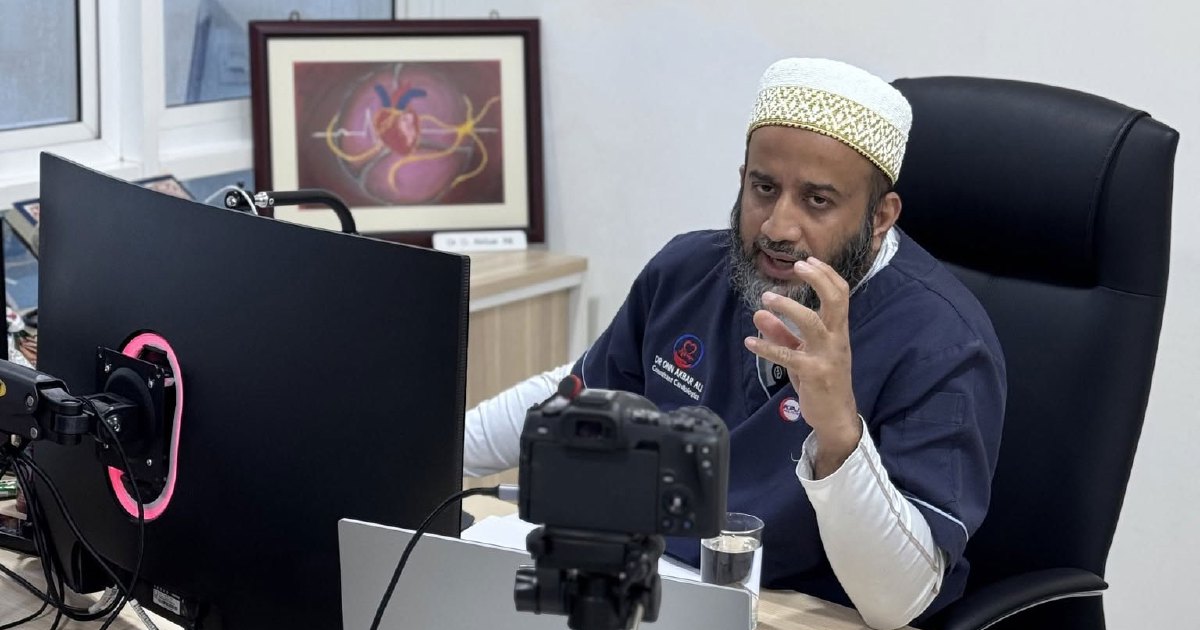
A prominent Malaysian cardiologist recently discovered a sophisticated deepfake video circulating online that replicated his facial features and voice with alarming precision. The synthetic media showed Dr Onn Akbar Ali endorsing herbal tea as a cure for diabetes, a claim he had never made and would never support given his medical expertise. The incident crystallised a mounting problem affecting the healthcare industry across the region: fraudsters are increasingly deploying artificial intelligence technology to impersonate medical doctors for financial gain.
The methodology behind these scams reveals considerable technical sophistication. Deepfake creators use artificial intelligence algorithms that can map a real doctor's facial expressions, speech patterns, and mannerisms to generate entirely fabricated video content. In many cases, the perpetrators obtain source material from legitimate medical lectures, television appearances, or public video recordings that circulate freely online. They feed this material into AI systems that have been trained to synthesise convincing facsimiles of the doctor's appearance and voice, then insert the synthetic doctor into new scenarios promoting dubious health products. The result is content that appears credible to the untrained eye, especially when shared rapidly across social media platforms where viewers may lack context about the video's origins.
The health products being promoted through these deepfake videos typically promise miraculous cures for chronic conditions like diabetes, hypertension, and cancer. These claims fundamentally contradict established medical science and bypass regulatory oversight. Many such products contain unverified ingredients or are merely repackaged everyday items marketed at inflated prices targeting desperate patients. The scammers profit by driving sales through direct-to-consumer online channels, often setting up temporary websites or using messaging apps to transact with buyers before abandoning the operation and establishing new ones elsewhere. Elderly consumers and those with limited digital literacy appear particularly vulnerable to these schemes.
The implications for Malaysian healthcare are substantial and multifaceted. Beyond the direct financial losses incurred by duped patients, these scams undermine public trust in legitimate medical professionals and evidence-based treatment. When patients encounter a deepfake video that appears to show a respected doctor endorsing unproven remedies, they may begin questioning whether their actual physicians are providing sound advice. This erosion of confidence in medical expertise can lead patients to delay or abandon conventional treatment in favour of fraudulent alternatives, potentially resulting in serious health deterioration. For conscientious doctors like Dr Onn Akbar Ali, the discovery of fake content bearing their likeness creates additional burdens: they must spend time and resources responding to patient inquiries and attempting to counter misinformation.
Regulatory responses to this emerging threat remain underdeveloped across Southeast Asia. Malaysia's existing consumer protection and healthcare advertising frameworks were designed for a pre-deepfake era and lack specific provisions addressing synthetic media impersonation. The Malaysian Medical Council has begun issuing guidance to doctors on how to respond if they discover fraudulent content using their identity, but enforcement mechanisms remain limited. Online platforms hosting such content often resist removing material without clear legal direction, citing free speech concerns or the technical difficulty of identifying synthetic media at scale. This regulatory gap leaves a window of opportunity for scammers to operate with relative impunity before authorities can intervene.
Detecting deepfake videos with certainty requires technical expertise that most healthcare regulators and law enforcement agencies in the region have yet to develop. While artificial intelligence researchers have created detection tools designed to identify telltale signs of video synthesis, these tools remain imperfect and require continuous updating as generation technology improves. Moreover, the tools are primarily available to well-resourced institutions, leaving smaller healthcare bodies and individual doctors without practical recourse. A cardiologist discovering a fake video using his identity may struggle to obtain technical verification of the fraud, complicating efforts to remove the content or report it to law enforcement.
The international dimension of these scams presents additional complications. Deepfake generators and the perpetrators distributing fraudulent health content frequently operate from jurisdictions outside Malaysia, making traditional law enforcement coordination challenging. A scam targeting Malaysian patients might originate from Southeast Asia, South Asia, or beyond, with the perpetrators deliberately locating themselves in territories with weak cybercrime enforcement. The borderless nature of social media distribution means that content can spread across multiple countries simultaneously, complicating efforts by any single nation's authorities to contain the problem. Even where Malaysia's cybercrime laws are robust enough to prosecute such cases, extradition and cross-border investigation remain slow and resource-intensive processes.
Proactive responses are beginning to take shape among medical institutions and professional bodies. The Malaysian Medical Association has started collaborating with technology companies to develop awareness campaigns educating the public about deepfake risks. Some hospitals have begun advising patients how to verify that medical endorsements genuinely come from their doctors by checking official hospital communications or contacting the doctor directly. Educational initiatives targeting patients emphasise critical evaluation of health information online, particularly claims of miraculous cures that contradict established medical practice. These grassroots efforts remain limited in scope, however, and depend heavily on individual initiative rather than coordinated national strategy.
Technological responses from platform operators represent another avenue for mitigation. Major social media companies have begun implementing synthetic media labelling systems and augmented detection capabilities, though consistency and transparency in these efforts vary widely. Some platforms now require disclosure when content has been algorithmically modified, but deepfake detection at the point of upload remains unreliable. Malaysian users rely largely on the content moderation efforts of international platforms, which may not prioritise scams targeting specific regional markets. The tension between swift removal of fraudulent content and protection against over-censorship continues to complicate platform policy development.
Longer-term solutions likely require coordinated action across multiple stakeholders. Medical regulators in Malaysia must develop specific legal frameworks addressing deepfake impersonation and synthetic media fraud, establishing clear liability for platforms that knowingly host such content. Healthcare professionals need accessible technical tools and training to identify and respond to fraudulent deepfakes bearing their identity. Patient education programs must scale significantly to reach broader audiences with critical information literacy skills. International cooperation agreements could facilitate faster investigation and prosecution of cross-border deepfake fraud operations. Public awareness campaigns should emphasise that genuine medical recommendations come through verified channels, not random online videos. Until such comprehensive responses materialise, the vulnerability of Malaysian patients and professionals to AI-enabled health fraud will persist.

