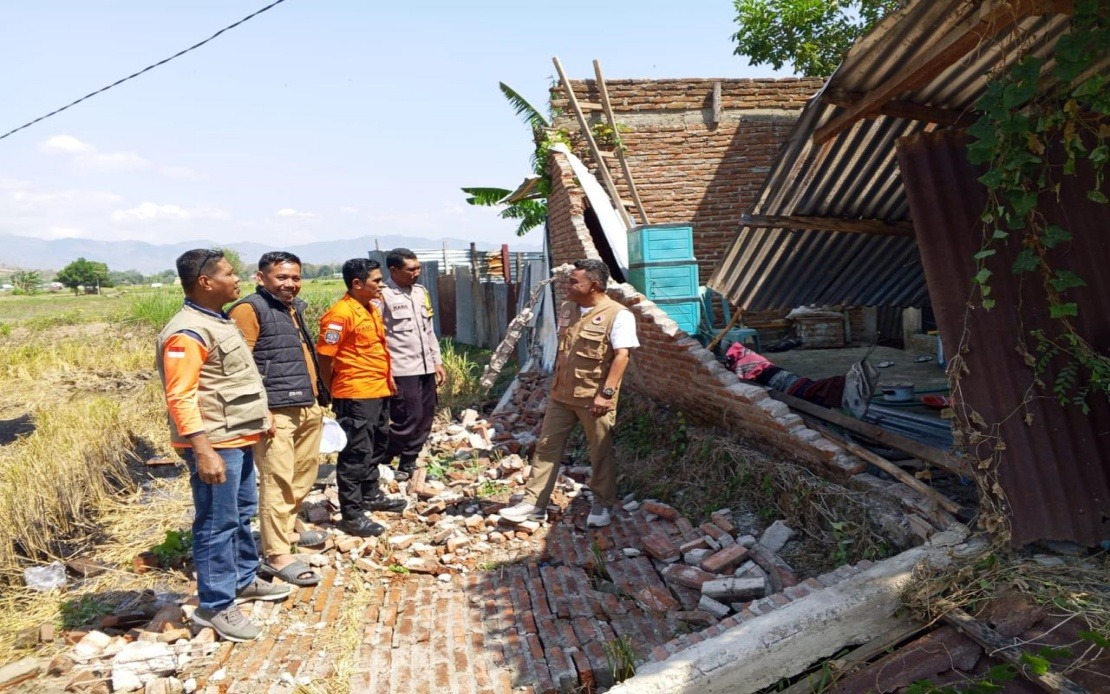
A devastating magnitude 7.7 earthquake has claimed at least 38 lives on Indonesia's Flores Island in East Nusa Tenggara, with rescue operations continuing at full pace to locate residents believed to be buried under collapsed structures. The natural disaster struck at 4:58 am local time on Saturday, with its epicentre located approximately 30 kilometres offshore from Mbay at a depth of 15 kilometres, unleashing destructive forces across the sparsely populated eastern region.
According to Suharyanto, chief of the National Disaster Management Agency (BNPB), the immediate focus remains on search and rescue operations. As of 3 pm on Saturday, two people were recorded as seriously injured while another 11 sustained minor injuries, though these figures are expected to change as rescue workers access additional affected areas. Approximately 2,000 residents have already evacuated to safety on their own initiative, demonstrating both the severity of the earthquake and the preparedness of local communities in this seismically active zone.
The earthquake's impact extended beyond immediate casualties. Widespread building damage has been reported across multiple municipalities on Flores, including the destruction of dozens of residential structures and several community health centres that serve as crucial medical facilities for remote settlements. The disaster also triggered a series of secondary hazards that have complicated rescue and relief efforts, with landslides blocking numerous roads and restricting access to affected villages. The infrastructure challenge is particularly acute given Flores' limited road network and mountainous terrain, which can isolate communities for extended periods following natural disasters.
A tsunami warning was issued in the immediate aftermath of the earthquake as a precautionary measure, reflecting the serious potential for sea-level disturbances following large undersea earthquakes in this region. However, authorities lifted the alert at 7:31 am after careful monitoring of ocean levels revealed no significant rise in sea height. This decision proved critical for maintaining transportation links, as the ports serving Flores represent vital lifelines for delivering emergency aid and evacuating the most seriously injured to medical facilities on nearby islands.
Transport infrastructure sustained notable damage, with airport terminal buildings affected and two port facilities experiencing some structural impact, though importantly the runway remained operational for incoming rescue flights. This preservation of aviation capability has enabled the rapid mobilization of specialized equipment and personnel. The BNPB has already deployed two helicopters and one fixed-wing aircraft to facilitate evacuations of the critically injured and to transport relief supplies to communities cut off by landslide-blocked roads.
The scale of required reconstruction became apparent as officials acknowledged that Saturday represented merely the first day of the disaster response. Casualty figures and damage assessments were expected to rise substantially as rescue teams gained access to more remote settlements and as structural engineers conducted full surveys of building integrity across the affected region. This pattern is typical of major earthquakes in Indonesia, where initial reports often underestimate the full toll as communication systems are restored and rescue teams penetrate areas initially cut off from outside contact.
Authorities have prioritized dual objectives beyond immediate rescue operations: restoration of critical infrastructure and provision of humanitarian assistance. The Public Works Ministry deployed personnel and heavy equipment specifically to clear landslide-blocked roads, a task that could require days of continuous work in mountainous terrain. Concurrently, the BNPB coordinated distribution of essential supplies including food, drinking water, clean water for sanitation, temporary shelter tents, generators for power, and medical equipment to affected communities, working through established disaster response protocols.
The deployment of military and police personnel alongside dedicated search and rescue specialists from Basarnas reflected the magnitude of coordination required. These agencies brought specialized equipment including rescue dogs, heavy lifting machinery, and medical teams trained in mass casualty management. The speed of deployment, moving resources to Flores within hours of the earthquake, underscored Indonesia's experience with seismic disasters and the maintenance of permanent disaster response capacity across the archipelago.
For regional observers, the Flores earthquake underscores both the seismic vulnerability of eastern Indonesia and the fragility of disaster response systems in remote areas. The region sits along the Pacific Ring of Fire, making earthquakes a recurring threat rather than an exceptional event. However, the challenges of reaching isolated communities, maintaining communication networks, and providing sustained medical care in such environments remain acute. The incident serves as a reminder of why countries throughout Southeast Asia continue investing in early warning systems, disaster preparedness training, and regional mutual aid agreements for major natural disasters.

