The humanitarian crisis in Nepal has reached a devastating inflection point as the search for survivors and identification of the dead continues three days after a catastrophic flash flood devastated the country's northern border region on August 26. What began as an emergency response has transformed into a grim exercise in identification, with photographs of mangled corpses now displayed at the gates of Tribhuvan University Teaching Hospital in Kathmandu—a haunting symbol of the scale of loss. More than 500 confirmed deaths have been reported, yet hundreds of people remain unaccounted for, their fates unknown as rescue teams methodically comb through the Bhotekoshi river system and downstream areas searching for any sign of life or remains.
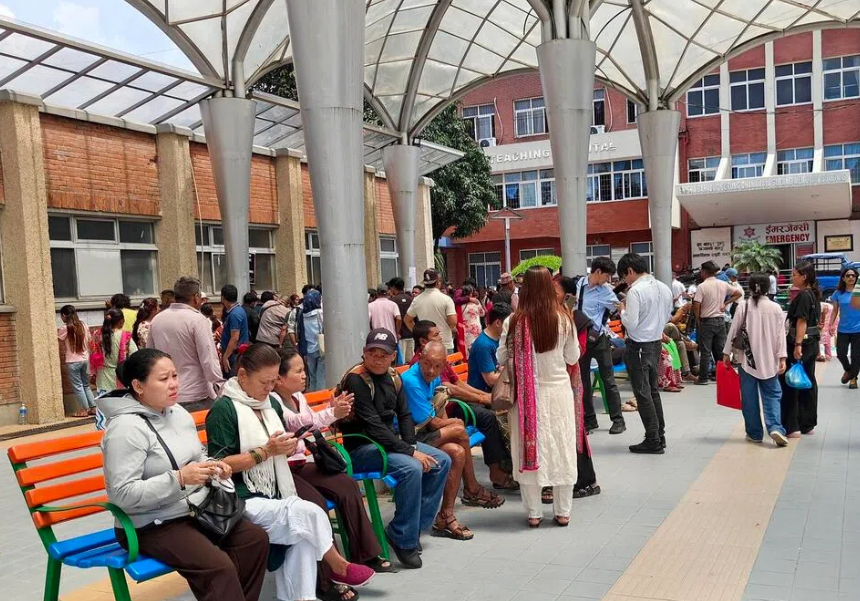
The personal dimensions of this tragedy have become starkly visible in the desperate scenes playing out across Kathmandu's hospitals. Families and friends of the missing cluster outside TUTH's gates each day, scanning photographs with growing desperation and diminishing hope. Among them is Dolma Tamang, a 36-year-old woman whose sister and brother-in-law vanished on the morning of the flood while transporting goods from the Chinese border through Rasuwa district. The couple's phones went silent after the deluge, leaving Tamang with no choice but to spend the past three days running between hospitals, seeking any information that might lead her to them. "It has been very difficult; my tears have run dry," she recounted to The Straits Times, her words capturing the exhaustion and emotional depletion that characterizes the experience of thousands searching for loved ones.
The scale of displacement is staggering. The missing persons registry at TUTH had swelled to more than 1,500 by the afternoon of August 28, a figure that continued to grow as more people checked in with authorities and more families arrived in the capital seeking news. Hospitals have become makeshift identity centres, with walls now plastered entirely with posters featuring photographs of those unaccounted for—a tragic collage of last-known images and desperate pleas for information. The emotional toll on those searching is evident in every interaction. Bikesh Shrestha, a 35-year-old hunting for his cousin Rakesh, found himself unable to view the displayed photographs of unidentified bodies, his emotional reserves too fragile to process what might await him among the images. "I had to turn my eyes away," he said, his voice strained as he alternated between hope and a paralyzing fear.
The international dimension of this disaster has added complexity to the response. Among the missing are nine Singaporeans, approximately 288 Indian nationals, and tourists from various countries who were either visiting Nepal or caught in the disaster while transiting through the region. The Gyirong border crossing between Nepal and Tibet, severely damaged in the flood, has been particularly tragic for Indian pilgrims who were either completing the Kailash-Mansarovar pilgrimage or preparing to embark on it—a religious journey of profound significance that has now become shrouded in uncertainty for hundreds of families. Groups from across India have begun arriving in Kathmandu, with relatives flying in from southern states like Tamil Nadu to join the search efforts and provide emotional support to those already in Nepal attempting to trace missing family members.
Rescue and recovery operations have been hampered by both practical constraints and the deliberate policy choices of Nepal's government. More than 4,400 police personnel have been mobilized alongside the Nepali Army and Armed Police Force, but progress remains slow given the scale of the affected area and the destruction wrought by the flood. A temporary halt in rescue operations occurred on the morning of August 28 due to concerns that a barrier lake—formed by debris damming the river—could breach and trigger a secondary flood. Though operations resumed after officials determined the immediate danger had passed, the situation remains unpredictable and precarious.
Nepal's Prime Minister Balen Shah has notably declined offers from China, India, and other countries to deploy additional international search and rescue teams, a decision rooted in lessons learned from the chaotic 2015 earthquake response when multiple foreign rescue teams created coordination difficulties rather than streamlining relief efforts. Instead, the government is requesting financial assistance channeled through a unified mechanism that will be announced shortly, with reconstruction and rehabilitation to be handled through consultation with international agencies. India has nonetheless provided substantive support, initiating relief assistance including temporary shelters, blankets, hygiene kits, solar lamps, medicines, and food supplies transported via military aircraft. New Delhi has also offered prefabricated truss bridges to replace dozens of structures destroyed across the region, recognizing that infrastructure rehabilitation is essential for accessing remote areas and restoring connectivity.
The humanitarian logistics are becoming increasingly strained as recovery operations extend downstream from the initial impact zone. Chitwan district, located further south along the river and bordering India, has been severely affected, with roads rendered impassable by accumulations of debris and silt. The district's national park and wildlife facilities have been damaged, but the most pressing concern is the overwhelming number of bodies requiring storage and identification. By the afternoon of August 28, 186 bodies had been recovered in Chitwan alone, yet the district's collective morgue capacity stands at only 30 to 50 bodies—a catastrophic shortfall that has forced authorities to seek alternative storage solutions. Similar capacity crises are emerging across multiple districts, as reported by The Kathmandu Post, threatening to overwhelm the medical and administrative infrastructure for managing the dead.
The search for survivors continues to yield some results, providing fragile threads of hope amid the tragedy. Nepal's security agencies have successfully rescued hundreds of people, discovering them trapped under debris, sheltered within tunnels, and buried beneath collapsed structures. These rescues are meticulously documented, with names updated on a government website that serves as a crucial reference point for searching families. The Nepal Tourism Board reported on August 28 that 121 foreign tourists had been rescued, including 85 Indian nationals and 16 Chinese citizens, suggesting that continued intensive efforts may still yield additional survivors from the disaster zone.
Within this landscape of loss and uncertainty, individual stories of perseverance illuminate the human dimensions of the crisis. Sushila Shrestha, a 23-year-old woman, continues searching for her 21-year-old brother Bir Bahadur, a truck driver who was transiting through Rasuwa district when the flood struck while heading to the Chinese border for commercial purposes. The absence of any confirmed news of his fate has paradoxically become a source of hope for his sister. "I am convinced he will return; he has to return," she declared, clinging to the possibility that silence might indicate survival rather than death. Such testimonies reveal the psychological mechanisms through which families endure the agonizing uncertainty that characterizes disasters of this magnitude.
For Malaysia and other Southeast Asian nations, the Nepal floods represent a sobering reminder of the region's vulnerability to climate-related disasters and the cascading effects of cross-border disasters. With hundreds of foreign nationals affected and international coordination proving challenging, the incident underscores the importance of regional frameworks for disaster response and the need for streamlined international assistance protocols. The particular vulnerability of pilgrimage routes and commercial corridors to catastrophic flooding suggests that infrastructure planning and early-warning systems along major transit routes should be prioritized at the regional level, with coordinated investment from governments benefiting from these connections.

