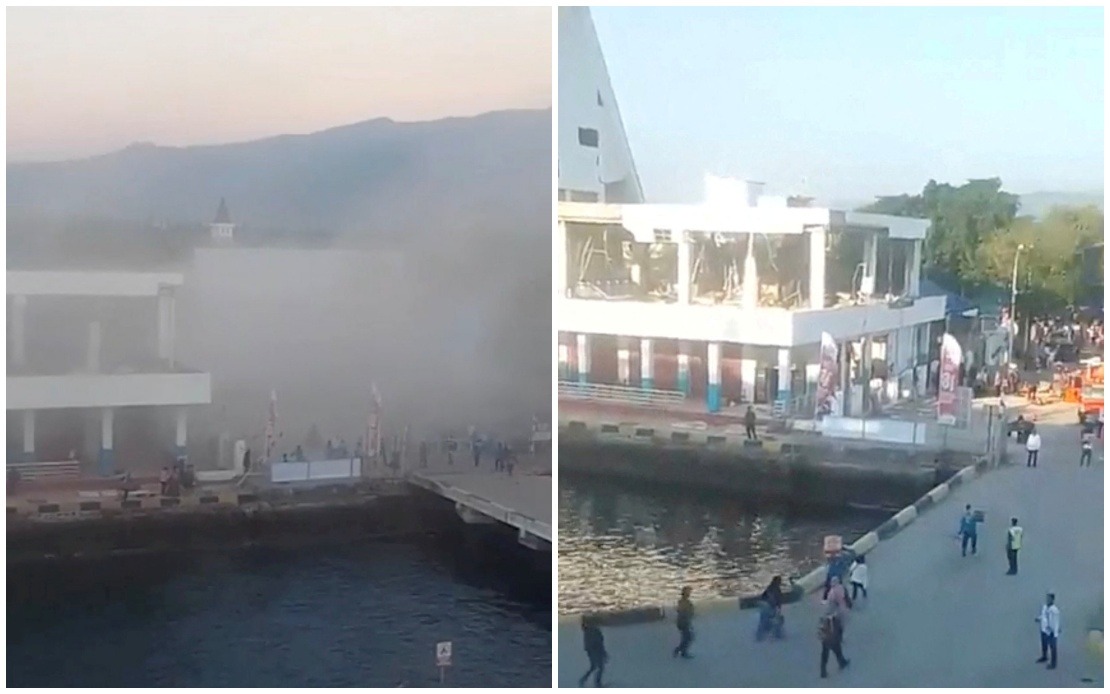
The death toll from a devastating magnitude 7.7 earthquake that struck off the coast of Flores Island in eastern Indonesia has reached at least 20, with rescue officials confirming additional injuries and people still trapped beneath collapsed structures. The seismic event, which occurred early Saturday morning near Mbay town in Nagekeo Regency, unleashed a series of powerful aftershocks that continued to rattle the region and compound the emergency response efforts being mounted by Indonesian authorities across the affected areas.
According to the Maumere Search and Rescue Office, the confirmed fatalities stand at 20, whilst six others sustained injuries from the quake and its aftermath. Most critically, rescue teams have identified at least two individuals who remain buried under rubble, intensifying efforts to locate survivors before conditions further deteriorate. The scale of human casualties underscores the earthquake's significant destructive force and the challenging terrain that rescuers must navigate in this remote part of eastern Indonesia.
The physical destruction wrought by the earthquake has been substantial across the affected region. East Nusa Tenggara Governor Melki Laka Lena reported extensive damage to residential buildings and commercial structures, with numerous homes reduced to rubble. Critical infrastructure has also suffered damage, with several roads rendered impassable either through direct destruction or by landslides triggered by the seismic activity. Such infrastructure damage poses particular challenges for evacuation and rescue operations, as teams must often work around blocked routes to reach isolated communities.
Social media footage circulating from affected areas provides harrowing evidence of the earthquake's intensity, with videos showing concrete structures collapsing into clouds of dust and debris. Resident accounts document scenes of panic as people fled buildings and rushed into streets for safety as the ground shook beneath them. These eyewitness accounts paint a picture of the sudden terror experienced by inhabitants of what is generally a geologically unstable region prone to seismic disturbances.
Governor Melki Laka Lena acknowledged during a press conference in Kupang that authorities are still in the process of compiling comprehensive damage assessments. The full extent of destruction across all affected settlements remains unclear as emergency officials continue field investigations. This incomplete picture reflects the challenges of coordinating responses across a dispersed island region where some communities remain difficult to access.
The earthquake triggered a tsunami warning immediately following the initial tremor, a precautionary measure that is standard protocol for seismic events of this magnitude occurring offshore. Indonesia's Meteorology, Climatology and Geophysics Agency subsequently lifted the tsunami warning after determining that water surge risks had diminished, though officials maintained heightened vigilance regarding potential aftershocks. The removal of the tsunami alert allowed residents to cautiously return from evacuation areas, though many remain wary given the continuing seismic activity.
Airport operations in East Nusa Tenggara have been significantly disrupted, with multiple flights cancelled in the immediate aftermath of the earthquake. This suspension of air services has hampered the movement of additional rescue personnel, medical supplies, and emergency equipment into the region, creating bottlenecks in the relief response. As flight operations gradually resume, authorities will prioritise the deployment of rescue teams and humanitarian assistance to the worst-affected communities.
The Chinese Consulate General in Denpasar issued an advisory to Chinese nationals within its consular jurisdiction on Saturday morning, specifically targeting tourists visiting Labuan Bajo and other popular destinations in East Nusa Tenggara. The consulate recommended that visitors remain on high alert and actively monitor local disaster warning systems for information about ongoing seismic activity. Beyond immediate aftershock risks, the advisory emphasized the importance of avoiding coastal areas due to potential tsunami hazards, a particularly important consideration given the region's tourism economy and the large number of international visitors typically present.
The earthquake's epicentre near Mbay town places it in a region of Indonesia that sits along the Pacific Ring of Fire, a seismically active zone where tectonic plates converge and create frequent earthquakes. This geological reality means that eastern Indonesian communities like those on Flores Island live under persistent seismic risk, with powerful earthquakes a recurring threat rather than exceptional occurrences. The region's vulnerability underscores ongoing challenges for Indonesia's disaster preparedness infrastructure in remote areas.
Rescue operations continue with teams working methodically through affected settlements to locate survivors and assess structural damage. Indonesian authorities have indicated that updates regarding casualties and destruction will be provided as emergency operations develop. The coming hours and days will be critical for determining whether additional survivors can be extracted from collapsed buildings and for establishing clear lines of communication with isolated communities whose status remains uncertain.
For Malaysian readers and Southeast Asian observers, this earthquake serves as a sobering reminder of the region's seismic vulnerability and the challenges that natural disasters pose across an archipelago characterised by complex geology and dispersed populations. The incident highlights the importance of regional disaster preparedness mechanisms and the ongoing need for investment in early warning systems, emergency response capabilities, and community resilience building across the broader Southeast Asian region.

