Kuala Lumpur City Hall (DBKL) has rolled out a package of three operational reforms designed to reduce regulatory friction for businesses across Malaysia's capital, signalling a shift toward more responsive municipal governance that acknowledges the challenges facing traders in the post-pandemic economy. The initiatives, introduced following consultation with business associations, address long-standing bottlenecks in permit applications, outdoor trading arrangements, and the closure-and-reopening cycle that has frustrated food operators in particular.
The centrepiece of DBKL's reform is a standardised monthly fee of RM30 per set for tables and chairs placed on five-foot ways—the covered walkways that line Kuala Lumpur's older commercial streets. This flat-rate approach replaces what traders say was an opaque, inconsistently applied system, enabling coffee shop owners, hawkers, and restaurant operators to budget with certainty while expanding their service areas into public spaces. Applications will be processed through DBKL branch offices aligned with parliamentary constituencies, with decisions based on location suitability and pathway width to ensure pedestrian and emergency access remain unobstructed. The framework emphasises that wheelchairs and emergency vehicles retain unimpeded passage, reflecting contemporary accessibility standards that align with evolving Malaysian expectations around inclusive urban design.
Parallel to this outdoor-seating reform, DBKL has simplified the approval pathway for minor works permits, a category encompassing tile replacements, ceiling work, and other non-structural alterations that previously required full permit applications despite their low safety risk. Under the new system, applicants need only complete a straightforward form and notify DBKL; the local authority will then issue approval through branch offices without the delays that historically accompanied routine maintenance projects. This streamlining reflects international best practice in regulatory efficiency, where jurisdictions distinguish between high-risk and low-risk modifications to avoid bottlenecking resources on routine, predictable work. By cutting processing time, DBKL removes friction that particularly affects small and medium-sized operators who lack dedicated compliance staff.
The third pillar targets one of the most disruptive aspects of food business regulation: the extended closures imposed for hygiene violations. Previously, a premises ordered shut for sanitation failures faced an uncertain timeline to reopen, with inspections scheduled at administrative convenience rather than operational urgency. DBKL now permits reopening as soon as 24 hours after cleaning is completed, conditional on a fresh inspection confirming that all hygiene and food safety standards have been met. This accelerated timeline acknowledges the economic harm of prolonged closure—lost revenue, staff wage payments, and supply-chain disruptions cascade through small businesses and their suppliers. However, the authority maintains that reopening is not automatic; inspection confirmation remains mandatory, preserving public health safeguards even as timelines shorten.
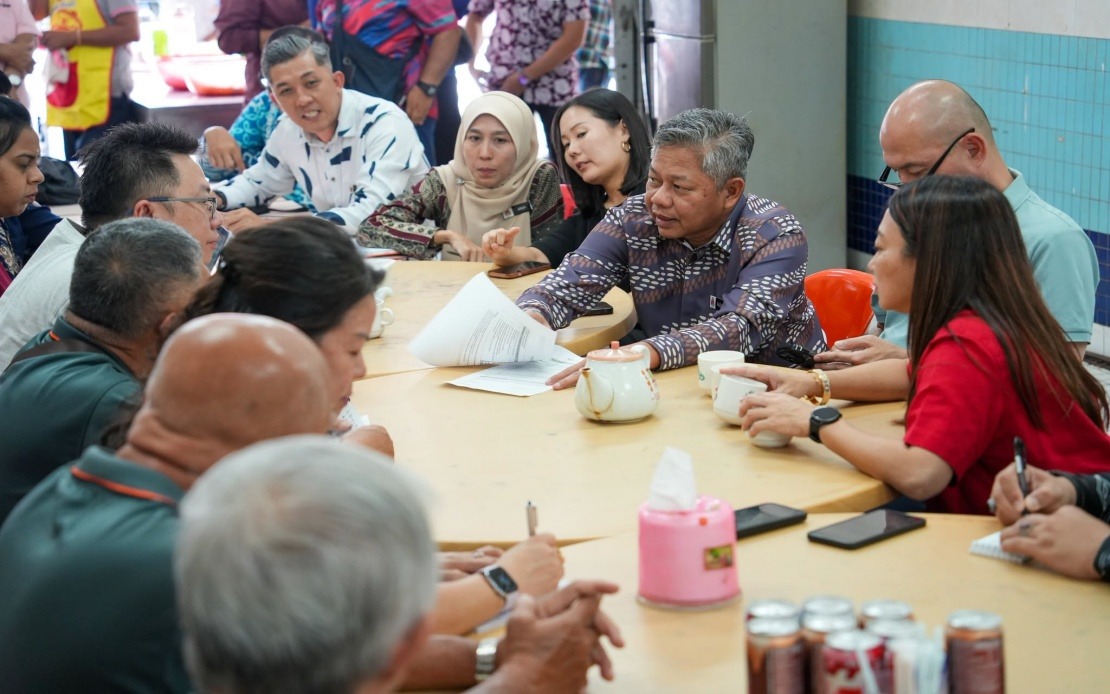
The reforms emerge from sustained engagement between DBKL leadership and trader associations, particularly following a consultation involving Minister Hannah Yeoh of the Prime Minister's Department (Federal Territories), Kuala Lumpur mayor Datuk Seri Fadlun Mak Ujud, and representatives of the Selangor and Kuala Lumpur Chinese Coffee Shop and Tea Shops Owners' Association. An earlier dialogue with the Malaysian Muslim Restaurant Owners' Association (PRESMA) in April specifically addressed reopening procedures, indicating that grievances about closure timelines cut across cultural and business-type boundaries. This cross-community engagement suggests DBKL recognised that regulatory friction affects all traders regardless of ethnicity or cuisine, and that standardisation itself becomes a fairness mechanism.
Central to these reforms is DBKL's commitment to standardised, transparent processes at the branch level. The authority explicitly notes that clear requirements reduce room for inconsistent interpretation by frontline officers, a chronic problem in Malaysian municipal administration where discretion and inconsistency have historically created opportunities for rent-seeking behaviour. By codifying procedures into fixed fees and streamlined forms, DBKL simultaneously serves traders seeking certainty and officers seeking clear guidance. This approach also supports digitalisation efforts that other Malaysian local authorities are pursuing—once procedures are standardised, they become more amenable to online submission and tracking, reducing face-to-face interactions and associated transaction costs.
For Malaysian entrepreneurs and regional observers, these reforms carry broader significance beyond Kuala Lumpur's boundaries. The capital remains a template for municipal governance across Southeast Asia, and business-friendly regulatory innovation here can influence policy thinking in other Malaysian cities and even in neighbouring jurisdictions. The explicit acknowledgment that all traders benefit equally from these measures, regardless of background or premises type, also signals a deliberately inclusive approach that has become increasingly important as Malaysia navigates questions about equitable economic participation. Hawkers, coffee shop owners, and restaurant operators—many of whom are migrant workers or operate on thin margins—typically lack the compliance resources of large enterprises, making streamlined processes a genuine equity issue.
However, the reforms' success will depend on consistent implementation across DBKL's 11 branch offices. Standardisation only works if all branches apply identical criteria; inconsistent interpretation would simply shift the problem from headquarters to the periphery. Training of frontline staff and regular auditing of decision-making will be essential. Additionally, while the RM30 monthly fee for outdoor seating is transparent, traders will watch whether DBKL enforces the rules fairly or selectively—competitive fairness hinges on equal enforcement, not merely equal rules on paper.
The initiative also reflects economic realities that have shaped Malaysian policy discourse since the COVID-19 pandemic. Lockdowns devastated hospitality and food businesses; many operators have not fully recovered, and many others have shifted to lower-margin models like outdoor seating and street vending to rebuild. By reducing regulatory costs and timelines, DBKL acknowledges that small traders are operating with limited buffers and that administrative friction directly translates into lost livelihoods. This practical recognition of economic vulnerability, coupled with standardised rather than discretionary treatment, positions DBKL as responsive to ground-level concerns.
Looking ahead, the true measure of these reforms will emerge in the months following their rollout. Trader feedback will reveal whether branch offices are genuinely implementing the simplified processes or reverting to old patterns under institutional inertia. Media monitoring and public complaints mechanisms will be useful tools for transparency. If successfully executed, these three initiatives could establish a template for other Malaysian municipalities seeking to balance public health, accessibility, and pedestrian safety with the operational needs of a dynamic informal and formal economy. For regional policymakers, they illustrate that regulatory simplification need not compromise standards—it merely requires alignment between stated rules and actual practice, a lesson with application far beyond Kuala Lumpur's streets.

