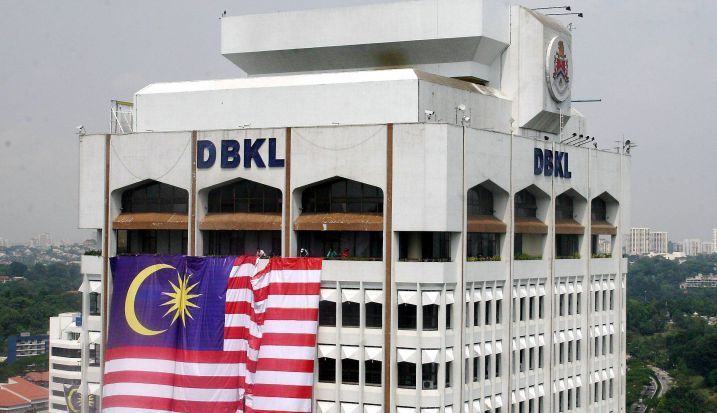
Kuala Lumpur City Hall has escalated enforcement action against the Taman Desa Phase 1 Residents Association, issuing a formal two-week deadline to dismantle facial-recognition systems and boom gates that were installed on public roads without authorization. DBKL enforcement officers posted red notices on the scanning devices positioned at Guard Posts 1 and 4 on Thursday, August 27, alongside yellow enforcement tape cordoning off the equipment. The notices explicitly stated that the structures violated Section 70 of the Street, Drainage and Building Act 1974, which governs alterations to public thoroughfares. A DBKL spokesperson confirmed that City Hall had consulted its legal department before issuing the notice and warned that failure to comply would result in the city authority itself removing the installations.
This enforcement action represents the culmination of a protracted standoff between DBKL and the residents association over the neighbourhood's guarded-community initiative. The dispute centres on the legitimacy and proportionality of access restrictions imposed through these security mechanisms. DBKL previously conducted an inspection on August 17 and found that the Taman Desa Phase 1 Residents Association had not implemented required modifications despite being granted an extended 30-day grace period to bring its scheme into compliance. An August 18 letter from City Hall explicitly ordered the association to fully restore vehicular access through Posts 2, 5, and 6, remove all unapproved structures, and reinstate public access to the affected roads. Earlier, on March 5, DBKL had already communicated that the CCTV cameras and facial-recognition technology had been deployed without prior municipal approval, yet the association proceeded without securing the necessary authorization.
The underlying friction became more visible when over 40 residents, predominantly individuals aged 50 and above, staged a demonstration on August 24 at Gate 5 on Jalan Desa Ria to voice their grievances about access restrictions. This gate remains permanently closed to vehicular traffic and stays locked to pedestrians until 6am, a policy that residents argue creates unnecessary hardship for early-morning exercisers. Those seeking to access a nearby public park are forced to navigate a longer, more hazardous route along a busy thoroughfare, exposing them to increased traffic risks. Beyond mobility concerns, residents have articulated several serious objections to the security infrastructure: they view the facial-recognition system as an invasive technology that compromises personal privacy, and they have raised valid concerns that the barriers could impede the rapid response of emergency vehicles during medical crises or disasters.
The facial-recognition and access-control apparatus represents a growing tension in Malaysian urban neighbourhoods between residents' desires for enhanced security and safety, and municipal authorities' commitment to ensuring that public roads remain genuinely public and accessible. Across Southeast Asia's rapidly growing cities, gated communities and access-controlled neighbourhoods have proliferated as affluent residents seek refuge from perceived urban security threats. However, such schemes frequently encroach upon public land and restrict the movement rights of citizens who live nearby or need to pass through these areas. Malaysia's regulatory framework, particularly the Street, Drainage and Building Act 1974, explicitly prohibits residents associations from unilaterally restricting access to public roads without municipal consent.
Taman Desa Phase 1 Residents Association president Frank Yeh has defended the initiative by asserting that the association followed proper procedures and secured support from 81 per cent of residents through what the association claims was a legitimate consultation process. This claim underscores a fundamental question in Malaysian local governance: whether resident association support, however substantial, can override municipal authority and statutory obligations to keep public infrastructure genuinely accessible. The association's reliance on a majority-support argument, while politically significant, does not address DBKL's legal position that public roads cannot be restricted without city hall authorization, regardless of resident sentiment.
The two-week deadline now places the residents association at a crossroads. Compliance would require dismantling security infrastructure that residents perceive as essential to their neighbourhood's safety, while non-compliance invites DBKL to undertake enforcement removal at municipal expense. This scenario highlights the growing friction between grassroots community organizing and municipal regulatory authority in Malaysian cities. The association's initial claim of following required procedures has been directly contradicted by DBKL's enforcement position, suggesting a significant communication or documentation gap during the original planning phases.
Beyond the immediate dispute, this case carries implications for how Malaysian local authorities balance resident autonomy with public access rights. DBKL's intervention signals that city authorities will not tolerate de facto privatization of public thoroughfares, even when implemented by organized, well-intentioned resident groups. The precedent established by this enforcement action may influence how other neighbourhoods across Kuala Lumpur and other Malaysian cities approach security measures, compelling them to work more closely with municipal authorities during planning rather than implementing systems first and seeking approval afterward.
The emergency-services argument raised by protesting residents deserves particular consideration. In densely populated urban areas, every minute counts during medical emergencies, and access barriers can delay ambulances reaching patients. This practical safety concern transcends the subjective debate about security benefits versus privacy intrusions and provides a concrete rationale for municipal insistence on unrestricted access to public roads. DBKL's position ultimately reflects recognition that public safety cannot be sacrificed for neighbourhood-specific security preferences.
Looking ahead, the association may seek to negotiate a compromise arrangement with DBKL that preserves some security enhancements while ensuring full public access and emergency-vehicle passage. Some neighbourhoods have successfully implemented such hybrid systems involving voluntary identification procedures, improved lighting, and CCTV monitoring without permanent access restrictions. Whether Taman Desa Phase 1 Residents Association will pursue negotiation or contest the enforcement action remains unclear, but the two-week timeline leaves limited room for extended deliberation.

