Kuala Lumpur City Hall (DBKL) has launched a comprehensive reform agenda comprising 16 governance initiatives spanning the past six months, responding to an embarrassingly low score in the Public Service Corruption Ranking under the 2025 Local Authority Star Rating System. The institutional reckoning came after DBKL secured merely 0.08 per cent out of a possible 5 per cent allocation for the anti-corruption assessment, a result that galvanised the municipality into dramatic corrective action.
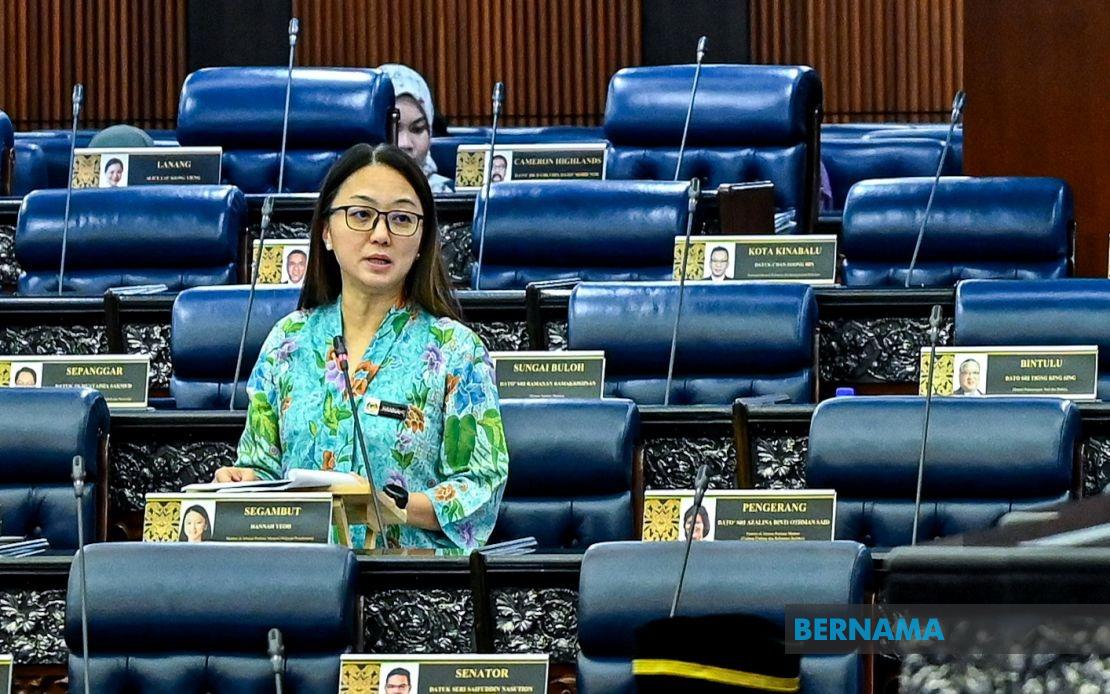
Minister in the Prime Minister's Department (Federal Territories) Hannah Yeoh disclosed the initiative in parliamentary question time, explaining that the poor performance triggered intensive self-examination within DBKL's administration. The catalyst for this reform effort emerged from an engagement session with Federal Territory Members of Parliament held on March 2, during which IIUM researchers conducted a comprehensive assessment. That investigation identified four strategic recommendations aimed at overhauling DBKL's administrative systems, governance structures, integrity protocols, and service delivery mechanisms.
At the heart of the reform package lies the rectification of five distinct procedural vulnerabilities that the Malaysian Anti-Corruption Commission had flagged. These deficiencies encompassed troubling practices across multiple operational domains: the production and content management of a radio studio broadcast initiative; the allocation methodology for Ramadan Bazaar commercial sites; oversight mechanisms for contracts relating to business licensing service provision; governance frameworks governing the Malaysian Statutory Bodies Association Sports Championship; and collection procedures for rental income from DBKL-administered residential housing and public housing schemes. Each represented a potential vulnerability in the organisation's decision-making architecture.
To strengthen institutional checks and balances, DBKL has fundamentally restructured its committee system. The municipality abolished the Special One Stop Centre (OSC) Committee entirely, recognising that the body's fusion of regulatory and administrative functions created opportunities for political interference in development approvals. The decision reflected a deliberate shift toward separating powers within the organisation's decision-making hierarchy. Simultaneously, DBKL established three new oversight mechanisms: the Audit Committee, the Governance and Integrity Committee, and the Mayor's Contributions Committee, each designed to distribute decision-making authority and prevent conflicts of interest that historically concentrated power.
Parliamentary transparency has been substantially enhanced through granting all Federal Territory MPs access to the OSC 3.0 Plus Portal, a digital system enabling legislators to scrutinise development applications and lodge formal submissions to the mayor before approvals materialise. This mechanism transforms parliamentary oversight from a retrospective function into a prospective one, allowing elected representatives genuine influence over municipal decisions. Additionally, DBKL has implemented a financial accountability ceiling, capping the mayor's unilateral authority to approve monetary contributions at RM3,000, with any requests exceeding that threshold requiring Top Management Committee deliberation.
The philosophical transformation extends beyond structural reorganisation. Hannah characterised the reforms as intended to fundamentally reorient DBKL's decision-making culture from an individual-centric paradigm toward a system anchored in collective deliberation, institutional safeguards, and integrity protocols. The Audit Committee chairmanship has been deliberately removed from the mayor's purview, institutionalising independence in financial and operational scrutiny. DBKL has further instituted job rotation policies for officers occupying sensitive positions, reducing the risk of entrenched fiefdoms and corruption networks. The municipality will introduce body-worn cameras for enforcement personnel during the fourth quarter, creating evidentiary records of street-level interactions and enhancing accountability.
Digitalisation constitutes another pillar of the reform strategy, representing both a transparency and efficiency mechanism. As of July, DBKL had operationalised 170 online application services, with a target of 180 end-to-end digital services by year-end, progressively eliminating paper-based processes that historically created opportunities for discretionary decision-making and informal payments. By 2030, DBKL envisions complete digitalisation of its application processing, fundamentally altering how residents and businesses interact with the municipality. The e-Lesen digital licensing system exemplifies this transformation, eliminating reliance on intermediary agents known colloquially as runners who historically functioned as informal gatekeepers and corruption vectors.
The licensing renewal framework itself has undergone significant reform. Effective July 1, DBKL extended licence validity from shorter periods to three-year terms, reducing the frequency of renewals and associated interactions with municipal officials, thereby diminishing corruption contact points. The e-Lesen system's integration with the Departmental Enforcement System (SPJ) creates a unified digital infrastructure where licensing status updates automatically across enforcement mechanisms, reducing opportunities for fraudulent or inconsistent decision-making.
These multifaceted reforms carry implications extending beyond Kuala Lumpur's municipal boundaries. As Malaysia's capital and most visible city administration, DBKL's governance standards establish implicit benchmarks for other local authorities across the nation. The low anti-corruption score and subsequent intensive reform response signal broader systemic vulnerabilities within municipal administrations that other city councils may similarly harbour. The institutional architecture that enabled DBKL's governance failures—concentrated decision-making authority, opaque processes, discretionary financial approvals, and paper-based systems—likely replicates across Malaysian municipalities, suggesting sector-wide vulnerabilities.
For residents and businesses operating within Federal Territory jurisdictions, the reforms represent a potential reduction in informal costs associated with municipal interactions. Digitalisation theoretically eliminates opportunities for officials to demand facilitation payments, while transparency mechanisms and oversight committees create documentary trails discouraging corrupt practices. The parliamentary oversight mechanism through the OSC portal introduces a new accountability vector, as MPs acquire political incentives to expose corrupt practices within their constituencies. However, genuine accountability depends on consistent implementation and enforcement of these frameworks over time, requiring sustained political will and institutional discipline beyond the initial reform announcement.

