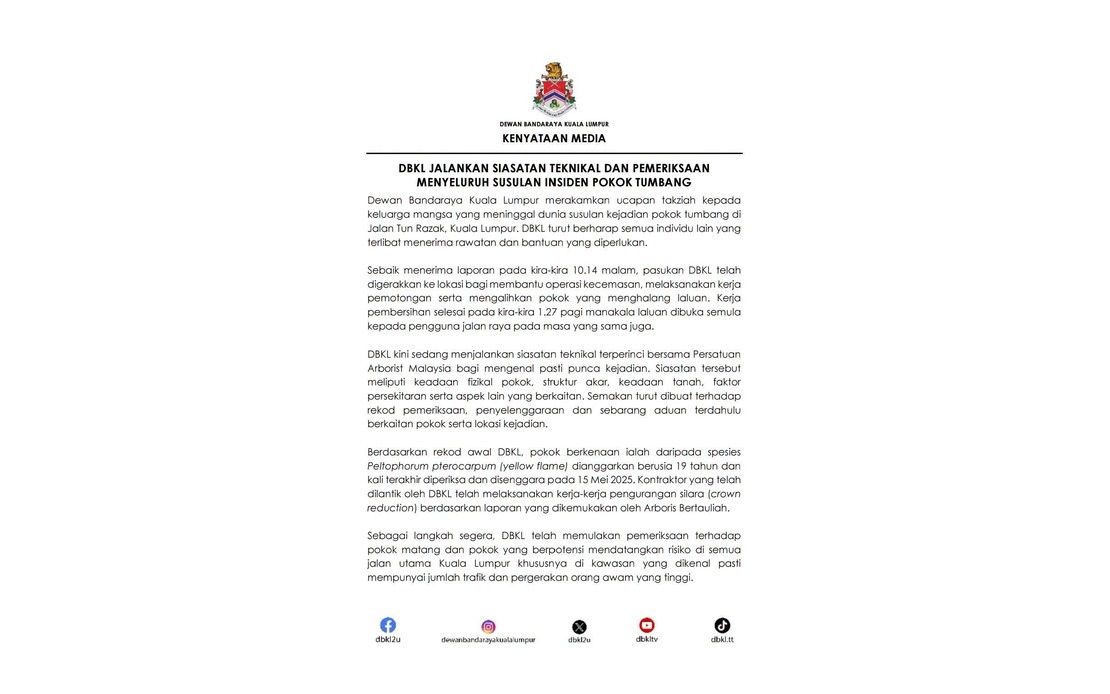
A fatal incident involving a fallen tree on Jalan Tun Razak in Kuala Lumpur has triggered a comprehensive technical investigation by the city authorities and tree specialists. The incident, which claimed a life late last evening, prompted an immediate response from Kuala Lumpur City Hall (DBKL) and has since become a catalyst for wider urban tree safety measures across the capital.
DBKL has partnered with the Malaysian Society of Arborist to conduct an in-depth examination of the circumstances surrounding the collapse. The joint investigation encompasses multiple dimensions of tree health and environmental assessment, including detailed evaluation of the tree's structural integrity, root system analysis, soil composition, and broader environmental influences that may have contributed to the failure. Investigators are also reviewing all previous inspection records, maintenance logs, and historical complaints connected to the tree and the surrounding area, suggesting a methodical approach to identifying whether warning signs had been missed.
The fallen specimen was a Peltophorum pterocarpum, commonly known as a Yellow Flame tree, which stood at approximately 19 years of age according to DBKL records. The tree had undergone its most recent inspection and maintenance work on May 15, during which a certified arborist had recommended and supervised crown reduction works. This detail raises questions about whether the maintenance performed was adequate or whether the tree's condition had deteriorated more rapidly than anticipated in the two months following that intervention.
In its statement addressing the tragedy, DBKL expressed condolences to the victim's family and committed to providing necessary support and assistance to those affected. The authority pledged full cooperation with police and other relevant agencies as investigations continue, underscoring the seriousness with which the incident is being treated and the potential criminal or civil liability considerations that may emerge from the probe.
The emergency response itself was notably swift. Upon receiving reports at 10:14 pm, DBKL dispatched an emergency response team that worked through the night to fell the remaining unstable portions of the tree and clear obstructions from the roadway. The road was reopened by 1:27 am, restoring traffic flow after approximately three hours of disruption—a relatively brief closure for a major thoroughfare in the capital, reflecting the scale of resources mobilized to address the emergency.
Moving beyond the immediate incident, DBKL has initiated a broader preventive program targeting vulnerable trees across Kuala Lumpur's road network. The authority has begun systematic inspections of mature trees and those assessed as carrying elevated risk factors along all major arterial roads, with particular emphasis on locations characterized by high traffic volumes and significant pedestrian movement. This proactive stance reflects recognition that a single incident can signal systemic vulnerabilities in urban tree management and that residents and commuters throughout the city may face similar hazards elsewhere.
The initial phase of this inspection campaign focuses on several critical corridors including Jalan Ampang, Jalan Sultan Ismail, Jalan Raja Laut, Jalan Datuk Keramat, and portions of Jalan Tun Razak itself. Eight inspection teams, comprising five qualified arborists and supporting personnel, have been mobilized to complete these surveys within a ten-week timeframe. This deployment of specialist personnel suggests that DBKL recognizes the technical complexity of assessing tree stability and declines to rely solely on standard municipal maintenance crews for this critical assessment.
Beyond the immediate inspection blitz, DBKL is pursuing a longer-term technological solution to enhance tree safety monitoring across the city. The authority is awaiting approval from SIRIM, Malaysia's standards and industrial research institute, to deploy approximately 400 advanced sensors at high-risk tree locations. These devices represent a significant technological investment in preventive maintenance, capable of continuously monitoring multiple parameters that affect tree stability and structural integrity. The sensors will track soil conditions, moisture fluctuations, micro-movements within the tree structure, and the impacts of extreme weather events such as intense rainfall and flooding—conditions increasingly relevant in the context of climate change and more volatile weather patterns affecting the region.
The planned sensor installation will proceed in phases, beginning with four strategically selected locations: Jalan Bangsar, Dataran Merdeka, Jalan Ampang, and Jalan Raja Chulan. These initial deployment sites likely represent areas of high public concentration or where tree failure would present particular risks to crowds and traffic. By establishing baseline data at these locations first, DBKL can evaluate sensor effectiveness and refine deployment strategies before broader rollout across the city.
For Malaysians and Southeast Asian urban planners, this incident underscores the hidden risks embedded in mature urban tree populations. Trees provide essential ecosystem services—cooling effects, air quality improvement, and psychological well-being for city dwellers—yet aging trees in tropical environments face specific challenges including root rot, pest infiltration, and soil degradation that may not be immediately visible to casual inspection. The Jalan Tun Razak incident, while tragic, has catalyzed a recognition by DBKL that systematic, technology-enabled monitoring may be necessary to prevent future casualties in a densely populated metropolitan area.
The investigation's findings will likely carry implications beyond Kuala Lumpur. Other major Southeast Asian cities managing aging urban tree populations—particularly those in high-density areas—may look to DBKL's response as a benchmark for balancing the environmental and aesthetic benefits of street trees with public safety imperatives. The deployment of sensor technology, if successful, could establish a model for preventive tree management that other municipalities in Malaysia and the region might ultimately adopt.

