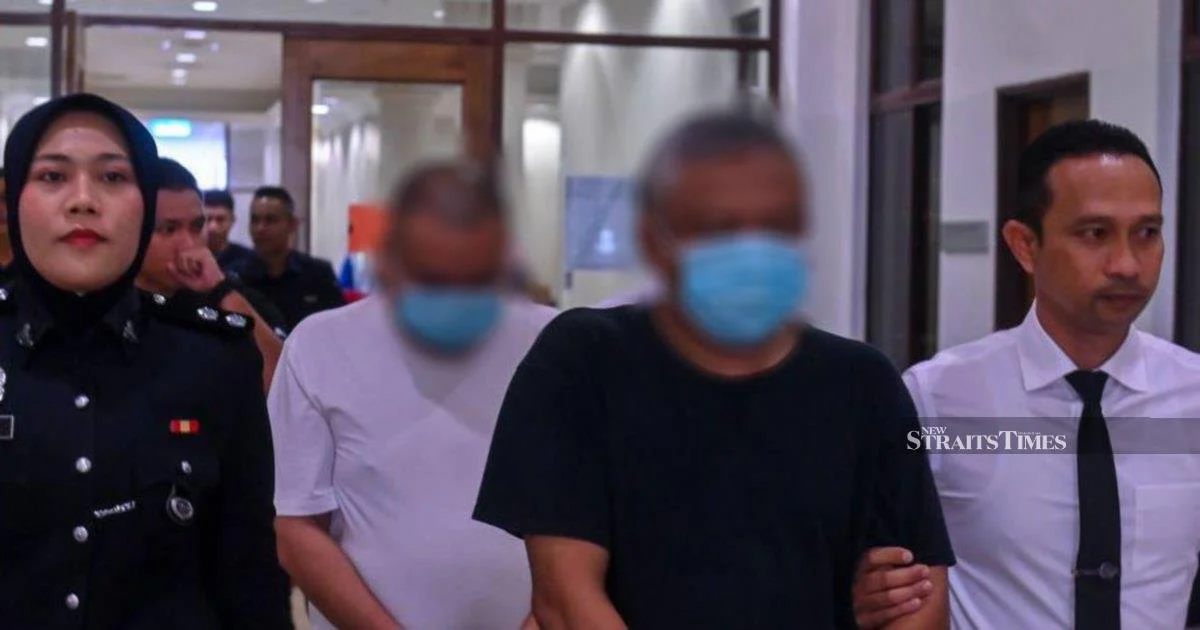
Kuantan police have arrested a businessman holding the Datuk title along with his assistant in connection with allegations of document forgery involving official royal insignia from Pahang's royal household. The detention followed investigative work into the creation and circulation of counterfeit correspondence that falsely displayed the coat of arms of the Tengku Mahkota of Pahang, raising serious concerns about the misuse of symbols associated with the state's monarchy.
The apprehension of both suspects marks an escalation in what authorities characterize as a sophisticated fraud operation. Police confirm that the arrested pair are suspected of manufacturing documents designed to falsely represent official communications from Pahang's royal institution, lending fraudulent legitimacy to what would otherwise appear as unauthorised correspondence. The presentation of authentic royal imagery on forged letters allowed the perpetrators to potentially deceive recipients and extract advantages through deception.
Forgery cases involving royal insignia carry particular gravity in Malaysia, where the monarchy holds constitutional significance and protective provisions under law. Misappropriating symbols of royal authority not only constitutes criminal fraud but also represents a breach of respect toward state institutions. The Pahang royal household has long guarded the integrity of its official seals and letterheads, making such counterfeiting operations subject to stringent legal penalties. The deliberate replication of the Tengku Mahkota's coat of arms suggests premeditation and technical capability to produce convincing false documents.
The involvement of an assistant in the scheme indicates the operation likely required multiple phases of coordination. Typically, such arrangements involve one party handling document design and reproduction while another manages distribution or execution of the fraud. The arrest of both individuals suggests investigators have identified a clear division of labour that contributed to the criminal enterprise's operation across multiple stages.
The Datuk title held by the principal suspect carries social and business implications that may have amplified the credibility of any forged documents he circulated. Individuals bearing such titles often command greater trust in business and social contexts, potentially making recipients more inclined to accept fabricated royal correspondence at face value. This social leverage, combined with professional letterhead forgery, created a potent combination for deception.
Fraud cases centring on forged official documents have become increasingly sophisticated in Malaysia over recent years, as perpetrators employ advancing technology to replicate security features and typography with greater accuracy. The successful production of documents bearing recognizable royal imagery demonstrates either access to high-quality reproduction equipment or detailed familiarity with the design specifications of authentic royal correspondence. Investigators will likely examine whether the suspects possessed technical expertise or relied on external resources for document production.
Police investigations in such cases typically extend beyond simple arrest and detention, involving comprehensive analysis of document samples, examination of equipment and materials used in forgery, and tracing the distribution networks through which fraudulent letters circulated. Financial institutions, government agencies, and private businesses may have been targeted or affected by the forged correspondence, requiring cross-agency coordination to determine the scope and impact of the fraud.
The legal consequences for forgery involving royal insignia in Malaysia are substantial. Beyond standard fraud charges, defendants may face additional counts under provisions specifically protecting royal symbols and institutional integrity. Sentences can extend significantly when the misuse of royal imagery is established, reflecting the seriousness with which Malaysian law treats any infringement on the dignity of the monarchy.
This case underscores wider concerns about document authentication in Malaysia's business and administrative environments. While technology has made authentic security features increasingly difficult to replicate perfectly, human error and insufficient verification procedures remain exploitable vulnerabilities. Organizations receiving official-looking royal correspondence should implement protocols confirming authenticity through direct communication with relevant institutions rather than relying solely on documentary appearance.
For the business community, particularly in Pahang, the arrest serves as a reminder of the risks inherent in transactions or arrangements based on unverified royal communications. The ability to produce convincing forgeries creates opportunities for elaborate confidence schemes targeting investors, suppliers, and partners who believe themselves to be operating under official approval or patronage. Heightened vigilance in authenticating high-stakes communications remains essential.
The investigation proceeds amid ongoing emphasis from Malaysian law enforcement on addressing sophisticated white-collar crime. Cases involving forgery of official documents, particularly those incorporating royal symbols, represent a category of economic crime that demands sustained investigative resources and prosecutorial attention. The resolution of this case may provide insights into broader networks of document fraud operating across the region.

