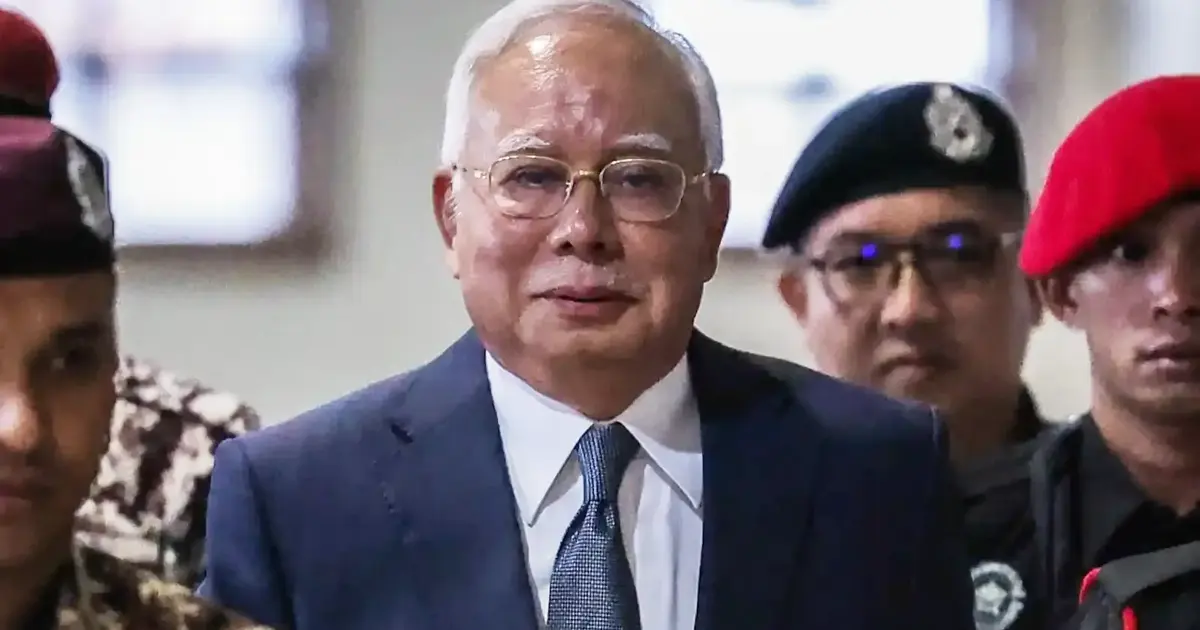
The Democratic Action Party has put the Malaysian Chinese Association on the spot, demanding a clear statement on whether the party backs Umno's intensifying campaign to secure a full pardon for former prime minister Najib Razak. DAP member Ong Hui Xue has framed the challenge as a test of transparency and political principle, highlighting the awkward position in which MCA finds itself as a junior partner in the Barisan Nasional coalition where Umno continues to dominate discussions about the ex-premier's legal fate.
Ong's intervention underscores a growing tension within Malaysia's ruling coalition over how to handle the Najib question, which has remained contentious despite his conviction on corruption charges. The DAP legislator's public call for MCA clarification reflects broader suspicions among opposition and some civil society voices that BN component parties may be tacitly acquiescing to Umno's efforts rather than openly debating whether such clemency would serve Malaysia's long-term interests in governance and accountability.
The context for this dispute traces back to Najib's 2023 conviction related to misappropriation of funds during the 1Malaysia Development Berhad scandal. Although he has maintained appeals through the legal system, several Umno figures and allies have more recently begun advocating for executive clemency, arguing that his imprisonment has become a divisive issue within the party and the broader Malay-Muslim political landscape. These voices have grown louder in recent months, suggesting a coordinated effort to build momentum for such an intervention.
MCA's silence on this matter carries particular weight because the party has historically positioned itself as a defender of the rule of law and institutional integrity, especially as it seeks to appeal to Malaysian Chinese voters concerned about corruption and governance standards. By remaining publicly neutral or unclear about Najib's pardon prospects, the party risks appearing complicit in what critics view as an erosion of accountability principles. The DAP is banking on this reputational vulnerability to force MCA into taking a definitive stance.
The timing of Ong's challenge is significant. With Malaysia's political landscape becoming increasingly fluid and coalition partnerships under strain, questions about fundamental principles like whether former leaders convicted of serious crimes should be pardoned have taken on greater salience. Different political parties are using these moments to differentiate themselves ideologically and appeal to voters who care deeply about institutional resilience and anti-corruption commitments.
For MCA specifically, the bind is genuine. Supporting a pardon could alienate Chinese voters who view such moves as undermining the rule of law and appearing to reward misconduct by powerful figures. Conversely, openly opposing it could trigger friction within the BN coalition and potentially complicate MCA's relationship with Umno, upon which the junior partner depends for political viability and access to resources. The party's leadership has thus far chosen to minimize public statements, a strategy that preserves internal coalition harmony but invites the kind of scrutiny that Ong is now directing at the organisation.
Umno's push for clemency cannot be separated from internal party dynamics and the broader question of Najib's continuing influence within the movement. Many Umno members and leaders remain personally or politically loyal to Najib, viewing his legal troubles as unjust persecution. For these figures, achieving his release represents both a symbolic vindication and a practical restoration of a senior voice within party deliberations. This internal Umno struggle has been playing out for years, with various factions advancing competing visions of the party's future and Najib's role in it.
From a governance perspective, Malaysia's pardon system allows for clemency through the Yang di-Pertuan Agong, but such decisions typically involve careful consideration of several factors including the nature of the offence, the circumstances of the case, and broader public interest. The suggestion that such clemency might be granted primarily for political expediency rather than genuine grounds of justice has troubled legal scholars and civil society observers who worry about the precedent such an action would establish for future cases involving powerful individuals.
The broader Malaysian electorate has shown mixed views on the matter. While some Umno and BN supporters see pardon advocacy as a reasonable political cause, others—including segments of the Malay-Muslim majority—have expressed concern that high-profile figures should not escape accountability through executive intervention simply because they possess political connections. This public ambivalence creates space for different parties to stake out positions that appeal to their core constituencies.
DAP's intervention also reflects the party's ongoing effort to position itself as the principled opposition force genuinely committed to accountability and transparency, in contrast to what it portrays as the BN's pragmatism and flexibility on such matters. By calling out MCA, the DAP is attempting to drive a wedge between coalition partners and highlight the moral hazard of allowing convicted former leaders to escape punishment through political maneuvers rather than legal processes.
MCA's response to Ong's challenge, whenever and however it comes, will send important signals about the party's true priorities and the coherence of its political values. The party's leadership faces a choice between maintaining coalition cohesion through strategic ambiguity or stepping forward with a principled public stance that could differentiate MCA in voters' eyes but potentially complicate internal BN relationships. This moment exemplifies the broader challenge facing Malaysian political parties in an era when voters increasingly demand clarity about core commitments to democracy and the rule of law.

