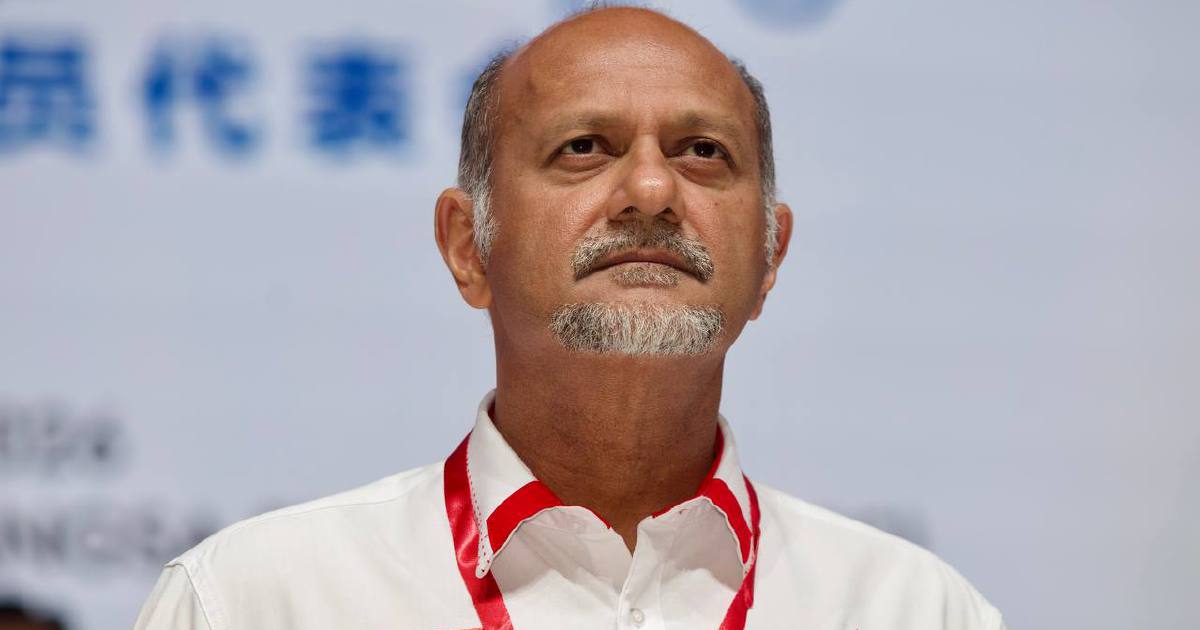
The Democratic Action Party has intensified its push for substantive reform across Malaysia's government machinery and economic structures, signalling growing impatience within the ruling coalition over the pace of change. DAP national chairman Gobind Singh Deo delivered the call during a visit to Putrajaya, directing his message squarely at Prime Minister Datuk Seri Anwar Ibrahim as the unity government enters its fourth year in office—a critical juncture where initial momentum often gives way to competing political interests and resource constraints.
The timing of DAP's intervention reflects a broader pattern in Malaysian coalition politics where component parties use public statements to maintain pressure on key policy agendas, particularly when they perceive the government losing focus on pledged reforms. With the administration now well past its initial honeymoon period, the party is apparently concerned that critical institutional overhauls and economic restructuring initiatives risk being diluted or indefinitely postponed as other demands compete for ministerial attention and budgetary resources.
Institutional reform in the Malaysian context encompasses several interconnected challenges that have preoccupied DAP leadership since the unity government's inception in 2022. These include strengthening parliamentary oversight mechanisms, improving transparency in government procurement and spending, reforming the civil service culture to prioritise merit-based advancement, and addressing longstanding issues within the judiciary and enforcement agencies. DAP's emphasis suggests these reforms remain incomplete despite earlier commitments, potentially reflecting the difficulty of restructuring entrenched bureaucratic systems that benefit various stakeholders within the ruling coalition.
The economic dimension of DAP's call carries particular weight given Malaysia's persistent struggle to boost productivity and competitiveness in an increasingly challenging regional landscape. The party likely refers to structural reforms needed to diversify revenue streams beyond traditional sectors, improve the ease of doing business, attract higher-quality foreign investment, and enhance human capital development through education and skills training. These remain pressing concerns as the global economic environment continues shifting, with implications for Malaysia's ability to maintain living standards and job creation for younger workers entering the workforce.
DAP's position within the coalition provides the party with both leverage and limitations in pushing these agenda items. As one of the larger component parties and a key driver of the opposition-to-government transition in 2022, DAP maintains meaningful influence over government policy direction, particularly on matters related to governance quality and anti-corruption efforts. However, other coalition partners with different constituencies and political priorities can dilute or block initiatives that threaten their interests, creating the legislative and bureaucratic gridlock that often characterises Malaysian multi-party administrations.
The three-and-a-half-year mark represents a natural inflection point for any government seeking to assess progress against initial commitments. At this stage, the most feasible reforms have typically been implemented, leaving the more contentious and complex structural changes that require sustained political capital and departmental cooperation. DAP's public statement likely reflects internal coalition discussions about whether the government will genuinely pursue deeper reforms or settle for incremental adjustments that maintain the status quo favouring entrenched interests.
For Malaysian businesses and civil society organisations monitoring governance trends, DAP's intervention signals that reform momentum cannot be assumed despite the government's professed commitment to change. The party's willingness to apply public pressure suggests internal coalition tensions may be escalating over implementation gaps between announced policy and actual institutional practice—a familiar pattern in Malaysian governance where formal statements sometimes obscure bureaucratic inertia and resistance from vested interests.
The broader regional context adds urgency to DAP's demands. Southeast Asian neighbours including Singapore, Vietnam, and Thailand have pursued aggressive economic restructuring and institutional streamlining with measurable success in attracting investment and retaining talent. Malaysia risks falling behind in competitive rankings if institutional quality continues deteriorating or economic reforms stall. For multinational firms evaluating regional headquarters locations and investment commitment levels, the pace and substance of Malaysian institutional reform represents a key decision variable, particularly given the country's historical position as a regional business hub.
Prime Minister Anwar Ibrahim's response to DAP's call will likely frame the government's actual commitment to reform versus the political management of competing interests within the coalition. Previous statements from his office have acknowledged the importance of these reforms, yet implementation timelines remain vague and funding often proves insufficient for meaningful systemic change. DAP's public intervention may be intended to stiffen resolve within the Prime Minister's office or signal to potential international investors that the party remains committed to reform advocacy, despite coalition pressures.
The sustainability of Malaysia's unity government itself depends partly on whether coalition partners maintain sufficient ideological alignment and policy consensus around reform priorities. DAP's emphasis on institutional and economic modernisation reflects the party's traditional platform of good governance and meritocracy, distinguishing its approach from other coalition components with different historical emphases. If DAP perceives the government drifting away from these core commitments, party leadership may escalate pressure tactics or recalibrate its coalition participation strategies.
Looking forward, the specific policy domains that DAP prioritises in coming months will clarify whether its current statement represents genuine coalition tension or routine political positioning ahead of potential electoral cycles. Observers should watch for concrete legislative proposals, budget allocations, and appointed taskforces addressing institutional or economic reform—tangible indicators that distinguish rhetorical commitment from substantive action in Malaysian politics.

