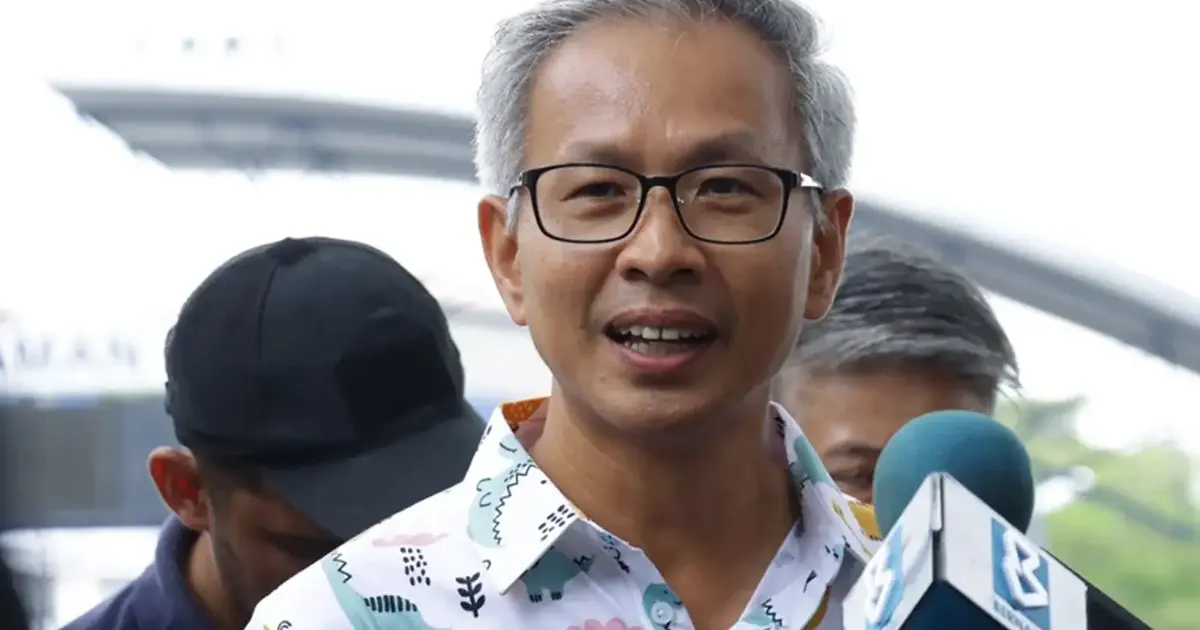
The Royal Malaysia Police continues its active investigation into DAP politician Tony Pua, according to a statement from the Home Ministry, as authorities work through more than 140 complaints filed by members of the public regarding a social media post he published. The ongoing probe underscores the heightened sensitivities surrounding discussion of Malaysia's constitutional framework and national foundational principles, particularly when such commentary originates from high-profile political figures with significant public platforms.
Pua's Facebook post, which touched upon aspects of Malaysia's constitutional monarchy system alongside references to Rukun Negara—the nation's founding principles established to promote national unity and social cohesion—triggered a substantial wave of public complaints. The sheer volume of reports reflects the polarized nature of the response, with significant segments of the public viewing the post as problematic commentary on sensitive constitutional matters. For Malaysian readers unfamiliar with the context, Rukun Negara comprises the five pillars of belief in God, loyalty to King and country, upholding the Constitution, the rule of law, and good conduct and morality.
The investigation's continuation highlights how Malaysian authorities treat posts and statements touching upon the monarchy, a constitutionally protected institution and central pillar of the Malaysian political system. The Federal Constitution enshrines the position of the Yang di-Pertuan Agong and sultans as integral constitutional figures, with laws explicitly designed to protect the dignity and reputation of these institutions. Discussion of constitutional frameworks involving the monarchy therefore treads carefully within Malaysia's legal boundaries, particularly regarding sedition and defamation laws.
For DAP, one of Malaysia's major opposition parties, the investigation represents a significant challenge as the party seeks to build broader electoral support while managing internal figures whose statements occasionally provoke wider controversy. Pua himself has previously held ministerial positions during periods of opposition coalition government, making him a relatively prominent political figure whose public statements receive considerable media and public attention. The party must balance defending its members against what supporters characterize as overly broad interpretation of speech restrictions with acknowledging legitimate public sensitivities around constitutional matters.
The investigation also reflects broader regional tensions around how Southeast Asian democracies navigate free speech protections against concerns about national stability and institutional respect. Malaysia, like several regional peers, maintains relatively strict legal frameworks governing commentary on state institutions, particularly the monarchy. This contrasts with some other democracies where wider latitude exists for public criticism of constitutional arrangements. The investigation consequently carries implications for understanding Malaysia's particular approach to balancing democratic freedoms with institutional protection.
From a legal standpoint, authorities must examine whether Pua's post violated provisions under the Penal Code relating to sedition or whether it constitutes protected political commentary and expression. The distinction between legitimate criticism of government policy or constitutional arrangements versus statements that attack the institution or dignity of the monarchy represents a perpetual gray area in Malaysian legal interpretation. Prosecutors and investigative authorities therefore face the substantive task of determining whether the threshold of illegality was crossed.
The 140 police reports filed represent a notable mobilization of public complaint mechanisms, suggesting either deeply felt concerns among segments of the population or potentially organized reporting efforts by political actors seeking to place pressure on authorities. Understanding the composition of these complaints—whether they reflect genuine grassroots outrage or coordinated political activity—provides important context for interpreting the nature of the controversy. Regardless, the volume signals that the post resonated negatively among sufficient numbers of Malaysians to trigger formal law enforcement response.
For political observers monitoring Malaysian governance, the investigation demonstrates how statements by opposition parliamentarians continue to attract intense scrutiny from enforcement agencies. Critics argue that such investigations can function as tools of political pressure against opposition figures, while government authorities maintain that investigations proceed impartially based on public complaints and evidence. The optics surrounding high-profile investigations into opposition politicians inevitably feed into broader narratives about democratic space and institutional independence in Malaysia's political system.
The situation also underscores how digital platforms have transformed political communication and risk in Malaysia. Statements posted to Facebook or other social media circulate immediately to wide audiences, invite rapid responses from political opponents and concerned citizens, and generate permanent records for authorities to examine. Political figures operating within Malaysia's regulatory environment must therefore navigate heightened awareness that social media posts addressing sensitive topics risk triggering investigations, regardless of intent or technical legality.
Moving forward, the investigation's outcome will carry implications for how politicians and public figures calibrate their public statements on constitutional matters. A determination that Pua's post violated applicable laws would potentially embolden stricter enforcement against similar statements, while a finding of insufficient evidence might suggest broader permissibility for constitutional commentary. Either outcome contributes to the evolving boundaries of acceptable political speech within Malaysia's institutional and legal framework, particularly for prominent figures whose platforms amplify their messages to national audiences.

