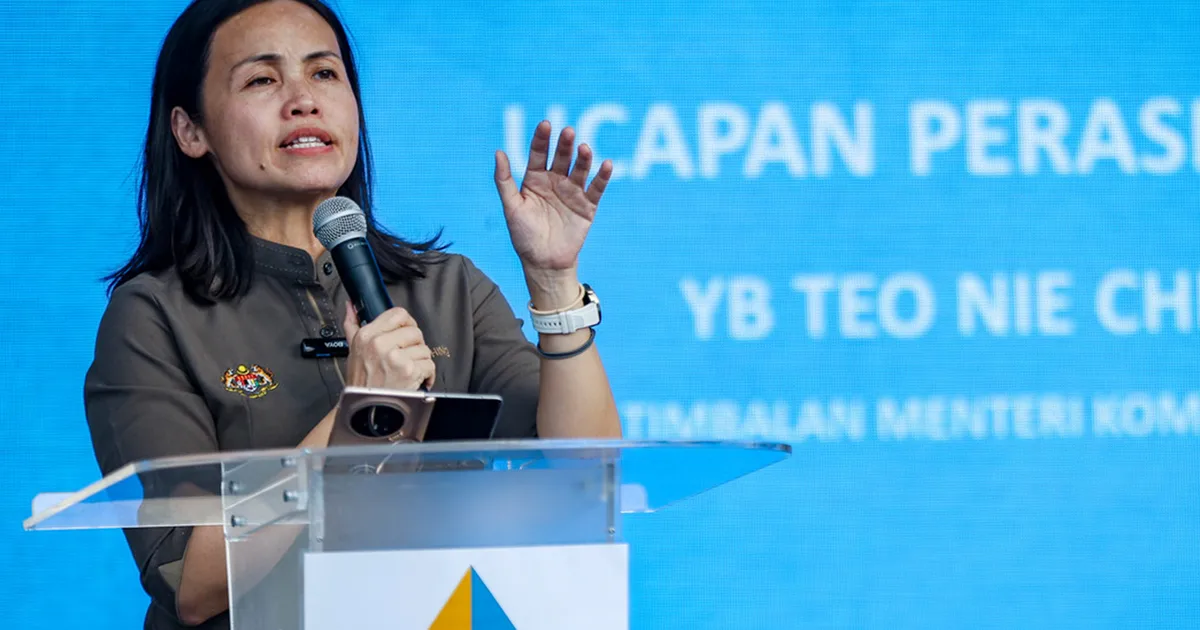
A prominent DAP politician and serving deputy minister has come forward to expose what she characterises as a deliberate and coordinated disinformation campaign waged against her through social media. The leader contends that multiple accounts were established with the express purpose of spreading unfounded claims connecting her to organised crime and gang-related activities, raising fresh concerns about the weaponisation of digital platforms in Malaysian political discourse.
The allegations, according to the deputy minister's account, surfaced across various social media channels in recent weeks. Rather than appearing as organic criticism or political disagreement, she argues that the pattern of activity indicates a carefully orchestrated effort designed to damage her reputation and political standing. The creation of multiple new accounts suggests a level of coordination and planning that transcends casual political commentary or routine partisan attacks.
This incident underscores a growing challenge facing Malaysian political figures: the vulnerability of public servants to targeted disinformation campaigns deployed through social media platforms. The speed and scale at which false narratives can spread online have created new vulnerabilities for politicians across the ideological spectrum, though the DAP leader's experience illustrates how such tactics can be weaponised against individual political rivals.
The allegation of gang-related involvement represents a particularly serious form of attack, as such claims carry potential legal and security implications beyond conventional political criticism. Gang associations could theoretically prompt law enforcement scrutiny and create public perception problems that persist long after the original allegations are debunked. This weaponisation of severe criminal allegations through social media highlights the asymmetric risks faced by political figures in the digital age.
The deputy minister's decision to publicly address the campaign reflects a broader shift among Malaysian politicians towards confronting disinformation directly rather than ignoring it. By naming the tactic and describing the pattern of coordinated account creation, she is attempting to inoculate her reputation against the false allegations and alert the public to what she views as an organised attack rather than spontaneous criticism.
Investigating the source and funding behind such coordinated campaigns presents significant practical challenges. Social media platforms often provide limited transparency regarding account origins, while coordinated networks frequently employ obfuscation techniques including VPNs, proxy accounts, and distributed operation across multiple devices and locations. Determining whether the campaign originates from political rivals, opportunistic bad actors, or agents seeking to exploit political divisions in Malaysia becomes exceptionally difficult under such circumstances.
The incident raises questions about the adequacy of Malaysia's digital governance frameworks and platform accountability mechanisms. While social media companies maintain policies against coordinated inauthentic behaviour, enforcement often lags behind the sophistication of coordinated campaigns. Malaysian regulators and platform operators have come under increasing scrutiny for their capacity to rapidly identify and dismantle such operations before they achieve significant reach and impact.
From a Southeast Asian perspective, Malaysia's experience with coordinated social media attacks mirrors similar challenges emerging across the region. Thailand, Indonesia, and the Philippines have all documented instances of sophisticated disinformation campaigns targeting political figures, suggesting that the problem represents a structural challenge to democratic governance across the region rather than an isolated Malaysian phenomenon. The techniques and technologies employed appear to be spreading and evolving across national borders.
The political implications remain complex. While the DAP leader's public disclosure serves to counter the narrative established by the false allegations, it also amplifies awareness of the campaign among audiences who might otherwise have remained unexposed to it. This paradox of addressing disinformation—that drawing attention to false claims can paradoxically increase their distribution—represents a genuine strategic dilemma for political figures responding to coordinated attacks.
The incident also complicates discussions about political civility and acceptable forms of criticism in Malaysian politics. Distinguishing between legitimate political attack and coordinated disinformation campaigns requires sophisticated media literacy among voters. The proliferation of multiple coordinated accounts spreading false allegations suggests an escalation beyond traditional competitive politics into territory that arguably undermines democratic contestation itself.
Looking forward, this case may prompt broader discussions within Malaysian political circles about developing shared norms regarding digital conduct and establishing mechanisms for identifying and responding to coordinated inauthentic behaviour. Whether regulatory responses, platform reforms, or industry standards prove most effective remains an open question that will likely occupy Malaysian policymakers and political analysts in coming months.

