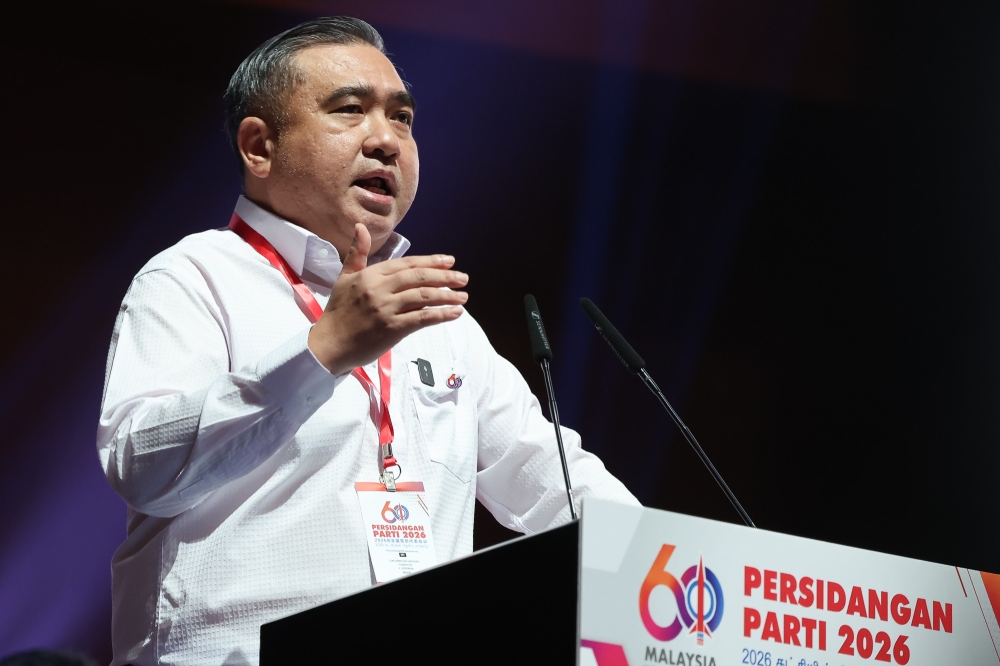
The Democratic Action Party signalled its unequivocal backing for Prime Minister Datuk Seri Anwar Ibrahim's pledge to abolish the Universities and University Colleges Act on Thursday, with Transport Minister Loke Siew Fook emphasizing that the party views this initiative as merely the opening move in a larger structural overhaul of Malaysia's higher education framework.
Making the statement in Putrajaya, the DAP leadership framed its endorsement as a crucial step toward restoring academic freedoms that have been constrained under the current legislation. The party's position reflects growing consensus among reform-minded political figures that the AUKU, a colonial-era statute that grants university administrators sweeping regulatory powers over student and faculty conduct, has become incompatible with contemporary democratic norms and institutional autonomy principles.
Loke's emphasis on pursuing changes that extend beyond the mere repeal of AUKU underscores a significant political reality: abolishing the act alone will not address underlying governance questions about how universities should be administered, how academic discourse should be protected, and what oversight mechanisms should exist to balance institutional independence with public accountability. The transport minister effectively signalled that DAP intends to be an active participant in shaping the legislative architecture that will replace the current statute.
For Malaysian higher education, the trajectory toward AUKU's removal represents a watershed moment. Universities across the country have operated under provisions that restrict student activism, limit faculty political engagement, and empower administrators to enforce codes of conduct with minimal due process safeguards. The statute has been frequently criticized by international academic organizations and human rights bodies as an impediment to free expression and institutional development. The government's commitment to dismantling it, coupled with DAP's insistence on comprehensive reform, suggests that policymakers are finally engaging with long-standing complaints from the academic community.
The DAP's positioning reflects its evolving role within Malaysia's coalition politics. As a party with substantial parliamentary representation and ministerial portfolios, DAP has moved beyond symbolic opposition to assume concrete responsibility for legislative outcomes. By staking out a position that supports the Prime Minister's core objective while simultaneously demanding ambitious supplementary measures, the party demonstrates both solidarity with the governing agenda and differentiation of its own policy priorities.
Loke's framing also reveals the complexity of institutional reform in Malaysia's context. Universities do require governance frameworks that prevent administrative arbitrariness while protecting research integrity and academic standards. The question facing lawmakers is not whether to govern universities, but how to construct governance mechanisms that respect autonomy, encourage inquiry, and maintain institutional credibility. This distinction becomes crucial when considering what specific legislative alternatives might succeed AUKU.
International comparison offers instructive lessons. Universities in established democracies typically operate under statutes that emphasize institutional independence, protect academic freedom as a fundamental principle, and establish transparent grievance procedures. Many countries have also moved toward greater student and faculty participation in university governance structures. Malaysia's reform process could benefit from examining these precedents while adapting them to local institutional contexts and constitutional frameworks.
The timing of DAP's public declaration carries political significance beyond the education portfolio. Anwar's administration has prioritized institutional reform and anti-corruption initiatives as defining characteristics of the current government. Educational reform, including AUKU's abolition, fits naturally within this broader agenda. DAP's explicit backing, articulated through a senior minister, demonstrates that this commitment extends across the coalition and is not merely a prime ministerial initiative that other partners tolerate.
However, the party's insistence that reforms must extend further hints at potential areas of coalition negotiation. What additional measures does DAP envision? Enhanced student representation in university senates? Stronger protections for academic freedom in enabling legislation? Greater transparency in administrative decision-making? These specifics will become clearer as the government moves from announcing intentions to drafting actual legislative proposals. The difference between political commitment and legislative implementation often proves substantial in Malaysian governance.
For students and academics, the significance of this political alignment cannot be overstated. Student unions, which have faced restrictions under AUKU, may soon operate with fewer statutory constraints. Faculty members engaged in research touching on sensitive social and political topics may gain stronger legal protection. These changes would fundamentally alter the higher education environment that affects hundreds of thousands of Malaysians annually.
The regional dimension also warrants consideration. Southeast Asian universities increasingly compete for international talent and research partnerships. Nations that better protect academic freedom and institutional autonomy tend to attract stronger faculty recruitment and research collaboration. Malaysia's movement toward AUKU abolition positions the country more competitively within regional higher education hierarchies, potentially benefiting long-term institutional development and research output.
What remains unclear is the implementation timeline and the precise legislative mechanisms that will replace AUKU. The abolition represents a necessary first step, yet the construction of an alternative legal framework—one that DAP's leadership believes must be more comprehensive—will determine whether the reform delivers substantive improvement or merely transfers restrictive powers to new institutional arrangements. The party's insistence on breadth of reform suggests awareness that symbolic victory without structural improvement would disappoint constituencies that have advocated for change.

