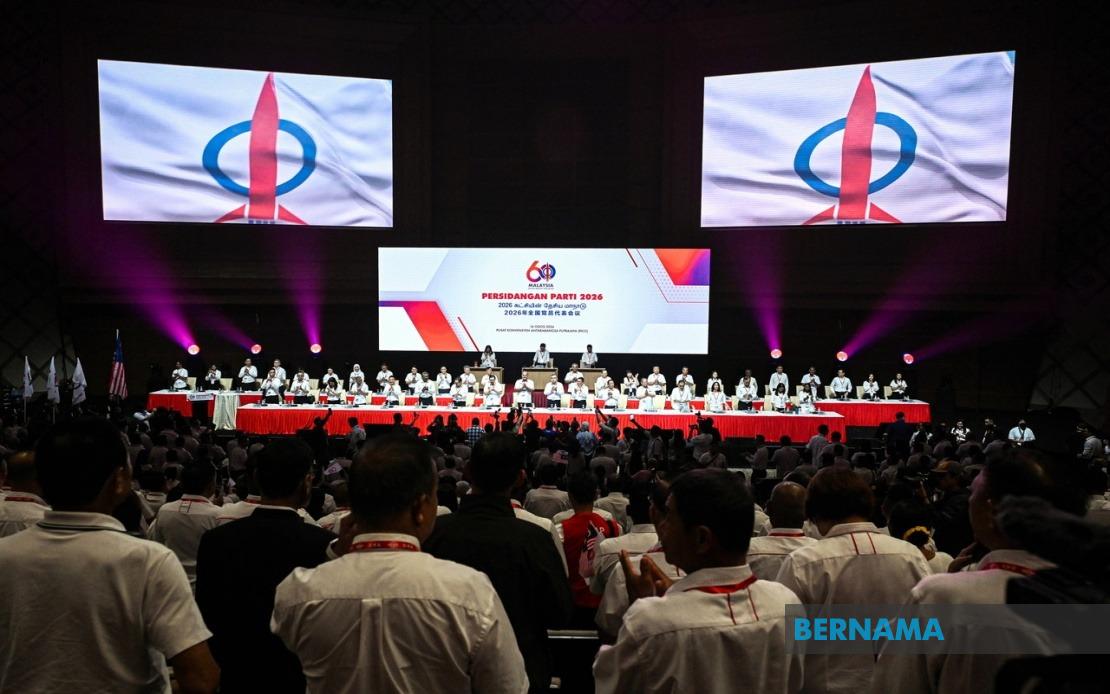
Delegates at the DAP 2026 National Conference in Putrajaya voted overwhelmingly in favour of the party remaining within the Unity Government coalition, with 14 state representatives voicing their support for continued participation in the federal administration. The deliberation took place at the Putrajaya International Convention Centre during a formal debate on whether the Democratic Action Party should maintain its position in government through the conclusion of the current 16th parliamentary term. The substantial backing reflects internal consensus that DAP's presence in the coalition serves the electorate's broader interests and the nation's political trajectory.
The case for continued participation centred on several interconnected policy objectives. Delegates emphasised that remaining in government allows DAP to follow through on electoral promises made to voters, particularly regarding institutional reform and anti-corruption efforts. Additionally, maintaining the current arrangement preserves the stability of Malaysia's political framework and reduces the probability of an unexpected early election that could disrupt ongoing developmental initiatives. The reduction of living costs, protection of minority rights in a multiethnic democracy, and consistent governance frameworks emerged as priority areas where delegates believed DAP's presence could make substantive contributions.
Jason Ng Thien Yong, representing Perak, articulated a pragmatic perspective on the party's electoral setbacks. Acknowledging recent disappointments in state-level contests, he argued that DAP must commit to strategic engagement within the Unity Government rather than retreating from executive responsibility. His position reflected the view that remaining in office provides a platform for implementing meaningful reforms that could subsequently restore public confidence. The Perak delegate contended that even an imperfect coalition offered superior prospects for advancing the party's reform agenda compared to opposition status.
Leong Ngah Ngah, a veteran DAP figure from Pahang, reinforced this argument by citing tangible achievements over the past three years under Prime Minister Datuk Seri Anwar Ibrahim's leadership. He appealed to delegates to approach the decision with political maturity, recognising that institutional reform and good governance initiatives have gained measurable traction within the current administration. The Pahang representative framed the vote as a choice between proven delivery within an existing framework versus hypothetical outcomes outside government.
Muhammad Shakir Amerr Mohideen from Selangor emphasised DAP's organisational capacity to rebuild electoral support in constituencies where the party previously lost ground. His contribution focused on the efficacy of good governance practices as a mechanism for restoring voter confidence in specific regions. This argument acknowledged past electoral disappointments whilst projecting forward to potential recovery through demonstrated competence in government.
Jason Tze-Xi Nathan of Melaka presented a complementary perspective, suggesting that maintaining DAP's governmental position was strategically preferable to explaining withdrawal to constituents. This logic emphasised the communicative and perceptual challenges associated with leaving the coalition, noting that such a move would require extensive public justification and could damage the party's credibility.
Yap Wui Lip, the Sabah delegate, introduced an important regional dimension to the discussion. His contribution centred on DAP's capacity to advocate forcefully for implementation of rights enshrined under the Malaysia Agreement 1963 whilst functioning within the governing coalition. This position reflected concerns specific to East Malaysian representation and suggested that greater influence accrues through insider status than external criticism. The Sabah delegate's remarks underscored how federal participation could serve distinct regional interests.
Support extended across Malaysia's geographical breadth, with delegates from Kelantan, Terengganu, Sarawak, Kedah, Negeri Sembilan, Johor, Kuala Lumpur, Perlis and Penang all expressing backing for continued governmental involvement. This geographic distribution demonstrated that the position enjoyed support from both traditionally DAP-strong regions and areas where the party faces greater electoral challenges, suggesting internal cohesion around the strategic direction.
Secretary-General Anthony Loke, in closing remarks, acknowledged the suggestions and critiques offered during debate whilst clarifying critical boundaries around continued participation. He emphasised that maintaining government presence would not constitute blanket approval for executive decisions by either the party's Central Supreme Committee or the Prime Minister. Instead, Loke stressed that DAP's continued participation remained conditionally dependent upon tangible progress in reform implementation and genuine efforts to rebuild public confidence and support. This formulation suggested that the party retained capacity to reassess its position should governance outcomes diverge significantly from stated commitments.
The final determination came through secret ballot conducted among 4,264 delegates representing 1,704 eligible party branches. This procedural mechanism ensured that individual voting decisions remained confidential, potentially enabling delegates to vote according to personal conviction rather than factional pressures. The breadth of delegate participation reflected DAP's organisational scope and the democratic processes governing party decision-making.
The decision assumes particular significance given DAP's status as a principal component of Pakatan Harapan alongside PKR and Amanah, the three parties anchoring the current federal administration. DAP's continued presence fundamentally shapes the coalition's composition and ideological orientation. The party marked its 60th anniversary during this conference, adding historical weight to a decision determining its governmental role during a critical phase of Malaysian political development.
For Malaysian politics more broadly, the DAP delegates' decision signals stability within the governing coalition during a period of economic challenges and social pressures. Conversely, the conditional nature of DAP's continued participation suggests the party intends to maintain active leverage over government performance, particularly regarding institutional accountability and cost-of-living initiatives. The outcome reflects calculated political judgment that DAP's interests and those of the broader electorate align with sustained governmental engagement rather than opposition repositioning.

