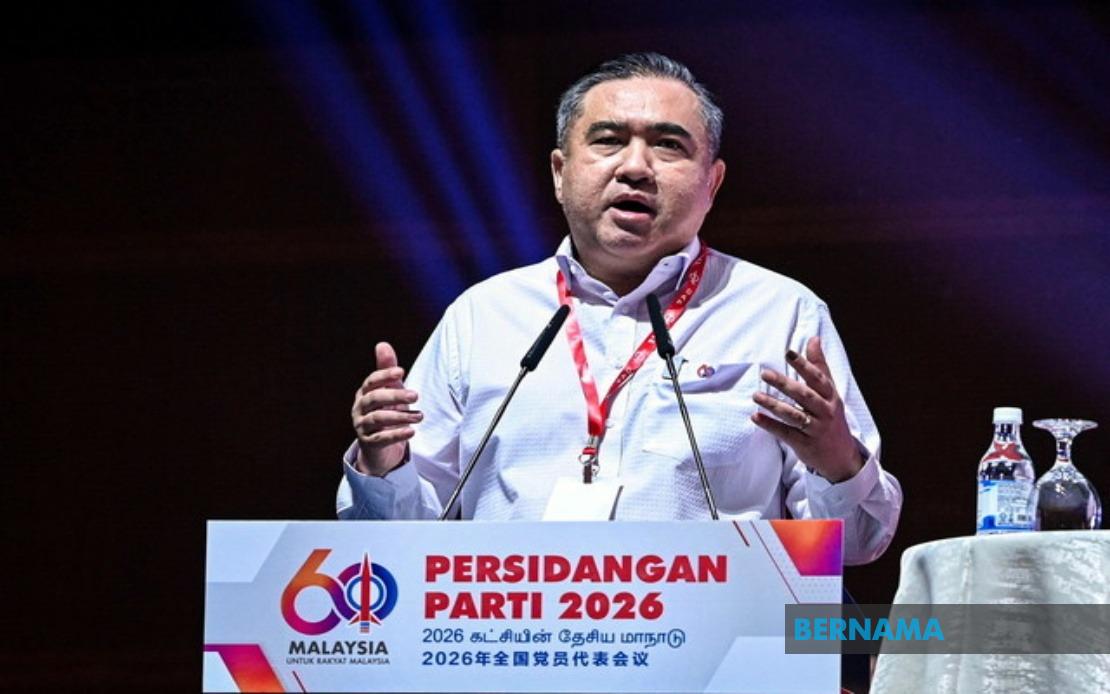
The Democratic Action Party has committed itself to maintaining its presence within Malaysia's federal government for the remainder of the 15th Parliament's term, following a decisive delegate vote at its 2026 Party Conference held at the Putrajaya International Convention Centre. The decision reflects strong organisational consensus on continuing the party's participation in the ruling coalition, providing stability assurance for the government's legislative agenda through the end of the parliamentary cycle.
DAP Secretary-General Anthony Loke presented the motion for a special party vote, seeking formal endorsement from the grassroots membership on the question of remaining in government. The timing of this formal consultation reflects the party's commitment to internal democracy and ensuring that major strategic decisions carry the weight of delegate approval rather than leadership discretion alone. By bringing the question to the conference floor, DAP demonstrated its intent to maintain organisational legitimacy for its coalition partnership.
The voting outcome proved decisive. Of 2,106 ballot papers distributed, 1,857 delegates voted in favour of remaining in government, 242 opposed the decision, and seven ballots were spoilt. This translates to 88.2 percent support among those present, representing overwhelming backing for the party's continued ministerial participation. The margin suggests that while a minority faction exists within DAP questioning the coalition arrangement, the dominant party sentiment favours maintaining the status quo through the parliamentary term's conclusion.
The party opted for secret ballot voting rather than the conventional show of hands, a procedural choice that underscores DAP's emphasis on ensuring transparency and protecting delegates from social pressure or groupthink during the voting process. Conference Speaker Cha Kee Chin announced the results, with preliminary data indicating that 4,264 delegates from 1,704 branches nationwide participated in the gathering and held voting eligibility.
DAP's ministerial footprint within the Cabinet spans five positions, with Secretary-General Anthony Loke serving as Transport Minister—a post affording significant oversight of Malaysia's infrastructure portfolio. Steven Sim holds the Entrepreneur and Cooperatives Development portfolio, while Gobind Singh Deo oversees the Digital Ministry. Nga Kor Ming directs the Housing and Local Government Ministry, and Hannah Yeoh manages the Prime Minister's Department's Federal Territories division. These five Cabinet positions represent DAP's principal executive power base within government.
Beyond Cabinet-level representation, seven DAP figures occupy deputy ministerial roles across diverse portfolios. Teo Nie Ching serves as Communications Deputy Minister, with Datuk Chan Foong Hin handling Agriculture and Food Security responsibilities in the same capacity. Wong Kah Woh oversees Education as Deputy Minister, while Liew Chin Tong manages Finance. The Prime Minister's Department accommodates two DAP deputy ministers: M. Kulasegaran for Law and Institutional Reform, and Lim Hui Ying for Women, Family and Community Development. Mordi Bimol rounds out the deputy ministerial representation as Youth and Sports Deputy Minister.
This extensive representation across 12 parliamentary positions—five Cabinet and seven deputy ministerial—reflects DAP's significant leverage within the coalition structure and explains the party's organisational investment in formalising its continued participation. Any withdrawal from government would necessitate reshuffling ministerial positions across remaining coalition partners, creating political complications that DAP's vote has now deferred beyond the immediate parliamentary cycle.
The delegate mandate carries implications for Malaysian political stability through 2028, as a united DAP backing its leadership's coalition strategy removes a major source of potential governmental instability. Opposition to DAP's participation in government primarily originates from certain civil society segments and smaller political rivals rather than from within DAP's own organisational structure, as evidenced by the 88.2 percent endorsement level.
From a regional perspective, DAP's continued participation in Malaysia's coalition government positions the party as a stabilising force within Southeast Asian democratic governance, particularly relevant given the broader region's experience with political volatility and coalition instability. DAP's commitment to parliamentary democracy through formal delegate voting reflects institutional maturity that distinguishes the party within Malaysian politics.
The decision also strategically positions DAP for negotiating enhanced influence within government during the parliamentary term's continuation. With the party's commitment to the coalition now formally authorised through democratic internal process, DAP's leadership gains enhanced legitimacy in demanding policy concessions or expanded representation in any future cabinet reshuffles that may occur before the parliamentary term concludes.
For Malaysia's broader political economy, DAP's remaining in government ensures policy continuity across transport infrastructure, digital economy development, and housing initiatives—portfolios where significant capital investment and long-term planning require consistent ministerial stewardship. The party's five-year commitment to these portfolios removes the disruption that would accompany sudden ministerial transitions should DAP have opted to withdraw from government.
The party's delegate-approved strategy effectively anchors Malaysian coalition politics through the remainder of Parliament's constitutional cycle, providing the predictability and institutional continuity that market investors and international observers frequently cite as prerequisites for economic confidence and social stability.

