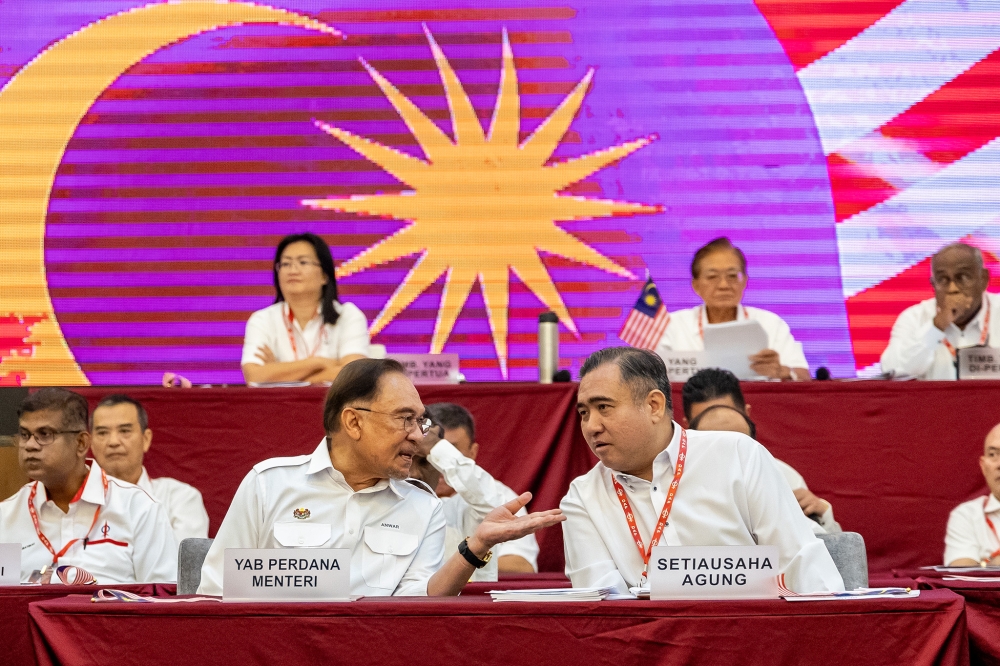
Transport Minister Anthony Loke has firmly rejected suggestions that the Democratic Action Party could withdraw from Prime Minister Datuk Seri Anwar Ibrahim's Pakatan Harapan coalition, underscoring that the party remains committed to the government despite frustrations over the pace of policy implementation. Speaking in the capital on July 17, Loke acknowledged the tension between ambitious reform agendas and the practical realities of managing a multi-party administration, presenting this friction as an unavoidable aspect of coalition governance rather than grounds for the party's exit.
The statement arrives at a moment when questions about Pakatan's stability have surfaced across Malaysian political commentary. Since the coalition returned to power in 2022 after the dramatic collapse of the previous administration, various component parties have periodically aired grievances about policy direction and resource allocation. DAP, as the second-largest coalition partner after Anwar's Parti Keadilan Rakyat, occupies a particularly sensitive position, balancing its reformist base with the pragmatism required to sustain a governing majority. Loke's clarification serves to dampen speculation while also managing expectations within his own party about what can realistically be achieved.
The DAP leader's framing of slower reforms as an inherent cost of governance reflects a broader recognition that coalition mathematics impose constraints on executive action. When a government comprises multiple parties with distinct ideological positions and supporter bases, pursuing rapid or sweeping change becomes considerably more difficult than single-party rule or narrow coalitions might permit. Each partner requires reassurance that their core interests are protected, and divergent constituencies must be kept sufficiently satisfied to prevent defections that could unravel the parliamentary majority. This reality has shaped Pakatan's approach across multiple policy domains, from economic management to social issues.
For DAP specifically, this compromise calculus carries particular weight. The party's voter base includes younger urbanites, professionals, and communities seeking transparency and meritocracy reforms—constituencies with high expectations for rapid institutional transformation. Simultaneously, other coalition members draw support from constituencies with different priorities: rural development, Bumiputera protections, religious sensitivities, and business continuity. Reconciling these divergent demands requires negotiation, consensus-building, and often accepting incremental progress over comprehensive overhaul. Loke's statement essentially tells DAP members that remaining in government, even with constrained reform capacity, remains preferable to opposition.
The question of coalition stability resonates across Southeast Asia, where multi-party governments have become increasingly common as traditional one-party dominance erodes. Malaysia's experience with Pakatan offers lessons for the region: coalitions can deliver more representative governance but sacrifice implementation speed; they provide checks on executive power but slow policy responsiveness; they require sophisticated negotiation skills but can fracture suddenly if tensions accumulate. Neighbouring countries observing Malaysian politics consider whether coalition governance truly strengthens or merely complicates democratic outcomes.
Loke's comments also contain an implicit rebuttal to critics within DAP who may argue the party has conceded too much to junior coalition partners or to Anwar's faction. By explicitly stating that slower reforms represent a structural feature of governing coalitions rather than evidence of DAP weakness or Anwar's dominance, he reframes the narrative around compromise as rational political management rather than capitulation. This rhetorical move matters internally within DAP, where members must feel their party retains leverage and voice despite constrained reform pace.
The commitment to Pakatan carries financial and organizational implications. Coalition membership channels government resources, ministerial positions, and policy influence to DAP. Withdrawal would cost the party these tangible benefits while potentially triggering a government collapse if other partners followed. The calculation for DAP leaders thus extends beyond ideological satisfaction to include party organizational health and competitive positioning against Opposition parties that could exploit any appearance of instability or irrelevance. Maintaining coalition membership preserves DAP's seat at executive tables.
Yet the statement also implicitly acknowledges vulnerabilities within the coalition structure. The fact that Loke felt compelled to rule out withdrawal publicly suggests such speculation had sufficient currency to warrant direct denial. This points to underlying tensions about burden-sharing, policy priorities, and whether all parties feel adequately represented in decision-making. Malaysian coalitions often operate on unspoken hierarchies, with some parties wielding disproportionate influence based on seat count or historical positioning. DAP's insistence on being heard likely reflects concerns that its parliamentary contribution receives insufficient recognition in portfolio allocation or policy direction.
The broader context includes Pakatan's mixed record across multiple policy areas. Some initiatives have moved forward—enhanced transparency measures, reduced emergency powers, attention to institutional reform—while others have stalled or disappointed. Crime prevention, cost of living pressures, economic restructuring, and racial-religious balance remain contentious areas where coalition partners struggle to align on solutions. Transport ministry operations, Loke's portfolio, offer concrete examples of where implementation challenges multiply when coordination across multiple stakeholders becomes necessary.
Looking forward, Loke's statement establishes markers for acceptable compromise within Pakatan. It signals that DAP will not use reform delays as justification for departure, effectively raising the threshold for coalition dissolution. Simultaneously, it suggests continuing negotiations over reform pace and policy content. The government's longevity now depends partly on whether coalition members feel that their constraints reflect shared governance requirements or unfair disadvantage. Loke's framing encourages the former interpretation while leaving room for ongoing internal adjustment.
For Malaysian voters observing this dynamic, the implications extend beyond immediate political maneuvering. Coalition stability affects government continuity, policy predictability, and public service delivery. Frequent coalition disruptions force costly recalibrations and administration changes. Conversely, coalitions that remain stable but perpetually gridlocked frustrate reform expectations. The Pakatan experience will likely influence how Malaysian voters evaluate multi-party governance in future elections, determining whether they view coalitions as necessary political evolution or problematic compromise on effectiveness.

