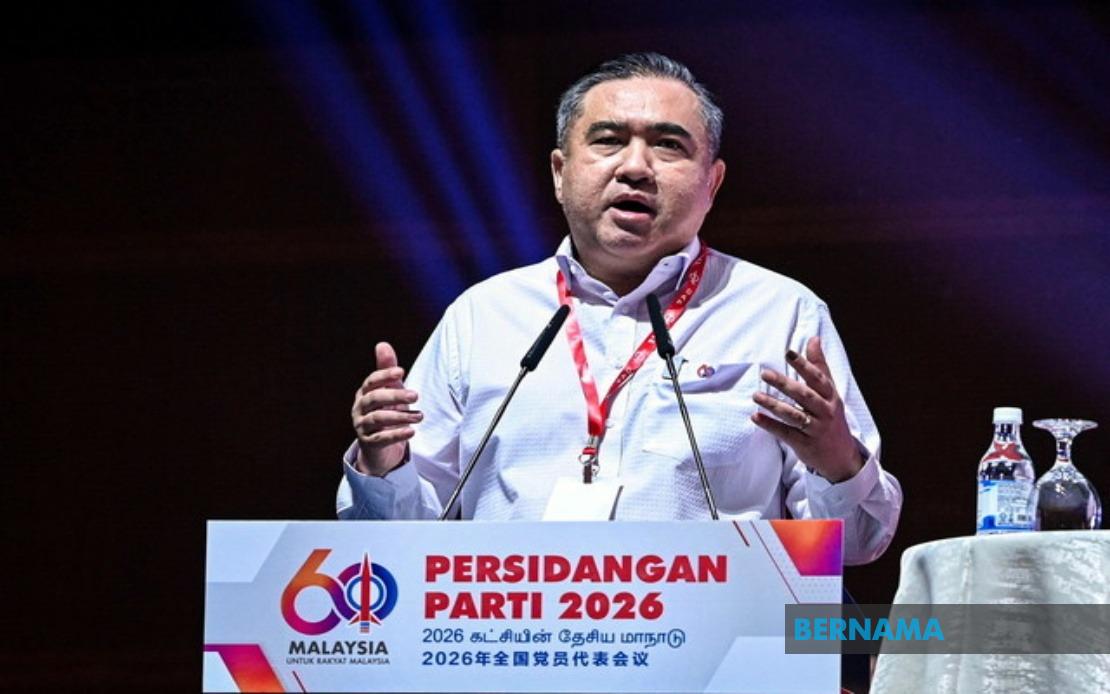
The Democratic Action Party has formally endorsed the government's initiative to repeal the Universities and University Colleges Act of 1971, marking a significant alignment between the party and the administration's direction on university governance. Anthony Loke, the party's secretary-general, made this declaration during his address at the DAP 2026 National Conference held at the Putrajaya International Convention Centre, emphasising that the party's participation in government extends beyond securing ministerial positions to advancing substantive institutional change.
Prime Minister Datuk Seri Anwar Ibrahim announced the repeal proposal during the PKR 2026 National Congress, framing the decision as a response to representations from student leaders seeking comprehensive modifications to the legislation. The Cabinet is scheduled to deliberate on the proposal in the coming week, setting the stage for formal parliamentary procedures should ministers approve the measure. This legislative manoeuvre represents a culmination of sustained pressure from student movements and civil society organisations that have long viewed AUKU as overly restrictive in its regulation of campus political expression and student autonomy.
Loke's statement carries particular weight given DAP's historical position as a vocal critic of AUKU provisions. The party has advocated for student freedoms throughout its parliamentary presence, viewing restrictions on campus activism as antithetical to democratic principles. By positioning the repeal as a victory for principles the party has "fought for decades", Loke frames the current government's action as vindication of longstanding party advocacy rather than a sudden policy reversal, thereby strengthening DAP's narrative of principled consistency.
The AUKU framework has undergone seven amendments since its establishment in 1971, with each modification reflecting evolving political contexts and student activism. The 2012 amendment represented a watershed moment, permitting students to engage in political party activities beyond campus grounds, a measure that effectively acknowledged the impracticality of enforcing absolute restrictions on student political speech. More recently, a 2024 amendment transferred disciplinary authority from university vice-chancellors to Student Disciplinary Committees, establishing a more democratised review process for student conduct matters. These incremental reforms have progressively eroded AUKU's original autocratic framework, creating momentum toward complete legislative replacement.
However, Loke's remarks extend beyond AUKU repeal to encompass a broader reform agenda. He explicitly called upon the Prime Minister to channel equivalent reformist energy toward ensuring equitable access to higher education irrespective of racial or ethnic background. This framing reveals DAP's intention to leverage the AUKU repeal as a political opening for advancing its multi-ethnic, non-communal educational philosophy—a core ideological distinction separating DAP from communalist competitors. By linking AUKU repeal to affirmative action reform, Loke positions student freedoms alongside educational equity as interconnected components of a comprehensive modernisation project.
The implications for Malaysian higher education institutions are multifaceted. Repealing AUKU would fundamentally alter the regulatory environment in which universities operate, removing statutory restrictions that have historically constrained student organising and political expression. University administrators currently navigate a complex landscape where AUKU provisions coexist with institutional autonomy principles, creating ambiguity around permissible student activities. AUKU repeal would necessitate development of alternative governance frameworks, potentially shifting responsibility for student conduct regulation from legislative prescription to institutional policy development. This decentralisation could either enhance university responsiveness to student interests or create inconsistent standards across institutions, depending on implementation quality.
The political economy of university governance remains contested terrain in Malaysia. Successive governments have approached student regulation with varying intensity, reflecting broader ideological commitments to either liberalisation or social control. The current administration's embrace of AUKU repeal signals a preference for greater institutional autonomy and student agency, positioning Malaysia as relatively progressive within Southeast Asia's higher education landscape. Singapore maintains considerably more restrictive student conduct regulations, while Thailand has experienced repeated cycles of authoritarian crackdowns on campus activism. Malaysia's trajectory toward greater student freedoms potentially establishes a regional model balancing institutional stability with democratic participation.
Yet implementation challenges loom substantial. Removal of statutory restrictions requires complementary development of transparent disciplinary codes, grievance mechanisms, and rights protections for students. Universities with limited experience operating outside AUKU's prescriptive framework may struggle during transition periods. Furthermore, political pressure from conservative constituencies concerned about campus radicalism could complicate the legislative process, requiring government coalition consensus. The government's commitment to cabinet consideration within one week suggests administrative readiness, though parliamentary passage remains contingent on broader political support.
Differential impacts across institutional types merit consideration. Large research universities in Klang Valley likely possess administrative capacity to develop robust alternative governance frameworks, whereas regional universities may face resource constraints. Student communities at high-profile institutions anticipated heightened activism following AUKU repeal, while more conservative or geographically isolated campuses might experience minimal immediate change. This variance could exacerbate existing disparities in university prestige and student engagement quality.
For Malaysian society more broadly, AUKU repeal represents symbolic recognition of student political agency and democratic maturation. Campus activism historically served as incubator for subsequent political leadership and intellectual ferment. Removing legislative fetters potentially restores universities' traditional role as spaces for critical inquiry and social debate, though institutional cultures must adapt accordingly. The measure aligns with Anwar Ibrahim's articulated commitment to democratic renewal, though sceptics note that rhetoric frequently exceeds implementation in Malaysian governance contexts.
DAP's strategic positioning on education reform reflects broader party interests in consolidating voter support among urbanised, tertiary-educated constituencies concerned with meritocracy and inclusive development. By championing AUKU repeal whilst demanding parallel reforms addressing affirmative action frameworks, DAP signals alignment with educated middle-class aspirations whilst maintaining principled opposition to communalist governance models. This positioning differentiates DAP from both Islamist parties emphasising religious education frameworks and Malay-Muslim communalist parties defending affirmative action structures.
The government's next steps will reveal sincerity regarding institutional reform ambitions. Cabinet approval followed by parliamentary passage represent necessary prerequisites, but post-enactment university responsiveness to student needs and transparent governance implementation will ultimately determine whether AUKU repeal catalyses meaningful democratisation or becomes merely cosmetic legislative change. International observers will monitor Malaysia's experience as reference point for higher education liberalisation trajectories within the broader Southeast Asian region, where tensions between institutional stability and democratic participation remain persistently contested.

